

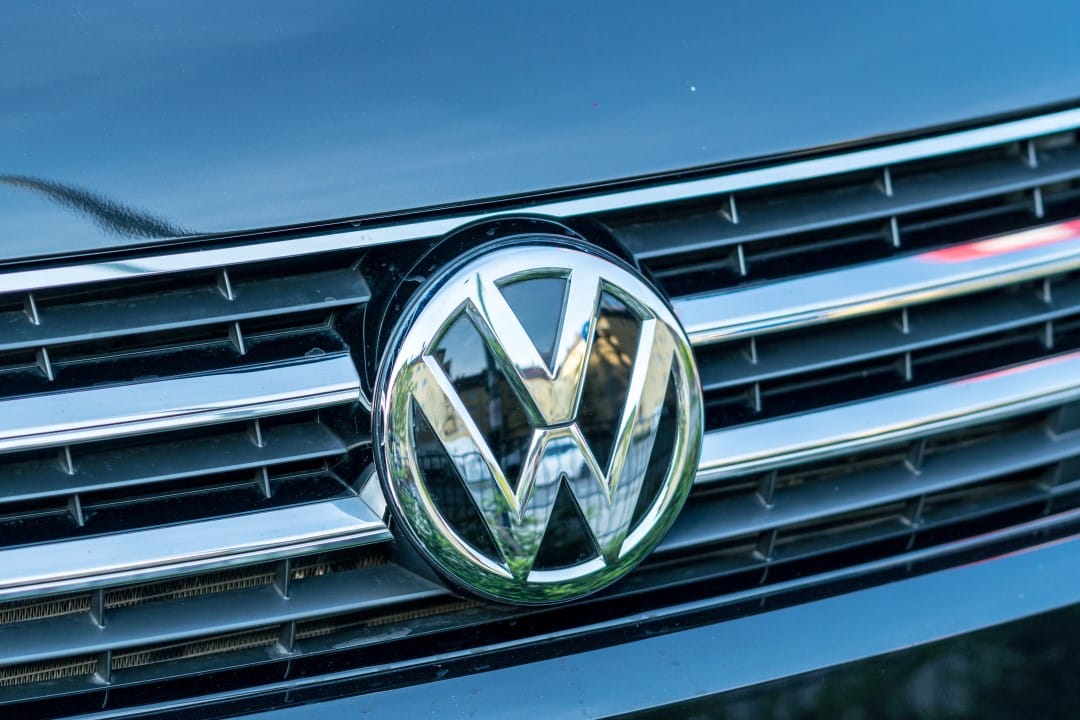
Volkswagen announced a recall of 150,290 vehicles in Brazil due to a defect in the parking brake that could lead to unintended vehicle movements. The recall covers six different models, all manufactured between 2025 and 2026, and the automaker recommends that owners take their cars for free inspection at dealerships. This is one of the brand’s largest recent recalls in the country, impacting a significant portion of its current fleet.
Safety risks and the identified brake defect
The problem identified by Volkswagen is related to the parking brake lever, which may not lock properly and, consequently, fail in its main function. This failure represents a considerable risk, as the vehicle can move unexpectedly even when parked, without the driver being present or having control over it. Scenarios such as a car disengaged on a ramp or parked in a flat place, but without proper security, can create dangerous situations.
More on this story: Volkswagen recalls more than 500,000 vehicles due to reversing camera failure in the USA
The automaker explicitly warns of the possibility of serious accidents. In a statement, Volkswagen stated that “the failure may result in involuntary movement of the vehicle when parked, which may cause accidents with risks of physical, fatal and/or material damage to the driver, passengers or third parties.” The critical nature of the affected component makes it imperative for owners to pay attention to the recall, which aims to eliminate any potential danger before an accident occurs.
Which Volkswagen models are included in the recall campaign?
Volkswagen’s recall campaign includes a range of popular models in the Brazilian market, covering vehicles produced in recent years. The full list of recalled cars, along with the specific chassis ranges for each, has been carefully detailed by the manufacturer. It is essential that owners check the chassis number of their vehicles to confirm they are within the scope of this action and ensure safety.
Learn more: Volkswagen recalls 117,798 vehicles to fix critical dashboard flaw
The models involved in the call are:
- T-Cross:manufactured in 2026 — Chassis: T4016198 to T4060559
- Pole:manufactured in 2026 — Chassis: TT612107 to TT643157
- Polo Track:manufactured in 2025 and 2026 — Chassis: TP002478 to TP028076 and ST089057 to TT022003
- Tera:manufactured in 2026 — Chassis: TT300291 to TT358902
- Virtus:manufactured in 2026 — Chassis: P003385 to TP008761 and T4003262 to T4018379
- Nivus:manufactured in 2026 — Chassis: TTP011605 to TP040040
The MQB-A0 modular platform and recall breadth
A crucial factor contributing to the high number of vehicles involved in this recall is Volkswagen’s use of the MQB-A0 modular architecture. This platform is a technological base shared between several models of the brand, which allows the standardization of internal mechanical components and the use of common suppliers on a large scale. Production efficiency and the agile development of new models are direct benefits of this strategy.
However, the unification of components on the MQB-A0 platform also presents an inherent risk: a defect in a shared part can, as in this case, impact a large volume of vehicles that are part of different production lines and categories. Thus, the parking brake failure is not restricted to a single model, but spreads across an entire family of cars that share this same base architecture, explaining the scope of the campaign.
On the same topic: Volkswagen recalls 94,000 electric cars globally after detecting risk of battery fire
How owners should go about free repairs
Volkswagen instructs owners of the vehicles listed to contact an authorized Volkswagen dealer as soon as possible. The procedure involves a detailed inspection of the parking brake system. If a manufacturing or design defect is found, the brake lever will be replaced with a new part that meets the required safety and functionality standards.
It is important to highlight that the entire service, both inspection and possible replacement of the component, will be carried out completely free of charge for the consumer, without generating any financial burden. The estimated time to carry out the repair is approximately two hours. For greater convenience and organization, the company recommends that owners contact their preferred dealership to schedule the service in advance.
The importance of recalls for vehicle and consumer safety
Recall campaigns represent a fundamental pillar for protecting consumers and maintaining traffic safety. They allow automakers to act proactively to correct manufacturing or design flaws that, if not remedied, could seriously compromise the functioning of vehicles and put lives at risk. A company’s initiative in calling for a recall is an indication of its responsibility and commitment to the quality and safety of its products on the market.
For vehicle owners, participating in a recall should not be seen as an option, but rather as an essential measure for their own safety, that of their families and that of all other road users. Maintaining the vehicle with all its components in perfect working order is not only a legal obligation of the manufacturer, but also a consumer right, guaranteed by current legislation, which requires safe products on the market. Negligence in responding to a recall can void the car’s safety warranty and even have implications for accidents related to the uncorrected fault.