

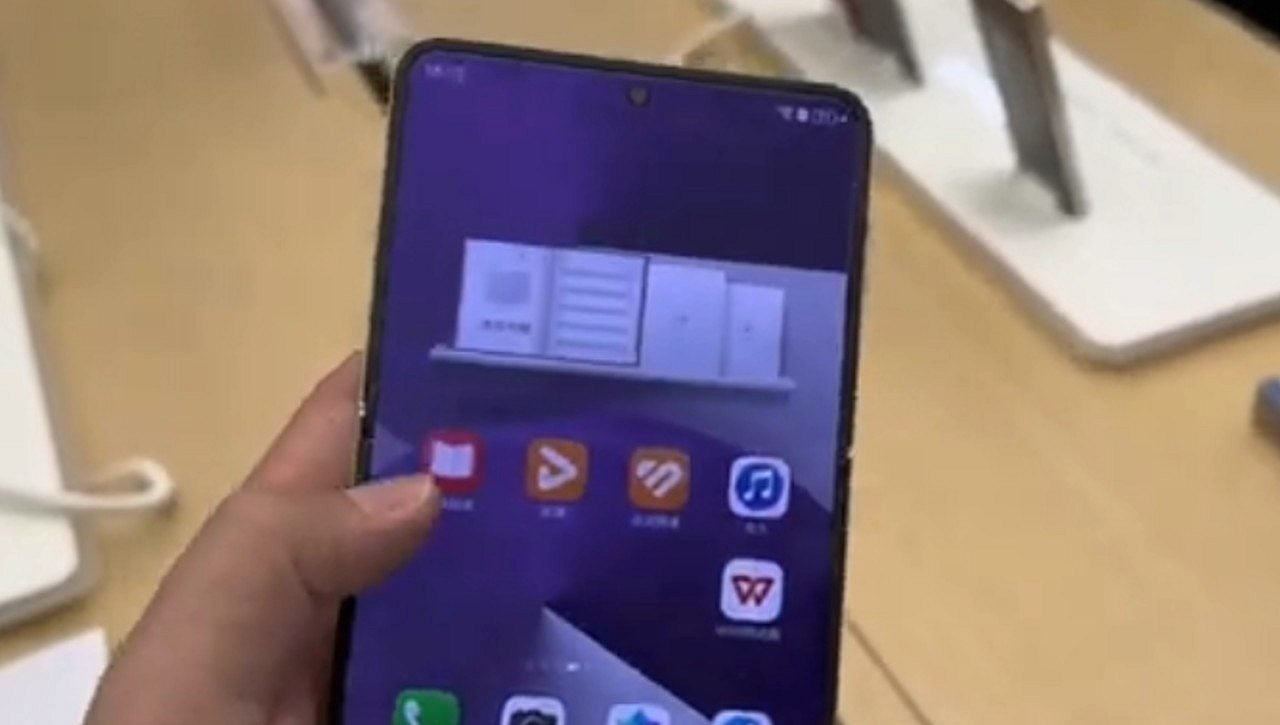
The mobile device industry is experiencing a frantic race to improve flexible screens, but a new movement in Asia points to an alternative path. Huawei is working on developing a smartphone with an ultra-wide screen ratio, known as widescreen, which completely eliminates the use of hinges. This engineering choice goes against the grain of the brand itself, which recently caught the world’s attention with the Mate XT, the first triple-folding model sold. Now, the Chinese giant focuses on delivering a massive viewing area in a rigid and traditional chassis.
The launch, scheduled for the next few months, attempts to solve a common dilemma among consumers of cutting-edge technology. Devices that transform into tablets offer a lot of space, but come at a high price in terms of mechanical fragility and thickness. By adopting a longer fixed panel, the Asian company promises an immersive visual experience without the risks associated with the soft plastic displays that dominate the current premium segment.
How the architecture of the brand’s new elongated display works
The widescreen display concept is already an absolute standard in computer monitors and televisions, but its application in cell phones requires severe ergonomic adaptations. In practice, the new equipment has a much more stretched horizontal aspect ratio than the standard 16:9 or the modern 20:9 found in current showcases. This format allows the user to watch cinematographic productions without the annoying black bands at the edges, in addition to making it easier to scroll web pages with a greater volume of text visible simultaneously.
The great technical advantage of this project lies in the elimination of any folding mechanism. Hardware engineers know that hinges collect dust, wear out over time, and require compromises in the internal arrangement of components. Huawei’s rigid device maintains the structural integrity of a single block of metal and glass, ensuring protection against water and dust at levels that flexible devices still struggle to achieve consistently in everyday use.
Learn more: Huawei anticipates launching a wide-screen cell phone to compete with foldable models
Main structural benefits of choosing a one-piece chassis
Opting for a traditional housing has immediate impacts on the production line and on the end consumer’s pocket. Ultra-thin glass screens that can withstand thousands of bends are expensive to manufacture and have high rates of disposal in factories. Without this complexity, the assembly cost plummets, allowing the company to position the product with a much more aggressive shelf value than competitors in Samsung’s Galaxy Z line or Motorola’s Razr family.
The internal space freed up by the absence of mechanical gears opens the door to substantial improvements in other hardware specifications. Larger batteries can be installed without compromising the weight of the equipment, delivering energy autonomy that foldable models are difficult to achieve due to the physical division of their energy cells.
- Superior physical resistance against accidental falls and constant pressure on the pants pocket.
- Significant increase in battery capacity, resulting in more hours of screen time away from the socket.
- Reduction in the final cost of the device due to the simplification of the supply and assembly chain.
- Absence of visible or tactile creases in the middle of the display during intense application use.
These factors make the product highly attractive for those who need robust equipment for daily work, but don’t want to give up a spacious digital work area. The extended energy autonomy, in particular, resolves one of the biggest complaints from owners of high-performance smartphones, consolidating the practical usefulness of the new format.
Consumer profile focused on multitasking and digital entertainment
The commercial direction of this launch surgically targets a niche of users who consume massive volumes of media on their phones. Mobile electronic game enthusiasts will find a much wider field of peripheral vision in this format, which guarantees a competitive advantage in online games. Likewise, subscribers to streaming platforms get a true pocket cinema, with full use of the pixels available on the light panel.
On the same topic: Huawei prepares launch of smartphone with stretched screen and dispenses with folding mechanism
Corporate professionals form the second base of interest for the Asian manufacturer. The stretched display allows you to run two heavy applications side by side with real comfort, without the virtual keyboards cluttering the programs’ interface. Editing a financial spreadsheet while participating in a video conference becomes a natural task, bringing the phone’s usability closer to that of an ultra-compact laptop.
Adaptation of HarmonyOS software and the company’s geopolitical scenario
The success of unusually proportioned hardware depends entirely on the operating system’s ability to organize information on the screen. Huawei needs to ensure that HarmonyOS, its proprietary software platform developed in the wake of US trade embargoes, is perfectly calibrated for the new form factor. This requires partner developers to rewrite parts of their code so that applications do not become distorted or render at the edges of the display.
The user interface should incorporate smart shortcuts and specific gestures to manage floating windows and screen splits intuitively. If the software does not keep up with physical innovation, the device runs the risk of becoming just an excessively long phone that is difficult to handle with a single hand. The fluidity in the transition between tasks will be the real acid test for the company’s programming engineering team.
More on this story: New Galaxy Z Fold 8 Ultra faces market challenge with the success of the Galaxy Z Fold 8
Strategically, this bet reflects the brand’s resilience in the global technology market. Prevented from using cutting-edge American components in several areas, the Chinese company finds design innovation a way to maintain its relevance and attract the spotlight of the specialized media. The fixed widescreen model proves that there is still plenty of room for experimentation in the telecommunications industry, challenging the idea that the future of premium cell phones belongs exclusively to devices that fold in half.