

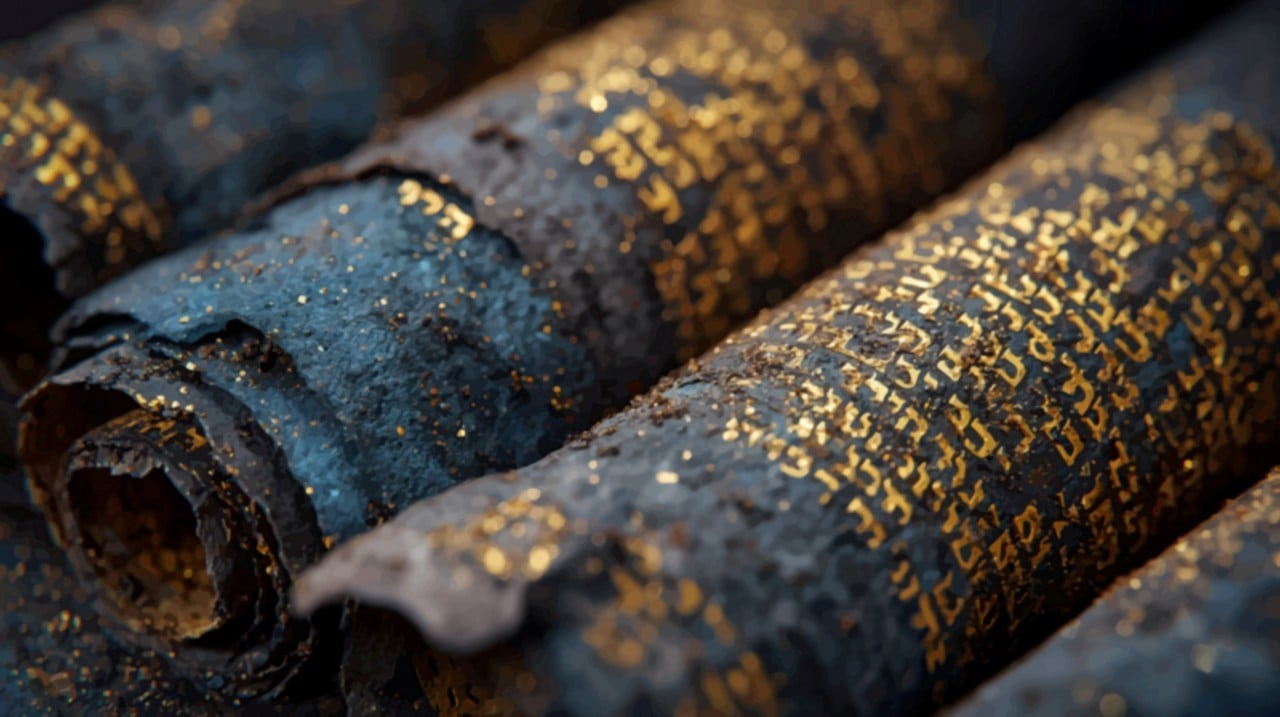
Scientists at the University of California, Berkeley burned manufactured papyrus sheets inside laboratory ovens to evaluate noninvasive reading methods for ancient documents recovered from Herculaneum. Findings published in the journal PLOS ONE showed that lead-based ink formulations absorb up to 25 times more X-ray radiation than the surrounding carbonized plant material. This precise radiological difference gives conservators an objective metric to identify which among the approximately 1,800 rolled manuscripts buried by Mount Vesuvius contain recoverable writing before undertaking complex computational unrolling.
The volcanic blast that decimated Pompeii and Herculaneum entombed the ancient villa library beneath massive deposits of scorching ash and incandescent debris. Extreme environmental heat converted the delicate scrolls into fragile cylinders of pure carbon that crumble instantly under physical manipulation.
Thermal chamber recreates volcanic conditions in laboratory trials
The research team in Berkeley fabricated replica papyrus specimens from scratch to study how biological cellulose degrades under sudden exposure to intense thermal energy. Investigators applied authentic historical ink recipes onto woven strips harvested from Nile River reeds before baking the sheets inside a high-temperature furnace. Running these controlled burn tests spared the delicate, irreplaceable artifacts stored in Italy from any experimental damage. The laboratory heating cycle mirrored the rapid thermal blast of the pyroclastic surge that swept across the Bay of Naples.
The test worked.
Subjecting the synthetic manuscripts to extreme thermal thresholds revealed that lead particles mixed into ancient ink mixtures amplified X-ray absorption twenty-five times compared to the blackened papyrus background, providing the optical separation necessary for advanced volumetric scanning systems to isolate individual letters without unrolling the brittle cylinders. These laboratory replicas verified that heavy metal deposits maintain sufficient physical density to stand out clearly against thoroughly baked botanical substrate. The results detailed in PLOS ONE now guide high-resolution computed tomography protocols aimed at buried classical texts.
Complete carbonization normally obscures visual examination because both the underlying reed sheet and standard soot-based carbon inks turn uniformly black and chemically identical after heating. Heavy metallic traces alter this dynamic by appearing as radiant white markings across digital slices produced by penetrating radiation beams.
Dense metallic traces produce distinct radiological contrast
Modern tomography scanners project focused X-ray beams through hundreds of tightly wrapped layers without requiring mechanical instruments to touch the physical artifact. Metallic ink deposits inside the experimental cylinders intercepted the radiation, casting defined geometric shapes and clean silhouettes throughout the simulated internal cavities. Computer algorithms use these density signatures to track internal winding paths and reconstruct specific characters from the ancient Greek and Latin alphabets. The laboratory trials in California demonstrated that lead density successfully bypasses the visual limitations of charred plant fibers.
Noninvasive digital imaging removes the need for physical unrolling techniques that fractured and destroyed dozens of fragile scrolls during earlier historical interventions. Manual handling inevitably pulverizes the delicate carbon structures into useless black powder.
The ruined villa library overlooking the Gulf of Naples remains the only intact literary repository surviving from classical antiquity. This expansive private collection holds philosophical writings on Epicurean thought alongside specialized poetic commentaries gathered within the Herculaneum estate. The newly generated absorption maps provide critical structural guidance for international collaborative decoding projects centered on ancient literature.
Global artificial intelligence contest speeds deciphering efforts
The international Vesuvius Challenge competition expanded the deployment of machine learning models developed specifically to extract text from severely heat-damaged artifacts.
The program awards substantial financial bounties to computer engineers and data specialists who successfully segment legible passages from three-dimensional volumetric scans. Quantitative measurements gathered during the Berkeley furnace trials provide machine learning developers with precise radiometric baselines to train automated vision networks. These algorithmic models learn to isolate microscopic metallic clusters scattered across thousands of compressed, distorted layers.
Oxygen starvation during the thermal eruption of Mount Vesuvius prevented organic combustion, allowing the carbonized scrolls to endure underground for two millennia. The same volcanic surge buried nearby Pompeii under deep ash strata, freezing the urban layout in place.
Computed tomography screening establishes sorting criteria for rolls
Scanning for lead signals provides institutions with a clear technical benchmark to determine which of the 1,800 Herculaneum cylinders should receive priority beam time in particle accelerators. Running full three-dimensional tomographic acquisitions on large synchrotron facilities demands significant financial resources and extensive processing hours from specialized technicians. Scrolls containing dense metallic inks offer significantly higher odds of immediate textual extraction by digital paleographers. Research groups intend to prioritize examination schedules for artifacts that display this distinct radiometric signature.
Data from the Berkeley trials confirmed that scrolls written exclusively with soot-based organic inks require alternative detection software to map hidden characters. Items lacking metallic compounds remain the most difficult target for standard radiological methods.
The PLOS ONE study establishes a non-destructive triage protocol for the continuing archaeological investigation of ancient scrolls housed in Italy. Custodial libraries can preserve the physical integrity of the artifacts while remote analysts reconstruct passages on digital displays. The Herculaneum collection continues to hold the vast majority of its ancient passages sealed beneath dense layers of blackened carbon.