

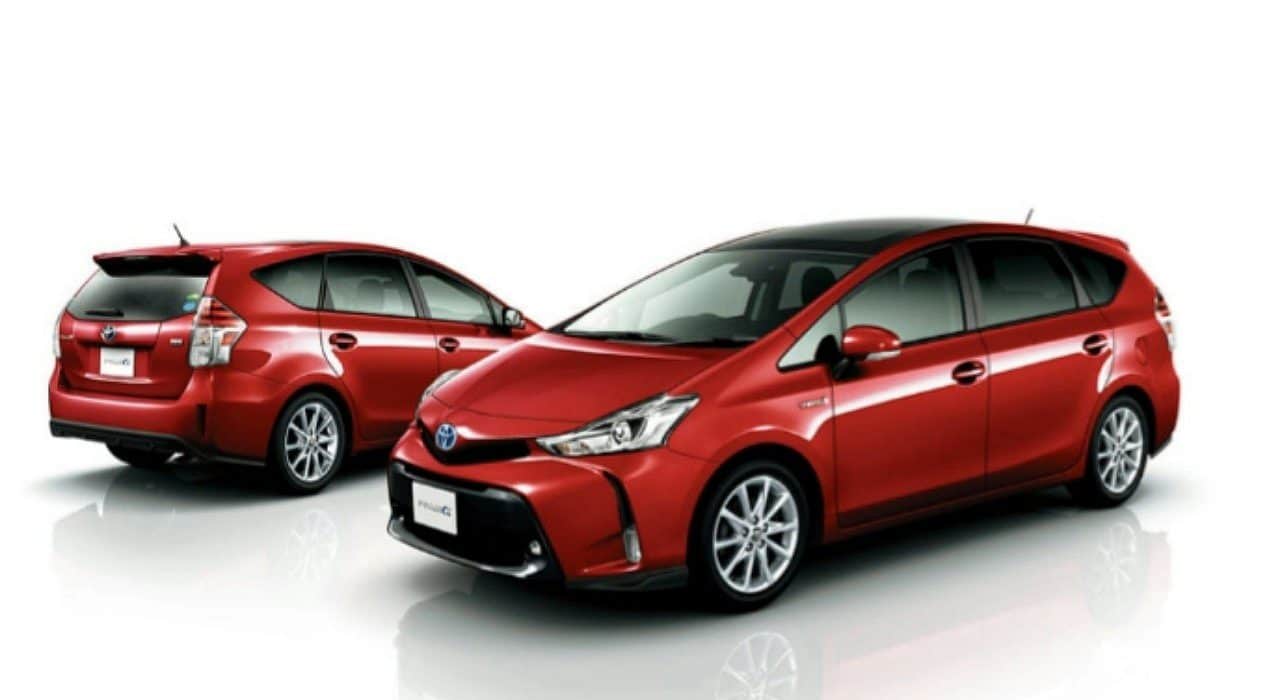
Drivers sustained steady market demand and shared positive appraisals for the Toyota Prius Alpha on September 19, 2026, marking five years since Toyota closed its production assembly lines. The compact wagon and minivan hybrid continues to attract practical buyers through its long-distance operating autonomy and its adaptable passenger room.
Toyota originally launched the dedicated hybrid wagon in 2011 to expand its alternative-energy portfolio. Dealerships distributed the vehicle across key global regions to serve families needing greater utility than a conventional hatchback. The automaker developed the project specifically around everyday commuting and cargo transportation.
Engineers adapted the third-generation hatchback structure to form an extended body reaching 4,615 millimeters in length, 1,775 millimeters in width, and 1,575 millimeters in total height. By stretching the wheelbase to 2,780 millimeters on the proven third-generation hatchback foundation, Japanese engineers created substantial cargo and passenger volume while keeping the vehicle low enough to preserve dynamic cornering stability without the excessive body roll that characterizes traditional full-sized passenger minivans.
The controlled exterior height prevents the high center of gravity that complicates driving in larger utility vans. Motorists maneuver the automobile with the direct responsiveness typical of a traditional touring wagon or midsize sedan. This structural balance maintains predictable road feedback through suburban streets and high-speed motorways alike.
Front wheels drive the vehicle. This front-wheel-drive layout reduces mechanical weight and maximizes underfloor cabin room across all production trims of the Prius Alpha.
Exterior proportions and revised wheelbase expand interior cabin room
The exterior profile maintains the signature aerodynamic triangular wedge of the Toyota hybrid family while extending the roofline backward to ensure ample headroom for second and third-row occupants. Designers also elevated the seat hip points above standard sedan levels to enhance passenger ergonomics. This seat placement permits passengers to enter and leave the vehicle with an upright body posture that avoids sharp spinal bending.
Inside the cabin, the dashboard features a wide horizontal instrument cluster that emphasizes visual width across the front compartment. Toyota offered buyers two distinct interior arrangements:
- A five-seat configuration arranged across two seating rows with an expansive rear luggage bay
- A seven-seat layout fitted with a folding third row designed for larger family outings
Accommodating seven passengers without elevating the rear floor required Toyota engineers to rethink their traditional hybrid component placement. Standard hybrid vehicles store secondary batteries beneath the rear luggage floor, which would obstruct the sliding rails and folding hardware of a third row. The engineering department solved this packaging conflict by redesigning the storage architecture from scratch.
The technical team installed a compact lithium-ion battery pack inside the front center console between the driver and front passenger seats. This vertical placement kept the aft cargo deck completely flat for luggage loading and seating adjustments.
Hybrid powertrain unites gasoline thermal unit with electric traction motor
The Prius Alpha runs exclusively on Toyota Hybrid System II technology paired with an internal reduction gear mechanism. The hybrid setup pairs a 1.8-liter DOHC four-cylinder gasoline engine with a high-output alternating current electric motor. Electronic management software harmonizes both power sources to balance throttle response with energy conservation.

The internal combustion unit generates a peak output of 73 kilowatts, which equates to 99 horsepower at 5,200 revolutions per minute, along with 142 Nm or 14.5 kgfm of torque at 4,000 rpm. Variable valve timing adjusts the combustion cycle continuously to minimize unburned fuel during highway cruising.
The synchronous AC motor adds 60 kilowatts, providing 82 horsepower and 207 Nm or 21.1 kgfm of torque available instantly from a standstill. This integrated power delivery enabled the station wagon to achieve a certified fuel consumption rating of 20.7 km/l under the official WLTC test standard. Regenerative braking captures kinetic energy during deceleration to recharge the onboard cells automatically.
Active electronic systems and structural airbags reinforce passenger safety
Factory equipment includes six SRS airbags placed strategically to cushion occupants across front and side impact zones. A millimeter-wave radar unit anchors the pre-collision safety system by detecting road obstacles and decelerating automatically when collisions become imminent.
Toyota also fitted steering-assisted vehicle stability control known as S-VSC alongside the integrated Toyota Safety Sense suite. These preventive electronic aids preserved long-term market interest after Toyota halted assembly in 2021 without introducing an immediate direct replacement. Owners frequently cite this active safety array as a primary reason for maintaining their vehicles on modern roads.
Long-term motorists frequently share favorable feedback regarding overall mechanical endurance and low running costs. Driver testimonials highlight this dependability, with one owner noting, “The fuel economy and cargo capacity are incredible!” while another stated, “It is so comfortable that I cannot let go of it!”
Another driver praised daily versatility by writing that “fuel efficiency, cargo capacity, and interior space are all sufficient.” A separate detailed ownership report reviewed aging wear after years of travel: “The tires grip well, the wheels are light, and it is not flashy at all, but I am completely satisfied with everything except brake performance.” These direct accounts demonstrate how practical attributes offset the lack of modern cosmetic styling.
The persistent absence of a successor model prompted ongoing driver requests urging the manufacturer to produce a modernized iteration. One driver commented: “I would love to see the latest version of the Prius Alpha, comfortable for long journeys, fuel-efficient, and capable of carrying a good amount of luggage and passengers.”
Another prospective buyer voiced strong commercial interest by demanding: “Please make a Prius Alpha with 60p speed. Seriously. I would buy it.” Enthusiasts have also suggested adopting the recent styling language of the brand to revamp the wagon silhouette: “If released now, a wagon with a hammerhead design would look cool.” These community proposals indicate a lingering commercial demand for efficient five-door wagons.
A veteran owner confirmed continued daily usage by stating: “Honestly, the Prius Alpha is so comfortable that I still drive it. I wonder if they will ever launch a newer model.” This sustained consumer loyalty highlights enduring satisfaction with the vehicle’s functional proportions and mechanical reliability.
Retail pricing for brand-new units during the 2020 mid-cycle revision spanned between 2,612,500 yen and 3,622,300 yen across authorized Japanese dealerships. That financial bracket reflected entry-level trims as well as premium editions outfitted with seven seats and advanced electronics. Those original window stickers continue to benchmark current secondhand valuations in pre-owned automotive markets.