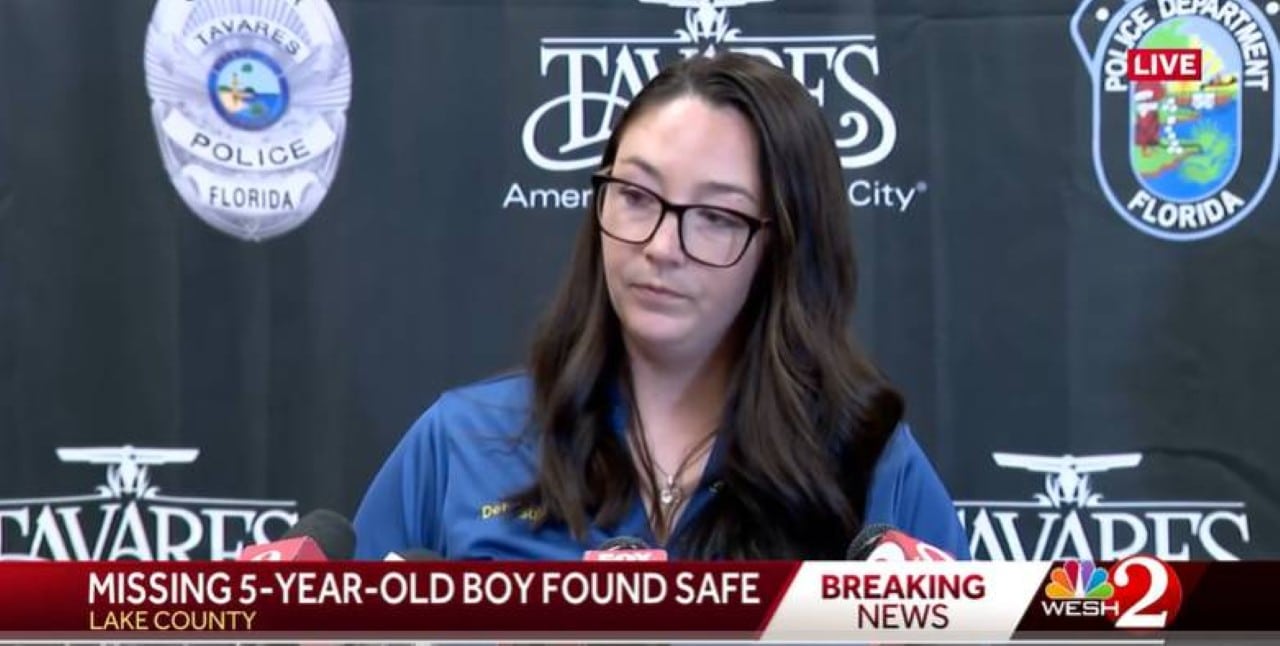
In a dramatic turn of events, a 5-year-old boy identified as Saunders was found safe in Tavares, Florida, following an AMBER Alert issued to locate him. Saunders, diagnosed with autism and described as semi-verbal, was under state custody when his grandmother, Kelly Dasilva, took him during an ongoing Department of Children and Families (DCF) investigation. The intense search, involving authorities and the local community, culminated in the boy’s safe return.
The abduction occurred on Sunday afternoon when Saunders was last seen at 1:19 PM. His grandmother took him without authorization, prompting an emergency response. By Monday morning, around 9:20 AM, police announced that Saunders had been located with Dasilva, who voluntarily brought him to a police station. Despite the ordeal, the boy was reported to be happy and unharmed.
In addition to Dasilva, who is in police custody, Saunders’ parents were also arrested for interference with custody, along with a family friend, Mitchell Morris. Local authorities revealed a history of domestic issues within the family, raising further concerns about the child’s safety.
The role of the amber alert system
The use of the AMBER Alert system was critical in the successful resolution of this case. Designed to quickly mobilize society in child abduction cases, the system broadcasts alerts via radio, television, traffic signs, and social media, ensuring vital information reaches the public within minutes. In Saunders’ case, the AMBER Alert was activated on Monday morning, sharing details about the boy and his possible location. Public involvement and collaboration with law enforcement were key to resolving the case within 24 hours.
In the United States, the AMBER Alert system has helped solve hundreds of cases since its inception. Named after Amber Hagerman, a 9-year-old girl abducted and killed in 1996, the system is a testament to the power of rapid response. In Brazil, the system was implemented in 2023 and has already proven effective, with four cases of missing children successfully resolved since its introduction.
Key details of saunders’ case
- Time of disappearance: Saunders was last seen at 1:19 PM on Sunday.
- Circumstances: His grandmother took him without state authorization.
- Resolution: He was found safe at 9:20 AM on Monday.
- Legal actions: Kelly Dasilva, Saunders’ parents, and Mitchell Morris face charges of custody interference.
This case underscores the importance of agile alert systems and community cooperation. The swift issuance of the alert and public vigilance were instrumental in ensuring Saunders’ safety.
Challenges and reflections on child safety
Cases like Saunders’ highlight the challenges faced by child protection systems. While authorities successfully rescued the boy, the situation raises questions about strengthening custody mechanisms and supervision for families with a history of issues. The involvement of multiple family members in the abduction illustrates the complexity of these situations.
The increasing reliance on systems like the AMBER Alert underscores the importance of technology in public safety. Social media platforms amplify the reach of alerts, significantly improving the chances of locating missing children. However, this requires a vigilant public willing to actively participate in these efforts.
Advancements in amber alert in brazil
Since its implementation in Brazil in 2023, the AMBER Alert system has proven to be a valuable tool in locating missing children. Four cases have been resolved successfully, including three in Ceará and one in Paraná. In one of the most recent cases, a two-month-old baby was abducted in Fortaleza, Ceará, and found within 24 hours after the alert was issued. These outcomes reinforce the system’s effectiveness and its vital role in child protection.
Technological advancements have enabled the AMBER Alert system to operate even more efficiently. In Brazil, the partnership with Meta, the parent company of Facebook and Instagram, has allowed for widespread dissemination of information, reaching millions in a short time. This model, inspired by the U.S. system, could be expanded to other areas of public safety.
Addressing child safety challenges
While the AMBER Alert is a powerful resource, it is not a complete solution for child safety. Many disappearance cases involve complex family dynamics, such as custody disputes and domestic abuse, which require broader and more integrated approaches. Saunders’ case, for example, highlights the need for continuous monitoring and support for vulnerable families.
Cooperation between police departments, social service agencies, and the public is essential to prevent similar incidents. Public awareness campaigns can educate people on the importance of acting quickly in disappearance cases and recognizing signs of child endangerment.
Facts about the amber alert system
- The AMBER Alert system was established in the U.S. in 1996.
- It was named after Amber Hagerman, a 9-year-old abducted and killed in Texas.
- Since its creation, the system has helped recover over 1,000 missing children in the U.S.
- In Brazil, it was launched in 2023 and has successfully resolved four cases so far.
- Social media plays a crucial role in disseminating AMBER Alerts to the public.
Additional details on saunders’ case
The details surrounding Saunders’ case reveal the complexities of situations involving children under state custody. The swift response from authorities and the effective use of the AMBER Alert system ensured a positive outcome. However, the case also exposed gaps in the child protection framework. The arrests of Kelly Dasilva and Saunders’ parents suggest a troubling pattern of familial interference with legal processes, potentially jeopardizing the safety of children.
Additionally, Saunders’ autism diagnosis adds another layer of vulnerability, emphasizing the importance of specialized care. Children with special needs are particularly susceptible to trauma in abduction scenarios, making it even more critical to resolve such cases promptly.
Lessons learned from the saunders case
Saunders’ case illustrates the importance of robust alert systems and collaboration between authorities and the public. While the outcome was positive, it raises important questions about preventing similar incidents in the future. Strengthening custody systems, expanding resources for vulnerable families, and investing in technology are essential steps to ensure child safety.
The AMBER Alert system, in particular, has proven to be an effective tool but relies on public awareness and participation to achieve results. Cases like this highlight the need to continue improving and expanding child protection systems in the U.S. and beyond.
