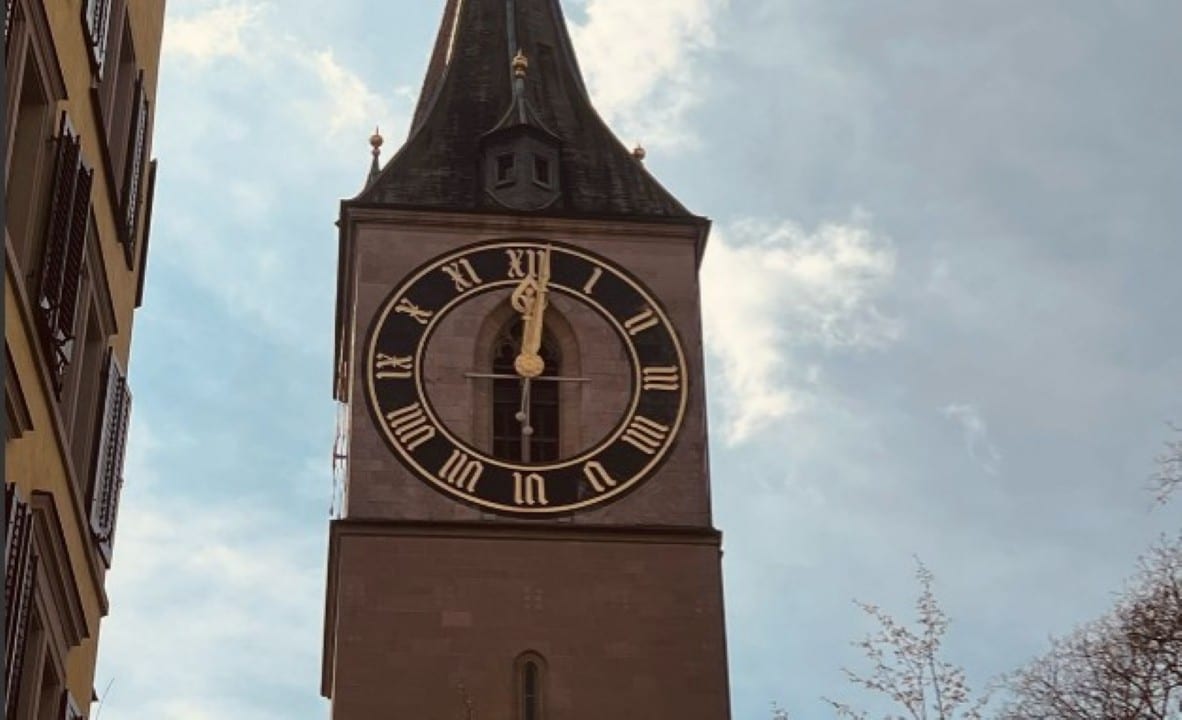
In the early hours of March 30, countries across the European Union, including Portugal, Italy, and Germany, moved their clocks forward by one hour, signaling the start of daylight saving time. This annual shift, traditionally set for the last Sunday of March, adjusts time zones to make better use of daylight during the warmer months. In 2025, the change took effect at 2 a.m. in most of the continent, with clocks jumping directly to 3 a.m. Known as “ora legale” in Italy, the adjustment impacts everything from daily schedules to flight and train timetables, requiring extra attention from residents and travelers alike. Despite ongoing debates about its potential abolition, daylight saving time remains in place, scheduled to end on October 26.
The practice dates back to the early 20th century, first introduced to save energy during World War I. Today, its primary goal is to extend natural light into the evening hours, particularly in spring and summer. In Portugal, the transition occurred at 1 a.m., advancing to 2 a.m., while Italy and Germany followed suit at 2 a.m. local time. This shift influences the daily lives of millions, from workers rising earlier to investors tracking global markets.
However, the change isn’t universally welcomed. Many note that losing an hour of sleep during the transition can affect well-being, while others question its energy-saving benefits in modern times. Still, the European Union upholds the tradition, coordinating its 27 member states to maintain harmony across time zones and prevent disruptions in the internal market.
Esta madrugada Portugal – como toda a União Europeia – muda para o horário de Verão. Quando for 1 da manhã passaremos para as 2 da manhã e manteremos este horário até ao último fim-de-semana de Outubro.
— Partido Democrata Europeu (@PartidoEuropeu) March 29, 2025
Design: Guilherme Batista #horariodeverao #pde #partidoeuropeu pic.twitter.com/IvcPJKwlUe
How daylight saving time works in Europe
The mechanics of daylight saving time in Europe are straightforward but demand synchronization. On the last Sunday of March, clocks advance one hour, effectively shortening the day by 60 minutes. This adjustment holds until the last Sunday of October, when clocks are set back, reverting to standard time. In 2025, the end date is set for October 26, aligning with the European autumn, when days naturally grow shorter.
This system stems from an EU directive aimed at standardizing time zones across member states. Portugal, operating on Coordinated Universal Time (UTC), and Italy, on UTC+1, adhere to the same schedule. Germany, also in UTC+1, mirrors the adjustment, ensuring cities like Lisbon, Rome, and Berlin stay aligned during the period.
While energy conservation remains the core rationale, recent studies suggest the savings may be less significant than in the past. Advances in technology and shifts in consumption patterns have reduced the impact on electricity use, fueling discussions about the practice’s future relevance.
Key dates in the European calendar
Daylight saving time in Europe follows a fixed schedule governed by EU regulations. Here are the critical dates for 2025:
- March 30: Start of daylight saving time, with clocks moving forward 1 hour.
- October 26: End of daylight saving time, with clocks moving back 1 hour.
- December 21: Winter solstice, marking the shortest day of the year in the northern hemisphere.
These milestones directly shape perceptions of time and the planning of daily activities across the continent.
Immediate effects on routines and travel
The switch to daylight saving time brings practical changes across multiple sectors. For Europeans, it means later sunrises and extended evenings, reshaping work hours and leisure time. In Portugal, sunrise shifts from around 6:30 a.m. to 7:30 a.m., while in Italy and Germany, daylight stretches until about 8 p.m. in the days following the change.
Travelers face additional considerations, particularly those with flights or trains scheduled in the early hours of March 30. Airlines and rail operators adjust their systems automatically, but passengers are urged to double-check schedules to avoid delays. In 2025, the transition aligns with the start of the spring tourism season, heightening the need for careful planning in cities like Paris, Madrid, or Vienna.
Financial markets also feel the ripple effects. Traders on European exchanges, such as Euronext or the Frankfurt Stock Exchange, recalibrate strategies to account for the one-hour shift relative to other global hubs. This adjustment influences dealings with New York or Tokyo, requiring seamless coordination among international teams.
History and ongoing debates
Daylight saving time traces its roots to 1916, when Germany adopted it as a wartime measure to conserve coal. Other European nations soon followed, and the practice saw a revival during World War II. After decades of inconsistent use, the European Union standardized it in 1981, establishing the current start and end dates.
Despite its history, the practice’s future is under scrutiny. In 2018, an EU public consultation found that 84% of 4.6 million respondents favored ending the biannual clock changes. The European Parliament approved a plan in 2019 to phase it out by 2021, but implementation stalled due to disagreements among member states.
The issue remains divisive. Supporters highlight energy savings and trade benefits, while critics argue that disruptions to biological rhythms and adaptation costs outweigh the gains. Italy has explored adopting a single time year-round, though no decision has been finalized.
Regional variations across Europe
While the EU coordinates daylight saving time, its application varies slightly. Countries in UTC, like Portugal and the UK (no longer an EU member), adjust at 1 a.m., while those in UTC+1, such as Spain and France, do so at 2 a.m. In Eastern Europe, on UTC+2, like Greece and Finland, the change happens at 3 a.m. local time.
Beyond the EU, practices differ. Switzerland, a non-member, aligns with its neighbors, as does Norway. Iceland, however, opts out entirely, sticking to standard time year-round. These variations stem from historical and geographic factors, with proximity to the Arctic Circle diminishing daylight benefits in some areas.
Within the EU, uniformity supports trade and logistics, but regional exceptions require awareness for cross-border travel. A journey from Lisbon to Helsinki, for instance, involves both time zone differences and seasonal adjustments.
Benefits and criticisms in numbers
Research on daylight saving time yields mixed findings. In the 1970s, it was estimated to cut annual electricity use by up to 1% in Europe, particularly in industrialized nations. Today, with LED lighting and renewable energy, that figure has dropped to roughly 0.3%, per recent analyses.
The impact on well-being is harder to measure. Studies suggest up to 20% of people experience adjustment difficulties in the days following the change, with rises in fatigue and traffic accidents. Conversely, tourism and retail sectors report gains, as longer evenings boost outdoor spending.
These statistics underscore the debate: direct savings are shrinking, but indirect benefits still factor into the equation. Whether the practice persists will hinge on how governments weigh these trade-offs.
Fascinating facts about daylight saving time
Some elements of daylight saving time stand out even to seasoned observers:
- In Portugal, the 1 a.m. shift is seamless for most, thanks to auto-updating digital clocks.
- Italy’s “ora legale” contrasts with “ora solare,” its term for standard time.
- Germany, the pioneer, now leads discussions on possibly ending the practice.
These quirks highlight how a century-old tradition has evolved to fit contemporary life across a diverse continent.
Looking ahead
The fate of daylight saving time in Europe remains unclear. Following the 2019 proposal, the 2020 pandemic shifted priorities, delaying consensus. Some nations, like France and Spain, advocate for permanent daylight saving time, while others, like Finland and Poland, prefer standard time year-round.
Coordination poses the biggest hurdle. Without agreement, abolition could fragment time zones, complicating transport and trade. For now, the EU sticks to the status quo, postponing a final call to future talks.
In the meantime, residents adapt. In Rome, locals enjoy extended spring evenings, while Berlin’s open-air cafés thrive. The March 30 shift remains an annual fixture shaping Europe’s rhythm.
Detailed annual timeline
For those tracking daylight saving time, 2025’s key moments are:
- Start: March 30, at 2 a.m. (or 1 a.m., depending on the zone).
- End: October 26, at 3 a.m. (or 2 a.m., depending on the zone).
- Duration: 210 days, roughly seven months.
This cycle reflects Europe’s effort to align daylight with human activity, despite lingering challenges.
