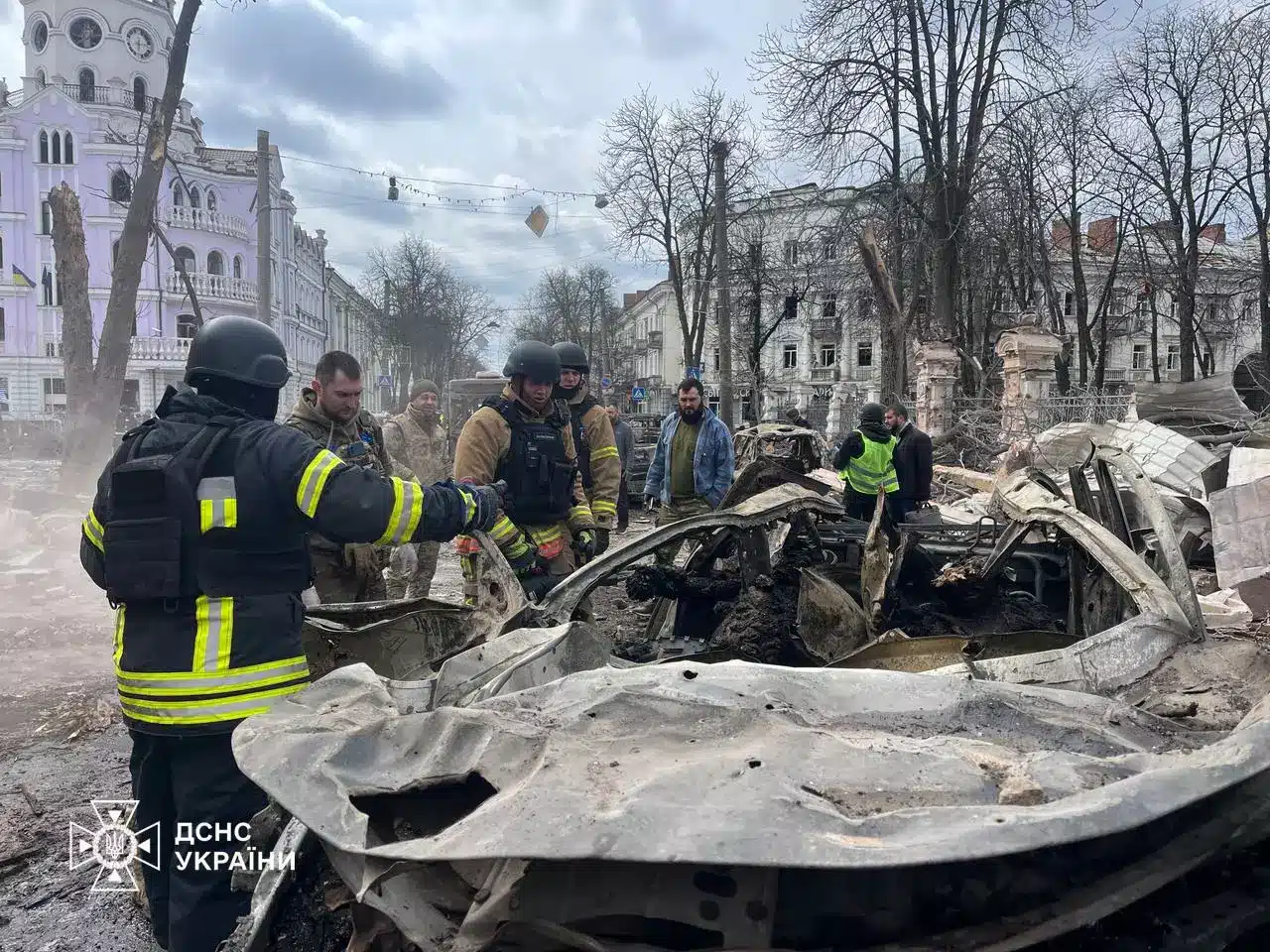
A catastrophic assault unfolded in Sumy, a northeastern Ukrainian city, where Russian missiles struck the urban core, claiming 32 lives and injuring 84 others on Sunday. The bombardment, which hit at 10:15 a.m. local time, obliterated civilian infrastructure, including buses and cars, scattering debris across streets. Official channels released harrowing footage showing bodies amid rubble and thick smoke as rescue teams scrambled to save survivors. The tragedy, coinciding with Palm Sunday, stunned the local community and heightened tensions at a critical juncture for peace negotiations.
Sumy’s acting mayor, Artem Kobzar, mourned the loss in a social media statement, emphasizing the attack’s toll on residential and commercial areas. He urged support for ongoing rescue operations. Located near the Russian border, Sumy has endured persistent threats, but this strike’s severity reignited discussions about civilian safety in conflict zones. Local authorities estimate that repairing the damaged infrastructure could take weeks, with power outages affecting thousands of households.
Global leaders swiftly condemned the attack. Ukrainian President Volodymyr Zelensky took to social media, expressing outrage and calling for a unified international response. He labeled Russia’s actions as a violation of human dignity, noting the symbolic weight of striking on a religious holiday. The assault has further complicated diplomatic efforts to halt the conflict, which has raged for over three years, testing the resilience of Ukraine’s people and infrastructure.
The violence in Sumy underscores the fragility of ceasefire proposals. Despite recent talks mediated by global powers, Russia’s continued strikes challenge the prospects for de-escalation. The attack’s fallout may reshape upcoming negotiations, with Ukraine insisting on ironclad security guarantees before agreeing to any truce.
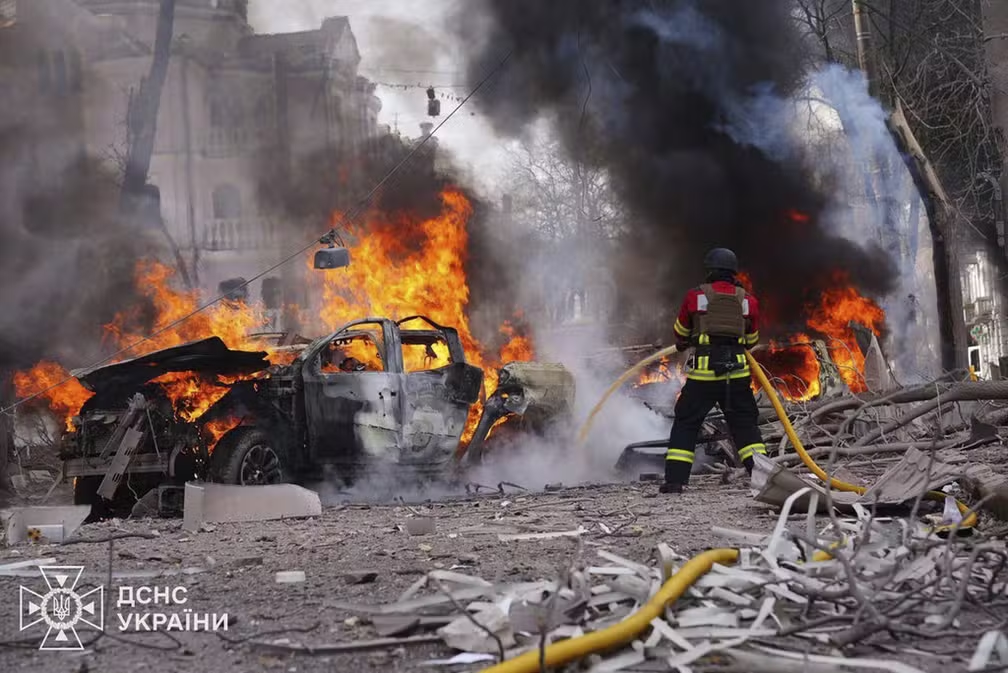
- Material damage: Buses, cars, and residential buildings destroyed.
- Rescue operations: Teams search for survivors in the wreckage.
- Religious context: Attack occurred on Palm Sunday, a Christian holiday.
- Global response: Leaders denounce the escalation of violence.
Heightened violence amid diplomatic strains
Sumy, home to roughly 260,000 residents, has emerged as a focal point of Russia’s offensive. Sunday’s attack is part of a broader wave of bombardments targeting Ukraine’s northeast. Over recent months, the region has faced frequent drone and missile strikes, hitting both military and civilian sites. Its proximity to Russia, just 30 kilometers from the border, leaves Sumy exposed to relentless threats. This latest assault stands out for its lethality, marking one of the deadliest incidents of 2025.
The human toll is compounded by extensive material losses. Local hospitals are overwhelmed, with shortages of medical supplies hindering treatment for the injured. Schools and markets, already adapted to wartime conditions, sustained direct hits, disrupting access to essential services. Power outages triggered by the attack have left thousands without electricity as temperatures drop, exacerbating the region’s humanitarian crisis.
Global outcry follows tragedy
The international community has reacted with alarm. French President Emmanuel Macron was among the first to speak out, stressing that Russia’s actions prolong the war and defy global norms. He called for a coordinated response to support Ukraine. British Prime Minister Keir Starmer echoed similar sentiments, pledging additional humanitarian aid. The attack has galvanized Europe’s resolve to bolster Ukraine’s defenses against aerial assaults.
In the United States, President Donald Trump expressed frustration with the escalation. Having pushed for peace talks since taking office, he described Russia’s strikes as excessive and signaled upcoming meetings with Russian and Ukrainian representatives to explore a truce. However, his approach has drawn scrutiny, with advisors cautioning against direct engagement with Moscow. Trump’s earlier decision to pause military aid to Ukraine sparked debate, though he insists diplomacy remains the priority.
Zelensky, unwavering in his stance, argues that Russia’s persistent attacks undermine trust in ceasefire promises. He demands robust guarantees, including international peacekeeping forces and the return of occupied territories. The Sumy tragedy strengthens his case that Russia’s intentions remain hostile, requiring stronger global pressure to shift the Kremlin’s calculus.
- Humanitarian efforts: NGOs mobilize resources for Sumy’s victims.
- Diplomatic push: Europe and U.S. urge immediate ceasefire talks.
- Energy crisis: Attack disrupts electricity supply across the city.
- Psychological toll: Residents live in constant fear of further strikes.
A history of violence in Sumy
Sumy has faced aggression since the war’s onset in February 2022. Early clashes saw Russian forces attempt to seize the northeast, only to be repelled by Ukrainian defenses. Despite retaining control, Sumy’s border proximity has made it a recurring target. Sporadic strikes persisted, but the intensity of 2025’s attacks signals a troubling escalation, with civilian casualties mounting.
Over three years, Ukraine has endured thousands of airstrikes, targeting everything from military bases to civilian hubs. Government data estimates over 10,000 civilian deaths since the conflict began, a figure that grows with each assault. Sumy’s strategic location has made it both a symbol of Ukrainian defiance and a stark reminder of the war’s toll on border communities.
Russia’s focus on civilian targets, including markets and residential zones, aligns with patterns observed throughout the war. These strikes aim to cripple infrastructure and erode public morale. In Sumy, the psychological impact is profound, with residents reporting sleepless nights haunted by air raid sirens. Children and the elderly face heightened trauma, compounding the region’s challenges.
Struggles for a lasting truce
Peace talks, reinvigorated in 2025, now face a significant setback. Recent U.S.-led proposals outlined a 30-day ceasefire, pausing attacks on critical infrastructure. Ukraine agreed in principle, but Russia demanded an end to Western military aid and Ukraine’s exclusion from NATO—conditions Kyiv rejects. The Sumy attack suggests Moscow is leveraging violence to gain leverage, complicating diplomatic progress.
Trump, who vowed to resolve the conflict swiftly, has engaged both Zelensky and Russian President Vladimir Putin. Yet tangible outcomes remain elusive. The White House plans further talks, potentially involving European allies, but Sumy’s devastation may force a reevaluation of strategies, with calls growing for tougher sanctions or enhanced military support for Ukraine.
Europe is stepping up its role. The UK and France are set to increase deliveries of air defense systems, while discussions about a 200,000-strong peacekeeping force, proposed by Zelensky, gain traction. Such a force would require unprecedented coordination, and skepticism persists about its feasibility without a firm ceasefire agreement.
- Recent timeline:
- January 2025: Trump threatens sanctions if Russia stalls talks.
- March 2025: Ukraine agrees to 30-day truce proposal.
- April 2025: Sumy attack kills 32, injures 84.
- Russia’s demands: Halt Western aid, block Ukraine’s NATO path.
- Ukraine’s stance: Zelensky seeks security guarantees, territory restoration.
Humanitarian and economic fallout
Sumy’s destruction deepens Ukraine’s humanitarian crisis. Millions of internally displaced people strain resources, with Sumy hosting thousands fleeing frontline areas. International organizations warn of looming shortages in food, water, and medicine as winter approaches. The attack’s disruption of power and heat threatens vulnerable populations, particularly the elderly and children.
Economically, the war’s toll is staggering. Rebuilding cities like Sumy demands billions, stretching Ukraine’s war-torn economy. The strike damaged local businesses, already battered by years of conflict, while power outages cripple industries. Ukraine’s reliance on foreign aid grows, with reconstruction funds tied to complex international agreements.
Globally, the conflict continues to ripple through energy and food markets. Ukraine’s grain exports, vital to global supply chains, face disruptions from Black Sea blockades, while Russia’s control of key routes fuels volatility. The Sumy attack reinforces fears of prolonged instability, potentially driving up commodity prices and straining economies worldwide.
Rebuilding challenges
Restoring Sumy will be daunting. Beyond physical repairs, the city must rebuild trust among residents, many of whom contemplate fleeing. Psychological support programs, already active elsewhere in Ukraine, are critical to addressing collective trauma. Volunteers and local groups have mobilized, but resources remain scarce.
Ukraine’s government pledged emergency aid for Sumy, though funds are stretched thin. The European Union and other partners committed support, but bureaucratic hurdles slow delivery. Prioritizing schools and hospitals is key to sustaining essential services, yet the scale of destruction demands long-term planning.
Ultimately, Sumy’s recovery hinges on the war’s outcome. A durable ceasefire could unlock reconstruction investments, but ongoing attacks perpetuate uncertainty. The community’s resilience shines through, with citizens banding together to aid victims despite the risks of further violence.
Political stakes in focus
The Sumy tragedy intensifies pressure on Zelensky, who faces domestic scrutiny over the war’s prolonged toll. While he retains broad support, war fatigue is palpable. Zelensky emphasizes national unity, but escalating violence could strain his leadership as he balances resistance with diplomacy.
For Putin, the attack may signal strength amid stalled talks. Russia holds roughly 18% of Ukraine’s territory, including areas annexed since 2014, and seeks to cement these gains. Rejecting temporary truces, Moscow appears to prioritize military pressure, betting on Ukraine’s exhaustion to dictate peace terms.
Trump’s mediation efforts are under scrutiny. His promise of a swift resolution clashes with the conflict’s complexity, and domestic critics question his strategy. The Sumy attack may push him toward tougher measures, though he remains committed to dialogue. The global spotlight remains on how these leaders navigate the crisis.
- Political challenges:
- Zelensky balances defiance with negotiation demands.
- Putin uses strikes to bolster bargaining power.
- Trump faces pressure for tangible diplomatic wins.
- Global ripple effects: War disrupts energy and grain markets.
