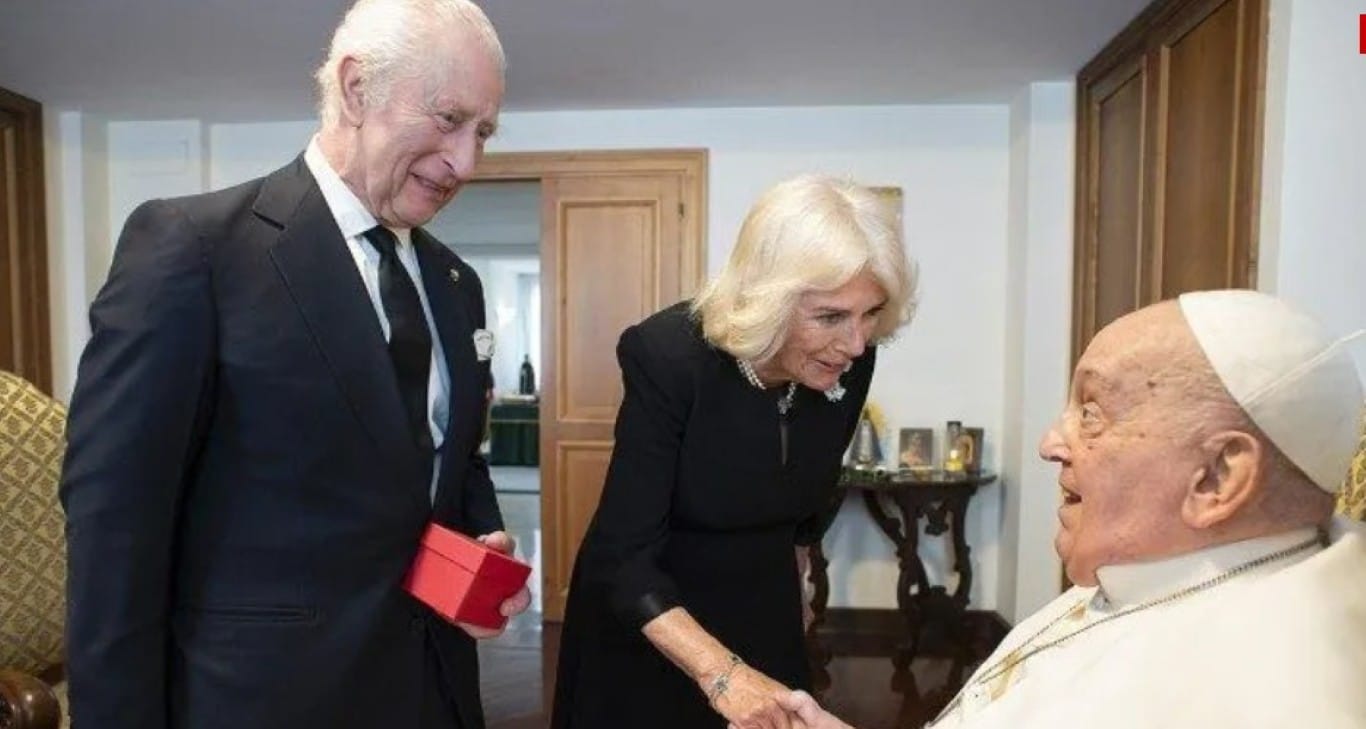
The death of Pope Francis at age 88 on April 21, 2025, sent shockwaves through the global Catholic community and beyond, marking the end of a 12-year pontificate defined by humility, social justice, and environmental advocacy. Among the numerous tributes from world leaders, King Charles III, monarch of the United Kingdom and Supreme Governor of the Church of England, stood out with a poignant statement expressing profound sadness and admiration for the Argentine pontiff’s legacy. Released by Buckingham Palace, the statement recalled the recent meeting between Charles, Queen Camilla, and Francis at the Vatican on April 9, a moment that underscored the pope’s global influence. The king’s words highlighted Francis’ unwavering dedication to the Church and his commitment to unity and care for creation, values that resonated across diverse communities worldwide. The bond between the British monarch and the pope, forged over years, symbolized mutual respect between distinct Christian traditions.
Charles III, who ascended the throne in 2022 following the death of Queen Elizabeth II, had previously met Francis in 2017 and 2019 as the Prince of Wales. These encounters strengthened diplomatic and spiritual ties between the British Crown and the Holy See, despite the historical divide between the Anglican and Catholic Churches since the 1534 schism. The April 2025 visit, initially postponed due to the pope’s frail health, was marked by warmth, with Francis personally congratulating Charles and Camilla on their 20th wedding anniversary. The gesture, described as heartfelt, came as the pontiff recovered from a 38-day hospitalization at Rome’s Gemelli Hospital for bilateral pneumonia, a period that tested his resilience but did not deter his commitment to his duties.
The global impact of Francis’ death transcended religious and political boundaries, with leaders from various nations offering condolences. Elected as the first Latin American pope in 2013, Jorge Mario Bergoglio brought a fresh perspective to the Church, emphasizing inclusion, interfaith dialogue, and environmental stewardship. His tenure saw significant reforms, such as opening the synod to women and laypeople, and acts of solidarity with marginalized groups, including migrants and those in poverty. His passing prompted an outpouring of grief, with tributes highlighting his role as a bridge-builder in a divided world.
- Vatican meeting: Charles and Camilla met Francis on April 9, 2025, after a delay due to the pope’s health.
- Prolonged hospitalization: Francis spent 38 days in hospital for pneumonia, discharged on March 23.
- Francis’ legacy: First Latin American pope, he championed reforms and interfaith dialogue.
- Historical ties: Charles met Francis in 2017 and 2019 before becoming king.
Context of the royal visit to the Vatican
The April 2025 visit by Charles III and Camilla to the Vatican occurred at a delicate moment for both leaders. Francis, still recovering from his hospitalization, insisted on the 20-minute private audience, described as a gesture of affection and mutual respect. The meeting, which coincided with the couple’s 20th wedding anniversary, saw the pope offer personal congratulations in a lighthearted tone. Buckingham Palace noted the king and queen’s delight at being able to wish Francis well in person, given his recent health struggles. The encounter, held despite medical advice for the pope to rest, underscored his commitment to fostering ecumenical dialogue and international cooperation.
The royal couple’s trip to Italy, from April 7 to 10, was part of a broader diplomatic effort to strengthen the UK’s ties with Europe post-Brexit. Beyond the Vatican meeting, Charles and Camilla attended events in Rome, including a Sistine Chapel mass focused on environmental preservation, a cause dear to both the king and the pope. They also met Italian President Sergio Mattarella and Prime Minister Giorgia Meloni, reinforcing bilateral relations. Francis’ decision to proceed with the audience, despite his condition, was seen as a testament to his determination to promote unity and shared values.
Francis’ health had been a concern since his February 14, 2025, admission to Gemelli Hospital for a severe respiratory infection. During his 38-day stay, he faced complications, including a respiratory crisis requiring mechanical ventilation and a blood transfusion for anemia. Discharged on March 23, he resumed limited activities, delegating his Easter homily to Cardinal Angelo Comastri during the April 20 Easter Mass. His final public appearance, delivering the Urbi et Orbi blessing from St. Peter’s Basilica balcony, came hours before his death from a stroke and heart failure.

Pope Francis’ legacy and Charles III’s response
Jorge Mario Bergoglio, elected pope on March 13, 2013, made history as the first Jesuit and Latin American pontiff. His papacy was defined by an inclusive approach, emphasizing mercy, social justice, and environmental care. His 2015 encyclical, Laudato Si’, inspired global leaders, including Charles III, a vocal advocate for sustainability. The king’s tribute praised Francis’ belief that caring for creation is an act of faith, a principle that bridged cultural and religious divides. Charles described the pope as a leader whose compassion and commitment to Church unity left an enduring mark.
The king’s statement was among the most detailed from world leaders, reflecting a personal connection built through multiple meetings, particularly the April 2025 encounter. Charles expressed gratitude for these moments, which deepened his admiration for Francis. The relationship between the British Crown and the Vatican, though shaped by historical differences, was strengthened by gestures like Queen Elizabeth II’s 2014 visit to Francis and Cardinal Pietro Parolin’s attendance at Charles’ 2023 coronation.
Other leaders also paid tribute. Argentine President Javier Milei mourned his compatriot, praising his kindness. European Commission President Ursula von der Leyen lauded Francis’ humility, while French President Emmanuel Macron highlighted his message of hope. In the US, President Donald Trump offered a brief message of peace, and Vice President JD Vance, who recently met Francis, noted his visible frailty in his final days.
- Francis’ reforms: Allowed women and laypeople to participate in the 2023 synod.
- Interfaith dialogue: Engaged with Muslim, Jewish, and other religious leaders.
- Environmental encyclical: Laudato Si’ shaped global sustainability policies.
- Social inclusion: Advocated for migrants, the poor, and marginalized groups.
Timeline of Francis’ final months
Pope Francis’ last months were marked by health challenges that limited his activities but not his resolve. Below is a summary of key events leading to his death:
- February 14, 2025: Francis is admitted to Gemelli Hospital with a severe respiratory infection.
- February 22, 2025: Respiratory crisis requires mechanical ventilation and blood transfusion.
- March 23, 2025: Discharged after 38 days, with rest advised.
- April 9, 2025: Meets Charles III and Camilla at the Vatican despite fragile health.
- April 20, 2025: Delivers Urbi et Orbi blessing at St. Peter’s, his final public appearance.
- April 21, 2025: Dies at 2:35 a.m. (Brasília time) from a stroke and heart failure.
Global impact of Francis’ death
The announcement of Francis’ death by Cardinal Kevin Farrell, the camerlengo, reverberated worldwide. In St. Peter’s Square, the basilica’s bell tolled in mourning as pilgrims and tourists expressed grief. The funeral, scheduled for April 25–27, will draw heads of state, including Brazilian President Luiz Inácio Lula da Silva. Francis broke tradition by choosing burial at Rome’s Basilica of Santa Maria Maggiore, reflecting his simplicity and devotion to the Virgin Mary, rather than the Vatican crypt.
Francis’ pontificate reshaped the Catholic Church, bringing it closer to the faithful and other faiths. His focus on “existential peripheries” inspired shifts in how the Church addresses social and spiritual issues. His outreach to Islam, Judaism, and other traditions, alongside critiques of consumerism and indifference, defined his legacy. His Easter 2025 call for a Gaza ceasefire and condemnation of antisemitism was among his final pleas for peace.
Charles III’s tribute emphasized Francis’ ability to touch millions with his compassion. The king, undergoing cancer treatment, showed empathy for the pope’s dedication despite his frailty. Their relationship, built on mutual respect, highlighted the potential for collaboration across Christian traditions in a polarized world.
Vatican rites and preparations
Following Francis’ death, the Vatican began traditional rites for the sede vacante, the period without a pope. Cardinal Kevin Farrell oversaw the death confirmation, followed by preparations for the funeral. Francis’ body will be displayed in St. Peter’s Basilica from April 23 for public farewells. The funeral, led by Cardinal Giovanni Battista Re, dean of the College of Cardinals, is expected to draw thousands to St. Peter’s Square.
Francis’ 2024 approval of a simplified funeral, using a single wooden coffin and burial at Santa Maria Maggiore, reflects his vision of a humbler Church. The nine-day mourning period, or novendiali, will include memorial masses, while the College of Cardinals prepares for the conclave to elect the next pope, likely starting in mid-May. The election, held in secrecy in the Sistine Chapel, is a pivotal moment in Catholic tradition, with expectations that Francis’ successor will build on his reforms.
- Funeral rites: Death confirmation, body display, and funeral between April 25–27.
- Sede vacante: Papal vacancy managed by Cardinal Kevin Farrell.
- Conclave: New pope election in the Sistine Chapel, expected in May 2025.
- Burial: Francis to be interred at Santa Maria Maggiore, breaking tradition.
Tributes from world leaders
Beyond Charles III, other leaders honored Francis’ multifaceted legacy. UN Secretary-General António Guterres called him a symbol of compassion, especially for the marginalized. US President Joe Biden described him as a transcendent leader, while former Bolivian President Evo Morales praised his human rights advocacy. Russian President Vladimir Putin noted Francis’ global authority and role in Catholic-Orthodox dialogue.
In Latin America, Francis’ death resonated deeply as the region’s first pope. Former Argentine President Cristina Kirchner recalled their seven meetings, including in Brazil and Cuba. In Brazil, his 2013 World Youth Day visit in Rio de Janeiro was remembered as a moment of connection with youth. The 2007 Aparecida Document, drafted by Bergoglio, remains a guide for Latin American Catholicism.
Charles III’s tribute, however, stood out for its personal tone and focus on shared spiritual values. As head of the Church of England, the king found in Francis a partner for discussions on faith, environment, and Christian unity. Buckingham Palace’s statement underscored that Francis’ legacy will continue to inspire actions for the common good across religious and political divides.
