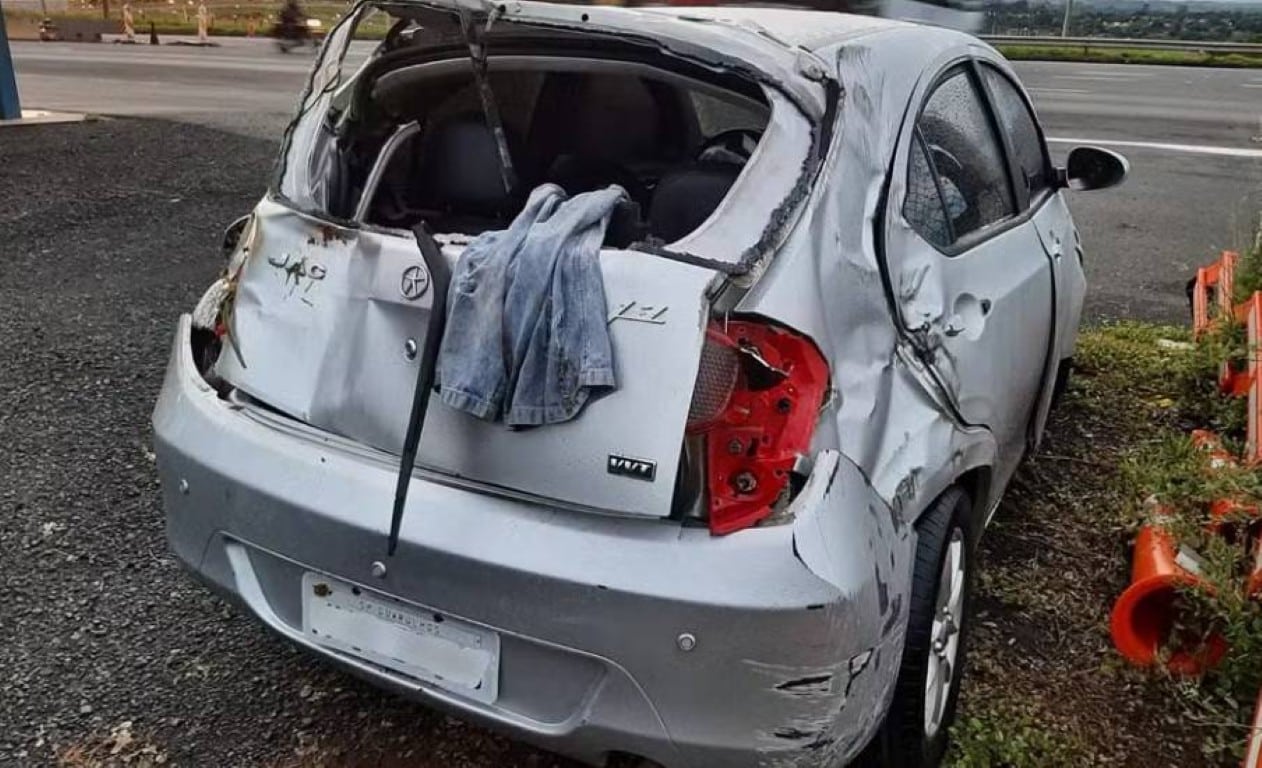
On the night of April 27, 2025, an act of kindness turned into a loss for a 48-year-old driver on the BR-153 highway in São José do Rio Preto, São Paulo. Spotting a car flipped over on the roadside, he stopped his vehicle to assist the accident victims. What he didn’t expect was that the driver of the crashed car, upon regaining consciousness, would steal his vehicle, turning a gesture of empathy into a police-reported theft. The incident, which took place on one of São Paulo’s busiest highways, raises questions about safety and the risks of helping in emergencies.
The theft, recorded as a felony, occurred around 10 p.m. in a section of BR-153 known for heavy vehicle traffic, especially at night. According to the police report, the driver who stopped to help noticed the overturned car with its wheels up, signaling the severity of the crash. He approached the vehicle and found three occupants: two passengers, who seemed disoriented, and the driver, who was unconscious. The scene suggested the accident had just happened, prompting the man to act quickly.
As he assessed the situation, the crashed car’s driver woke up. Instead of showing gratitude or seeking help, he acted unexpectedly: he ran toward nearby parked cars, attempting to open their doors. Another driver who had stopped to help managed to prevent him from entering her vehicle, but the man took advantage of the first rescuer’s unattended car. Without hesitation, he got in and fled, leaving the car’s owner and others at the scene stunned.
- Incident details: The theft occurred after the crashed driver regained consciousness and fled with the victim’s car.
- Crime location: BR-153 highway, São José do Rio Preto, São Paulo, on the night of April 27, 2025.
- Police report: The case was registered as theft, but the suspect remains unidentified.
- Vehicle status: The stolen car was recovered, but no details on damages or full recovery were provided.
Context of the crash and profile of those involved
The crash that triggered the incident occurred on a stretch of BR-153 that, according to Federal Highway Police data, sees a significant number of accidents due to heavy traffic and road conditions at certain times of the year. The highway, connecting various cities in São Paulo’s interior, is a vital route for cargo transport and drivers traveling between municipalities like São José do Rio Preto, Bady Bassit, and Araçatuba. Sharp curves, dense traffic, and, in some cases, driver recklessness contribute to collisions and rollovers, like the one witnessed that night.
The two passengers in the crashed car, whose identities were not disclosed, gave statements to the police. They claimed they had met the driver only days earlier in Bady Bassit, a town near São José do Rio Preto. However, they provided no detailed information about him, such as his full name or background, complicating the suspect’s identification. The lack of concrete details about the man who fled with the car raises questions about his intentions and history, especially given his immediate reaction after the crash.
Police are investigating whether the crashed driver has a criminal record or if the theft was an impulsive act driven by the moment’s confusion. His attempt to enter other vehicles before succeeding with the victim’s car suggests a desperate bid to escape, possibly out of fear of being held accountable for the crash or for other unknown reasons. The investigation also aims to determine if the rollover was caused by mechanical failure, recklessness, or external factors like weather or road obstacles.
Impact of the theft and challenges for the victim
The driver who had his car stolen faced not only the temporary loss of his vehicle but also emotional and bureaucratic hardships. For a 48-year-old worker likely reliant on his car for daily activities, the incident was a significant blow. The vehicle, whose make and model were not disclosed, was recovered by authorities, but the process of retrieval and potential repairs may involve time and additional costs. The victim, whose name was also withheld, had to cope with the shock of being betrayed by someone he tried to help, which may foster distrust in future emergencies.
Beyond material loss, the case highlights the vulnerability of drivers who stop to assist on highways. BR-153, like many Brazilian roads, often lacks adequate lighting or constant police patrols, increasing risks during nighttime stops. The incident underscores the need for safety measures, such as keeping the car locked even in emergencies and staying aware of surroundings before leaving the vehicle unattended.
- Challenges faced by the victim:
- Temporary loss of the vehicle, crucial for work or travel.
- Costs for administrative fees and potential car repairs.
- Psychological impact, such as wariness about helping strangers.
- Time spent on police and bureaucratic procedures.
Highway safety: how to act in accidents
Traffic accidents, like the rollover on BR-153, are common on Brazilian highways, especially in high-traffic areas. Federal Highway Police data show that in 2024, Brazil recorded over 60,000 accidents on federal roads, with thousands of injuries or fatalities. Assisting in such situations is a civic duty but requires precautions to avoid risks like theft, assaults, or secondary accidents caused by speeding vehicles.
Road safety experts recommend drivers follow specific protocols when stopping to help. Before exiting the car, it’s critical to signal the area with a safety triangle or hazard lights and, if possible, park in a safe spot, like the shoulder. Keeping doors locked and keys in hand is a simple yet effective way to prevent thefts like the one in São José do Rio Preto. Calling police or emergency services (such as 193 or 190) before approaching the crashed vehicle ensures trained professionals arrive quickly.
- Tips for assisting safely:
- Signal the accident site with a triangle or hazard lights.
- Park in a safe area, preferably on the shoulder.
- Keep doors locked and keys with you.
- Contact police or emergency services before acting.
- Avoid approaching vehicles without assessing the surroundings.
The reality of Brazilian highways
Brazilian highways, including BR-153, face structural challenges that contribute to accidents and crimes. Many roads lack proper maintenance, with potholes, poor signage, and missing guardrails. Nighttime lighting is also inadequate in several stretches, heightening risks for drivers and pedestrians. Additionally, police patrols, while present, cannot cover the full extent of highways, leaving gaps for criminal activities like thefts and assaults.
The BR-153 stretch where the incident occurred is notably busy, linking key cities in São Paulo’s interior. The highway is used by truckers, travelers, and locals, making it vital to the regional economy. However, heavy traffic and adverse road conditions demand extra caution from drivers. Data from the National Department of Transport Infrastructure (DNIT) indicate that investments in federal highway improvements have increased, but they still fall short of ensuring complete safety.
Highway crime is another pressing concern. Thefts, like the one in São José do Rio Preto, are just one aspect of a broader issue that includes cargo robberies, kidnappings, and scams targeting unsuspecting drivers. Educational campaigns and increased police presence in critical areas are measures advocated by experts to curb these trends. Meanwhile, drivers must adopt preventive practices to protect their property and safety.
Ongoing investigation and next steps
The São José do Rio Preto police continue to investigate, but the lack of information about the suspect poses a challenge. Without a clear identification, authorities rely on clues like security camera footage, witness statements, and analysis of the recovered vehicle to move forward. The fact that the stolen car was retrieved is a positive development, but it does not guarantee the suspect’s capture, especially if he has no prior criminal record.
Investigators are also working to clarify the crash’s circumstances. The accident’s dynamics may offer insights into the driver’s behavior, such as possible intoxication, speeding, or mechanical failure. The passengers, who claimed to have known the man for only a few days, may be called for further statements if new evidence emerges. Cooperation from other drivers who stopped at the scene is also crucial to reconstructing the sequence of events.
As the investigation continues, the case serves as a warning for drivers on BR-153 and other highways. While solidarity is commendable, it must be paired with caution, especially in isolated areas or at night. The experience of the 48-year-old driver, who lost his car while trying to help, highlights the need to balance the urge to assist with measures that ensure personal safety.
- Next steps in the investigation:
- Review of security camera footage from the crash area.
- Analysis of fingerprints on the stolen vehicle.
- Additional statements from the crashed car’s passengers.
- Search for the suspect’s criminal history, if identified.
Preventing thefts in emergencies
Cases like the one on BR-153 are not isolated. Reports of thefts and scams on highways are frequent, particularly in areas with low oversight. Drivers who stop to assist, change tires, or address mechanical issues are prime targets for criminals. Prevention involves both practical measures and awareness of the risks of acting without preparation.
One of the most emphasized recommendations is never leaving the vehicle unattended. Even in emergencies, keeping keys in hand and doors locked significantly reduces theft risks. Another key measure is avoiding stops in deserted or poorly lit areas, opting for spots with more traffic or near gas stations and police posts. Waiting for rescue teams before exposing oneself is also an effective strategy.
Technology can aid prevention. Vehicle tracking apps, alarms, and extra locks make it harder for criminals to act. Drivers can also benefit from social media groups or messaging apps to share alerts about dangerous stretches or recent incidents. Information is a powerful tool to avoid unpleasant surprises.
Social impact and reflections on solidarity
The BR-153 incident reignites debate about the limits of solidarity in a context of growing insecurity. The decision to stop and help, though well-intentioned, left the 48-year-old driver vulnerable. Such cases may discourage acts of empathy, especially in areas where crime is a constant concern. Society faces the challenge of preserving values like solidarity without exposing citizens to unnecessary risks.
Community initiatives, such as awareness campaigns and partnerships between police and civilians, can help create a safer environment for highway travelers. Driver training programs with guidance on handling accidents are another way to prepare the public for emergencies. Balancing the desire to help others with self-protection is key to preventing stories like the one in São José do Rio Preto from recurring.
The recovery of the stolen vehicle brought partial relief to the victim, but the incident’s repercussions go beyond material loss. The psychological toll of being betrayed by someone who received help is hard to quantify but can leave lasting scars. For the local community, the case reinforces the need for collective efforts to enhance road safety, ensuring that acts of kindness are not punished with loss and frustration.
- Measures to promote safety and solidarity:
- Educational campaigns on highway safety.
- Partnerships with Highway Police to boost patrols.
- Development of apps for alerts on risky areas.
- Training programs for drivers on first aid and safety.