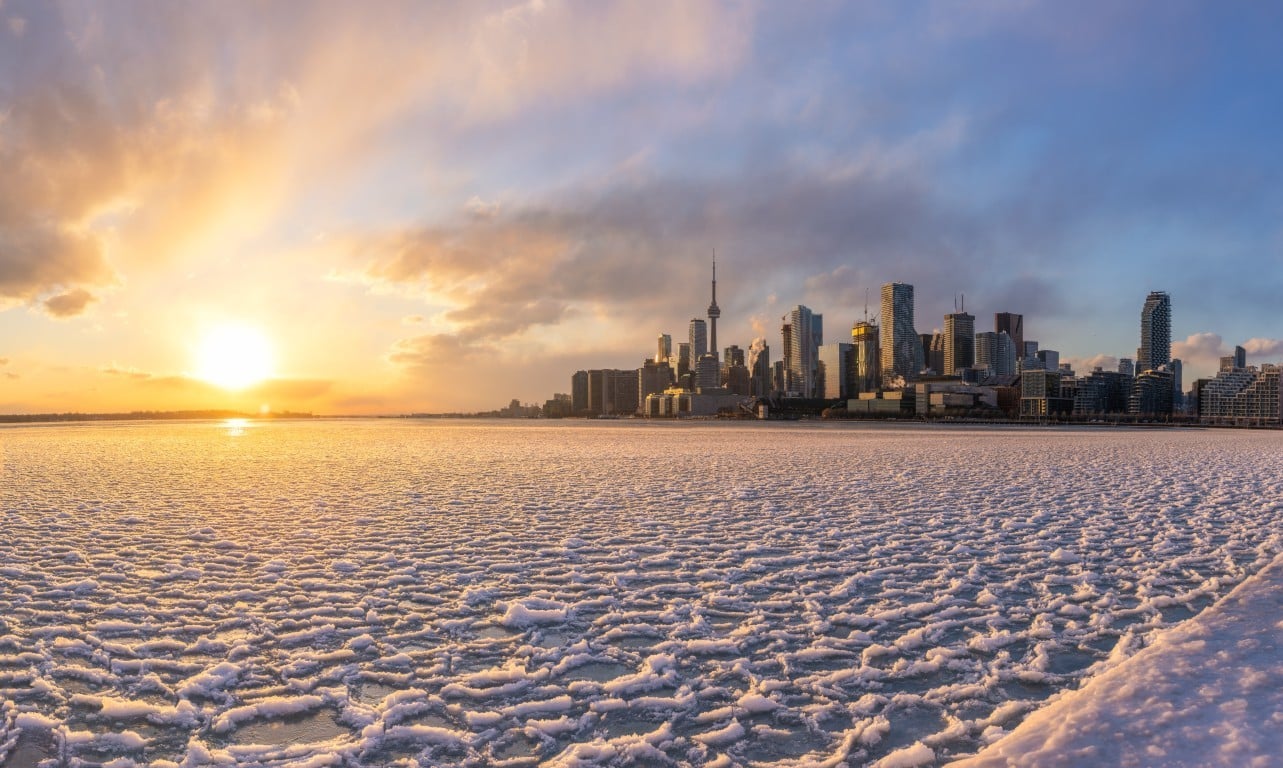
An extreme weather phenomenon is set to transform North America’s landscape in May 2025, defying expectations for a mild spring. The collapse of the polar vortex, an atmospheric structure regulating the Northern Hemisphere’s climate, is poised to unleash Arctic air masses, bringing freezing temperatures and intense blizzards to the United States and Canada. Cities like Chicago, Minneapolis, Toronto, and Winnipeg are bracing for harsh conditions, with forecasts predicting lows as extreme as -30°C in some areas.
Local authorities are ramping up efforts to mitigate impacts, while residents stockpile essential supplies.
- Cities on alert: Chicago, Toronto, and Winnipeg bolster infrastructure.
- Forecast duration: Effects may persist until mid-June.
- Associated risks: Blizzards, power outages, and transportation disruptions.
The event, driven by a sudden stratospheric warming, exposes the vulnerability of urban and rural areas to abrupt climate shifts.
Origin of the phenomenon
The polar vortex is a mass of cold, low-pressure air that swirls around the Arctic, located in the stratosphere about 30 kilometers above ground. During winter, its winds, which can exceed 250 km/h, form a barrier that confines frigid air to polar regions. A sudden stratospheric warming, marked by a temperature spike of up to 50°C in the stratosphere within days, destabilizes this structure. In May 2025, this phenomenon was detected early in the month, with signs of weakening polar winds recorded around May 5.
The vortex’s disruption allows the jet stream, a high-altitude wind current, to become wavy, releasing Arctic air to southern latitudes. Regions like the U.S. Midwest and eastern Canada, which typically enjoy milder May weather, now face an unexpected return of winter. The current event marks the third significant polar vortex collapse in 2025, following similar episodes in February and March.
Intensified preparations
In the United States, Midwest and Northeast cities are mobilizing resources to confront the extreme cold. In Minneapolis, emergency teams stockpile road salt and test generators to prevent blackouts, a measure adopted after power grid failures during February’s collapse. Chicago, which endured heavy snow earlier this year, is strengthening shelters to protect vulnerable populations, such as the elderly and homeless.
In Canada, provinces like Ontario and Manitoba are expanding heated shelter capacity. In Toronto, public transit systems are being adapted to operate under heavy snow, while Manitoba organizes convoys to ensure rural areas have access to supplies.
- U.S. preventive measures: Stockpiling salt and maintaining power lines.
- Canadian actions: Convoys and heated shelters in urban and rural areas.
- Focus on vulnerable populations: Priority for the elderly and homeless.
- Transportation impacts: Flight cancellations expected in Chicago and Toronto.
These preparations reflect lessons learned from prior events that left thousands without power and isolated rural communities.
- Cidades em alerta: Chicago, Toronto e Winnipeg reforçam infraestrutura.
- Previsão de duração: Efeitos podem se estender até meados de junho.
- Riscos associados: Nevascas, apagões e paralisações no transporte.
O evento, impulsionado por um aquecimento estratosférico súbito, expõe a vulnerabilidade de regiões urbanas e rurais a mudanças climáticas abruptas.

Transportation impacts
The polar vortex collapse poses significant challenges for transportation. Airports in major hubs like Chicago and Toronto anticipate flight cancellations due to blizzards and strong winds. In February, over 2,300 flights were grounded in the U.S., and authorities are now intensifying de-icing operations to minimize disruptions. Major highways, such as I-90 in the U.S. Midwest, face risks of closures due to snow accumulation.
In Canada, provinces like Alberta and Manitoba warn that rural roads may become impassable. Freezing rain, expected in U.S. coastal areas, heightens the risk of accidents on bridges and overpasses.
Effects on electrical infrastructure
The demand for heating is expected to strain power grids, particularly in regions already impacted by weather events in 2025. In the U.S., states like Illinois and Pennsylvania are reinforcing transmission lines exposed to strong winds. In February, approximately 190,000 people lost power due to infrastructure failures.
In Canada, Hydro-Québec estimates that 1.2 million households could be affected if winds down power lines. Energy companies are testing grids to handle up to a 30% surge in consumption, a precaution taken after blackouts in 2023.
- Midwest risks: Failures in transmission lines.
- Canadian concerns: 1.2 million households at risk.
- Preventive actions: Testing for energy consumption spikes.
Most affected areas
The U.S. Midwest and Northeast are among the most vulnerable regions. Cities like Chicago and Minneapolis may see temperatures drop to -34°C, while New York faces lows of -20°C. Southern states like Tennessee and the Carolinas, less accustomed to extreme conditions, expect freezing rain that could damage unprepared infrastructure.
In Canada, Ontario and Manitoba are at the forefront of concerns. Winnipeg faces forecasts of -42°C, and Toronto may hit -25°C. The Great Lakes region, shared by both countries, anticipates snow accumulations of up to 50 centimeters.
Increasing frequency of the phenomenon
Polar vortex collapses have become more frequent in recent years. Since 2010, such events have risen, with 2025 recording three episodes by May. Arctic warming, which reduces the temperature gradient between polar and mid-latitude regions, is noted as a factor weakening the vortex.
In 2019, a collapse left tens of millions under sub-zero temperatures in the U.S. and Canada. In 2021, a similar event caused a cold snap in Texas, exposing power grid vulnerabilities. The 2025 pattern underscores perceptions of an increasingly unstable climate.
Population protection measures
Authorities are issuing warnings for residents to avoid unnecessary travel and maintain emergency kits with blankets, non-perishable food, and portable chargers. In Chicago, crews are maintaining pipelines to prevent freezing, while Toronto adapts public transit to handle harsh conditions.
In Canada, Manitoba issues hypothermia alerts, particularly for rural areas. Schools in Michigan and Ohio are considering suspending in-person classes, a measure previously taken in February.
- Emergency kits: Blankets, food, and chargers recommended.
- Hypothermia prevention: Alerts in Manitoba and rural areas.
- School closures: Michigan and Ohio evaluate measures.
- Public transit: Toronto adapts operations for heavy snow.
Influence on tourism
The polar vortex collapse also impacts tourism in Arctic-adjacent regions. Canadian operators offer packages to view blizzards and intensified auroras, which may increase due to atmospheric changes. Despite growing interest, the climatic risks require extra precautions for travelers.
In the U.S., winter destinations like ski resorts in Wisconsin anticipate higher demand but face logistical challenges due to weather conditions.
Lessons from prior events
The February 2025 collapse, which affected over 150 million people, provided valuable lessons. In the U.S., Midwest blackouts exposed power grid weaknesses, while in Canada, Alberta blizzards isolated rural communities for days. These incidents prompted a more robust response for May, with authorities and residents acting with greater foresight.
In Detroit, February blizzards paralyzed traffic, and the city now bolsters road maintenance crews. Alberta, Canada, organizes convoys to prevent rural isolation.
Energy sector preparation
The energy sector faces a critical test with rising heating demands. In the U.S., companies conduct preventive maintenance on wind-exposed lines. In Canada, Hydro-Québec strengthens infrastructure following 2023 blackouts that affected thousands of households.
Forecasts of strong winds, which could topple transmission lines, keep authorities on high alert. Energy consumption is expected to reach record highs in regions like Illinois and Ontario.
Health risks
Extreme cold poses significant health risks, particularly for the elderly and those with pre-existing conditions. Authorities recommend proper clothing and maintaining heated environments. In Manitoba, hypothermia warnings are issued for rural areas with limited access to medical services.
In the U.S., heated shelters are opened in cities like Chicago and Minneapolis, prioritizing vulnerable populations. Prolonged cold exposure can cause frostbite within minutes, according to the National Weather Service.
- Hypothermia risks: Alerts for the elderly and rural areas.
- Frostbite: Cold exposure can cause damage in minutes.
- Heated shelters: Chicago and Minneapolis prioritize vulnerable groups.
Global climate patterns
The May 2025 polar vortex collapse is not an isolated event but part of a broader pattern of climate extremes. Sudden stratospheric warming, which triggers the phenomenon, has been recorded three times since 2020, suggesting increasing frequency. Arctic ice melt, intensified by climate change, reduces polar wind stability, allowing cold air to reach lower latitudes.
While North America faces extreme cold, other regions, like parts of Europe and Asia, may experience anomalous warmth due to jet stream undulations. This contrast highlights the complexity of global climate interactions.
Community mobilization
Local communities are also organizing to face the cold. In Toronto, demand for portable heaters and insulation materials surges, while in Chicago, residents stockpile supplies to avoid travel during blizzards. Schools and businesses adjust schedules, with some opting for remote operations.
In Canada, Ontario volunteers distribute blankets and food at shelters, an initiative strengthened after February’s challenges. Community solidarity plays a crucial role in the response to the climatic event.
Forecasts for coming weeks
Meteorologists warn that the collapse’s effects may persist until mid-June, depending on stratosphere-troposphere interactions. The cold peak is expected between May 15 and 20, with temperatures plummeting across much of the U.S. and Canada.
Cities like Winnipeg and Minneapolis are set to experience the harshest conditions, while coastal areas face freezing rain risks. The phenomenon’s unpredictability demands constant monitoring by weather services.
