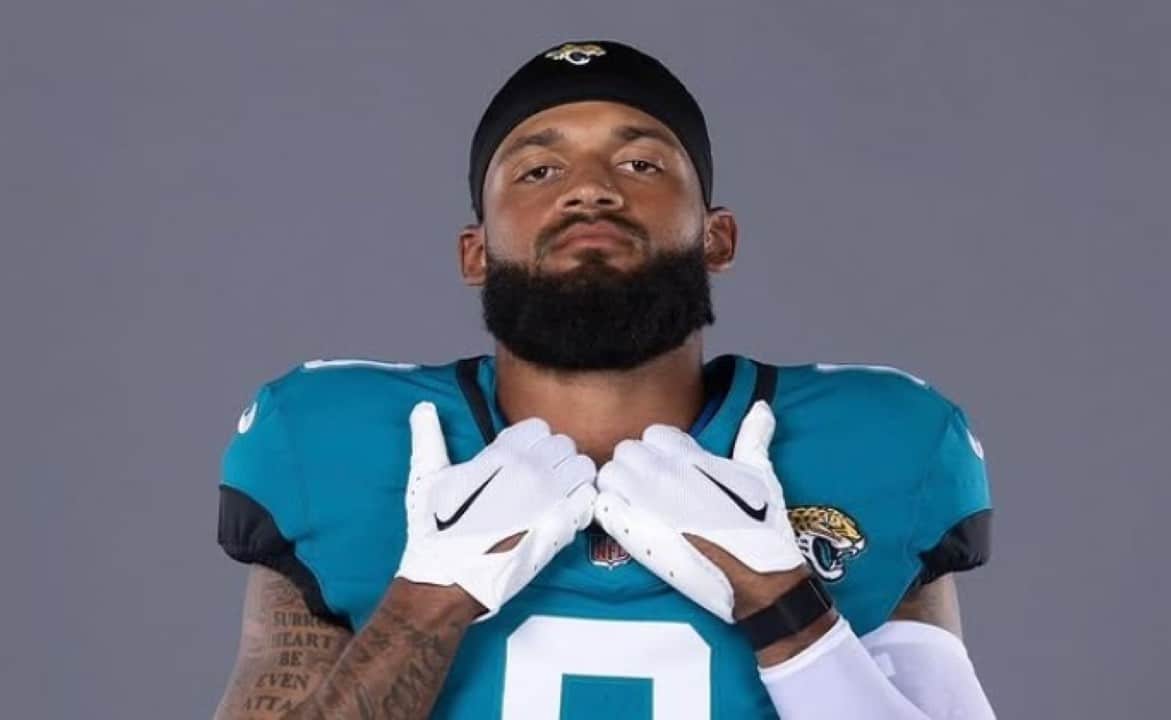
The NFL offseason has sparked significant roster changes, with the Jacksonville Jaguars and Dallas Cowboys making bold moves that reshape their offensive strategies. On May 7, 2025, the Jaguars released wide receiver Gabe Davis, barely a year after signing him to a three-year, $39 million contract. Simultaneously, the Cowboys acquired Pittsburgh Steelers’ wide receiver George Pickens in a trade that signals a new direction for both franchises. These decisions reflect the fast-paced, high-stakes nature of NFL roster management.
Teams across the league are recalibrating their lineups post-draft, with financial and performance considerations driving key decisions. The Jaguars’ release of Davis raises questions about their offensive rebuild, while the Cowboys’ acquisition of Pickens aims to bolster their passing game. These moves, alongside other recent trades, underscore the competitive dynamics of the NFL.
- Financial implications: Davis’ release frees up cap space for Jacksonville but highlights the risks of big contracts.
- Trade dynamics: Pickens’ move to Dallas reflects a trend of teams seeking young, proven talent.
- Quarterback synergy: Pairing Pickens with Dak Prescott could elevate the Cowboys’ offense.
- Steelers’ strategy: Pittsburgh’s focus shifts to DK Metcalf and quarterback uncertainties.
Gabe Davis’ brief tenure in Jacksonville
The Jaguars’ decision to part ways with Gabe Davis stunned many fans. Signed in 2024 to bolster the receiving corps, Davis was expected to complement quarterback Trevor Lawrence. However, his 2024 performance—20 receptions for 239 yards and two touchdowns in 14 games—fell short of expectations. The team’s management, under pressure to improve a lackluster season, opted to cut ties.
Davis, previously a reliable target with the Buffalo Bills, struggled to find chemistry with Lawrence. Injuries and inconsistent playcalling further hampered his output. The release, announced on May 7, 2025, allows Jacksonville to redirect funds toward emerging talent or draft prospects. For Davis, the move opens opportunities to join another team seeking a veteran receiver.
The financial aspect of the decision cannot be overlooked. The Jaguars absorbed a significant cap hit, but the long-term savings provide flexibility. This move aligns with a broader trend of teams prioritizing cost-efficiency over underperforming high-cost contracts.
Pickens’ trade to Dallas: A new chapter
On the same day, the Dallas Cowboys finalized a trade for George Pickens, acquiring the 24-year-old wide receiver from the Pittsburgh Steelers. The deal includes a 2026 sixth-round pick for Dallas, while Pittsburgh receives a 2026 third-round pick and a 2027 fifth-round pick. Pickens, in the final year of his rookie contract, brings dynamic playmaking to a Cowboys offense led by Dak Prescott.
Pickens’ 2024 season with the Steelers saw him amass 900 yards on 103 targets, despite inconsistent quarterback play. His 2023 performance, with 1,140 yards and five touchdowns, showcased his potential as a WR1. The trade, reported by Dianna Russini of The Athletic, had been in discussion since the 2025 NFL Draft, with Dallas ultimately securing the deal.
- Pickens’ strengths: Known for contested catches and deep routes, he averaged 18.1 yards per reception in 2023.
- Prescott’s impact: The quarterback’s 4,516 yards in his last full season signal a strong fit.
- Cowboys’ goals: The trade aims to address offensive inconsistencies post-2024.
- Steelers’ pivot: Trading Pickens aligns with their acquisition of DK Metcalf.
Steelers’ quarterback carousel
Pittsburgh’s decision to trade Pickens comes amid ongoing quarterback uncertainty. Since Ben Roethlisberger’s retirement in 2021, the Steelers have cycled through Kenny Pickett, Russell Wilson, Justin Fields, Mitchell Trubisky, and Mason Rudolph. The current roster includes Rudolph, Skylar Thompson, and rookie Will Howard, selected in the sixth round of the 2025 draft.
The team’s pursuit of Aaron Rodgers, who visited their facility in March 2025, remains unresolved. Rodgers, at 41, brings experience but no long-term solution. The Steelers’ acquisition of DK Metcalf, signed to a $150 million deal, suggests a shift toward building around a star receiver while addressing quarterback needs separately.
Pickens’ departure allows Pittsburgh to focus on Metcalf’s integration. The trade’s draft picks provide future flexibility, but the Steelers face pressure to stabilize their quarterback position to maximize their offensive potential.
Cowboys’ offensive boost
For Dallas, acquiring Pickens addresses a critical need in their passing game. Dak Prescott, recovering from a season-ending hamstring injury, expressed confidence in his readiness, stating in April 2025 that he could play immediately. His 2022 season—4,516 yards, 36 touchdowns—demonstrates his ability to elevate receivers like Pickens.
The Cowboys’ offense struggled with consistency in 2024, prompting this trade. Pickens’ ability to stretch the field complements existing weapons like CeeDee Lamb. The team’s management views the trade as a low-risk, high-reward move, given Pickens’ youth and contract status.
Dallas’ coaching staff, led by Mike McCarthy, plans to integrate Pickens during OTAs and minicamps. The trade reflects a broader strategy to capitalize on Prescott’s prime years while addressing defensive and offensive line needs through the draft.
Financial strategies in the NFL
The Jaguars’ release of Gabe Davis and the Cowboys’ trade for Pickens highlight the NFL’s complex financial landscape. Davis’ $39 million contract, once seen as a bargain for a proven receiver, became a liability due to underperformance. Jacksonville’s decision to cut him prioritizes long-term cap flexibility over short-term losses.
Similarly, the Cowboys’ trade for Pickens reflects a calculated risk. By acquiring a player in the final year of his rookie deal, Dallas avoids immediate financial strain while gaining a high-upside talent. The inclusion of draft picks in the trade balances future roster-building needs.
- Cap management: Teams like Jacksonville prioritize flexibility for 2026 signings.
- Rookie contracts: Pickens’ cost-effective deal benefits Dallas in the short term.
- Trade trends: Midseason and offseason trades are increasingly common for WRs.
- Long-term planning: Both teams aim to align rosters with salary cap projections.
Emerging trends in NFL roster moves
The NFL’s 2025 offseason has seen a surge in roster shakeups, with teams prioritizing youth and versatility. The Jaguars’ release of Davis aligns with a trend of cutting high-cost veterans who fail to deliver. Meanwhile, the Cowboys’ acquisition of Pickens reflects a focus on acquiring players with untapped potential.
Other teams have followed suit. The Steelers’ trade of Diontae Johnson to Carolina in 2024 and their acquisition of DK Metcalf signal a willingness to reshape rosters aggressively. These moves underscore the importance of draft capital and cap space in maintaining competitiveness.
The timing of these transactions, post-NFL Draft, allows teams to reassess needs before OTAs. For fans, the flurry of activity generates excitement, but it also highlights the transient nature of NFL careers.
Player transitions and adaptations
For Gabe Davis, the release from Jacksonville marks a pivotal moment. At 27, he remains an attractive option for teams needing a veteran presence. His tenure with the Bills, where he averaged 549 yards per season, suggests he can rebound in the right system.
Pickens, meanwhile, faces the challenge of adapting to a new playbook and quarterback. His success in Dallas hinges on building chemistry with Prescott and navigating the pressure of a high-profile market. The Cowboys’ fanbase, known for its intensity, will closely watch his integration.
Both players’ experiences reflect the NFL’s demanding environment, where performance and adaptability determine longevity. Their moves also highlight the league’s emphasis on immediate results.
Coaching and roster synergy
Coaching decisions play a significant role in these roster changes. In Jacksonville, Doug Pederson faces scrutiny for the team’s offensive struggles. Releasing Davis signals a shift toward younger, homegrown talent, with rookies from the 2025 draft expected to compete for roles.
In Dallas, Mike McCarthy’s staff views Pickens as a piece of a broader offensive puzzle. The Cowboys’ playbook, built around Prescott’s strengths, emphasizes deep passes and quick releases—areas where Pickens excels. The coaching staff’s ability to maximize his potential will shape Dallas’ 2025 outlook.
Pittsburgh’s Mike Tomlin, known for his player development, must now focus on integrating Metcalf while addressing quarterback instability. The Steelers’ coaching staff faces a complex task in balancing immediate needs with long-term goals.
Fan and media reactions
The news of Davis’ release and Pickens’ trade dominated NFL discussions on May 7, 2025. Jaguars fans expressed frustration on social media, with many questioning the team’s offseason spending. The decision to cut Davis, while financially prudent, sparked debates about Lawrence’s supporting cast.
Cowboys fans, conversely, celebrated the acquisition of Pickens. Social media posts highlighted his highlight-reel catches, with optimism about his fit alongside Prescott and Lamb. Media outlets, including ESPN and NFL Network, praised Dallas’ proactive approach.
- Jaguars’ fanbase: Disappointed but hopeful for draft-driven rebuild.
- Cowboys’ excitement: Pickens seen as a game-changer for 2025.
- Steelers’ mixed views: Some fans support the Metcalf focus, others lament Pickens’ exit.
- Media takes: Analysts view these moves as reflective of NFL’s evolving strategies.
Historical parallels in NFL trades
The Jaguars’ release of Davis echoes past instances of teams cutting high-profile signings. In 2019, the Cleveland Browns released wide receiver Antonio Callaway after a disappointing season, a move that allowed them to pivot toward younger talent. Similarly, Jacksonville’s decision prioritizes flexibility over sunk costs.
The Cowboys’ trade for Pickens draws comparisons to their 2018 acquisition of Amari Cooper, which revitalized their offense. Like Cooper, Pickens brings youth and explosiveness, offering Prescott a reliable target. These parallels highlight the cyclical nature of NFL roster management.
Pittsburgh’s trade of Pickens, following their acquisition of Metcalf, mirrors the Philadelphia Eagles’ 2022 trade for A.J. Brown. In both cases, teams prioritized star power while leveraging draft picks for future depth.
Draft implications and future moves
The 2025 NFL Draft shaped these roster decisions. The Jaguars, with several rookie receivers on their roster, likely viewed Davis as expendable. Their draft class, heavy on offensive talent, provides options to replace his production.
The Cowboys, meanwhile, used their draft to address defensive needs, making the Pickens trade a strategic complement. The acquired sixth-round pick offers minor flexibility, but Dallas’ focus remains on immediate contributors.
Pittsburgh’s acquired picks—a 2026 third-rounder and a 2027 fifth-rounder—signal a long-term approach. The Steelers’ draft strategy, centered on offensive line and quarterback depth, will benefit from this additional capital.
Broader NFL landscape
These moves occur against a backdrop of league-wide activity. The Steelers’ pursuit of Aaron Rodgers, though unconfirmed, reflects a trend of teams seeking veteran quarterbacks to bridge gaps. The Baltimore Ravens’ release of kicker Justin Tucker, cited as a “football decision,” underscores the NFL’s ruthlessness.
Other trades, such as DK Metcalf’s move to Pittsburgh, highlight the premium on elite receivers. The Cowboys’ acquisition of Pickens positions them to compete in a loaded NFC East, where offensive firepower is critical.
For the Jaguars, the focus shifts to developing young talent. Their 2025 season hinges on Lawrence’s growth and the integration of draft picks, with Davis’ release marking a turning point.
