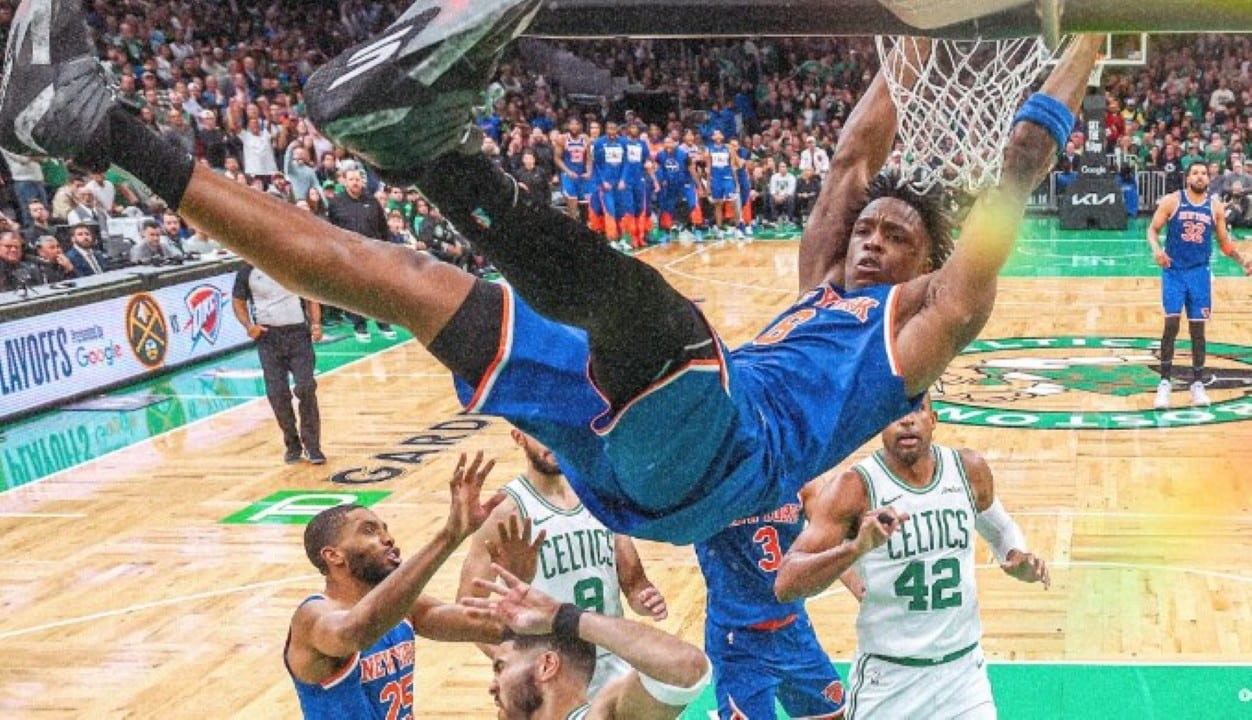
On May 7, 2025, the TD Garden hosts a high-stakes Game 2 as the Boston Celtics take on the New York Knicks in the second round of the NBA playoffs. Following a stunning collapse in Game 1, where they squandered a 20-point lead and fell in overtime, the Celtics are determined to even the series. The game, airing on TNT and streaming on Max, tips off at 7:00 p.m. ET. The intense rivalry and physical play have made this matchup a focal point for basketball fans.
The Knicks, powered by Jalen Brunson and OG Anunoby’s 29-point performances in Game 1, pulled off a remarkable comeback. The Celtics, reigning NBA champions, aim to reverse a troubling trend, as home teams are 0-5 in the second round of the 2025 playoffs. Boston’s inefficiency from three-point range, hitting just 25% (15 of 60) in Game 1, remains a critical issue.
Betting odds reflect the anticipation of a competitive game. The Celtics are favored with a -10.5 point spread, and the over/under is set at 212 points. The TD Garden crowd is expected to create a hostile environment for the Knicks.
- Jayson Tatum: Celtics’ star, but limited to 4 points in the clutch in Game 1.
- Jalen Brunson: Knicks’ leader with 29 points in Game 1, struggling early in Game 2.
- Physical defense: Both teams face intense contact, disrupting offensive flow.
- Rebounding edge: Celtics dominate the boards, a key factor in Game 2.
Game 1 exposes Celtics’ vulnerabilities
The Celtics dominated early in Game 1, building a 20-point lead. However, their grip slipped in the second half, allowing the Knicks to storm back and win in overtime. Jayson Tatum, the cornerstone of Boston’s offense, struggled in crunch time, converting just 1 of 9 shots in the fourth quarter and overtime. The team’s three-point shooting was historically poor, with a playoff-record 60 attempts but only 15 makes, underscoring a need for better shot selection.
The Knicks seized the moment, driven by Brunson and Anunoby’s combined 58 points. Their defensive intensity and ability to capitalize on Boston’s mistakes secured a rare road victory in the second round, putting New York in the driver’s seat. The win highlighted the Knicks’ resilience and set the stage for a fiercely contested Game 2.
First quarter sets physical tone
Game 2 opened with both teams leaning into physicality. The Celtics took a 24-13 lead by the end of the first quarter, capitalizing on the Knicks’ abysmal 22.2% shooting (4 of 18). Jalen Brunson, a hero in Game 1, struggled, hitting just 1 of 6 shots.
Boston’s defense was relentless, stifling New York’s offensive options. A three-point attempt by OG Anunoby was waved off after a video review confirmed it came after the shot clock expired, illustrating the tight margins. The quarter was marked by frequent fouls and a lack of offensive rhythm, with both teams battling for every possession.
- Jaylen Brown: 16 points, 6 rebounds, 2 steals in the first half.
- Derrick White: 14 points, including 3 three-pointers, in the first half.
- Foul advantage: Celtics drew more free throws, a critical edge.
Knicks mount second-quarter comeback
The Knicks found their footing in the second quarter, led by Karl-Anthony Towns. Matched up against Al Horford, Towns scored 8 straight points, including two and-one plays and a driving layup, sparking a surge. New York closed the half with an 11-3 run, trimming Boston’s lead to 50-41 at halftime.
Despite the rally, the Knicks’ offense remained inefficient, scoring just 56.5 points per 100 possessions in the first quarter—their lowest-scoring playoff opening quarter since 2003. Boston’s dominance on the boards and ability to draw fouls kept them in control, even as their three-point shooting (5 for 21) continued to falter.
Standout performers in the first half
Jaylen Brown led the Celtics in the first half with 16 points, 6 rebounds, 2 steals, and an assist in 18 minutes. His all-around play shone in moments like a steal followed by a three-pointer. Derrick White also made his mark, contributing 14 points, 4 rebounds, 2 assists, and 2 blocks, including a transition three that energized the crowd.
For the Knicks, Towns was the bright spot, but Jalen Brunson managed just 2 points on 1-for-7 shooting. The Celtics’ physical defense, particularly on Brunson and Tatum, forced both stars into inefficient shots, setting a gritty tone for the game.
- Brown vs. Hart: Brown outplayed Josh Hart, including an and-one layup.
- Towns vs. Horford: Towns dominated the paint, but Horford held firm defensively.
- White’s spark: Transition threes and blocks highlighted his impact.
- Physical play: Constant contact disrupted mid-range shots for both teams.
Kristaps Porzingis raises concerns
Kristaps Porzingis, who left Game 1 due to an undisclosed illness, returned as a reserve in Game 2. However, his six-minute stint in the first half was lackluster, raising questions about his health. The center struggled to make an impact offensively or defensively, leaving the Celtics reliant on Al Horford and others in the paint.
Porzingis’ limited contribution could strain Boston’s rotation, especially against a player like Towns, who has exploited mismatches in the post. The coaching staff will need to monitor his minutes closely in the second half.
Historic rivalry adds weight
The Celtics and Knicks share a storied rivalry dating back to the NBA’s early days. While playoff meetings have been less frequent in recent years, their matchups always carry intensity. In 2013, Boston eliminated New York in the first round, but the Knicks gained the upper hand in regular-season games last year.
Game 2 in 2025 adds another chapter, with both teams vying for supremacy. As defending champions, the Celtics face pressure to avoid falling into a 2-0 hole at home, while the Knicks look to build on their surprising playoff run.
Tactical keys to the game
Boston’s game plan in Game 2 centers on improving three-point efficiency and maintaining their rebounding edge. The team’s 5-for-21 mark from deep in the first half highlights the need for better shot selection. Defensively, the Celtics are focused on containing Brunson, using quick switches to disrupt his drives.
The Knicks rely on physicality to wear down Boston. Forcing turnovers and capitalizing on fast breaks, where players like Anunoby and Hart excel, is a priority. Towns’ presence in the paint, particularly in pick-and-rolls with Brunson, remains a cornerstone of their offense.
- Celtics’ defense: Quick switches and pressure on Brunson.
- Knicks’ offense: Post-up plays with Towns in the paint.
- Rebounding battle: Both teams fight for second-chance points.
- Fast breaks: Knicks aim to exploit Boston’s miscues in transition.
Numbers shaping the matchup
First-half stats underscore the defensive battle. The Celtics’ rebounding dominance and ability to draw fouls offset their poor three-point shooting. The Knicks, with a 36.6% field-goal percentage, struggled to find offensive rhythm.
The 212-point over/under suggests a game with moderate scoring, but the physicality could keep the total low. The -10.5 spread for Boston reflects confidence in their home-court advantage, though the Knicks’ second-quarter push shows the series is far from decided.
TD Garden crowd fuels intensity
The TD Garden, with a capacity of over 19,000, creates a daunting atmosphere. The passionate Celtics fanbase, stung by the Game 1 loss, has rallied behind the team, amplifying the pressure on the Knicks. The crowd’s energy could influence foul calls or substitution decisions.
New York, accustomed to the raucous Madison Square Garden, is no stranger to hostile environments. Veterans like Brunson and Anunoby, with playoff experience, are likely to stay composed, but the crowd’s intensity may test their focus in critical moments.
Supporting cast steps up
Beyond the stars, role players have been pivotal. For Boston, Derrick White’s versatility and Al Horford’s steady defense against Towns have been crucial. Josh Hart brought defensive energy for the Knicks but struggled offensively against Brown.
Boston’s depth, with contributors like Sam Hauser and Payton Pritchard, provides flexibility against New York’s physical style. The Knicks rely on players like Isaiah Hartenstein to bolster the frontcourt and support Towns’ efforts in the paint.
- Derrick White: 14 points, 2 blocks, and transition scoring.
- Josh Hart: Defensive hustle but limited offensive output.
- Al Horford: Anchors the paint against Towns’ dominance.
- Hartenstein: Adds depth to the Knicks’ frontcourt.
Paint battle takes center stage
The matchup between Towns and Horford has been a focal point. Towns’ post-up skills created mismatches, while Horford’s positioning and rebounding kept Boston competitive. Porzingis’ lackluster performance put extra pressure on Horford, who, at 38, remains a linchpin for the Celtics.
New York aims to keep Towns as the offensive hub, especially in pick-and-rolls with Brunson. Boston’s ability to disrupt these plays will be critical to maintaining their lead in the second half.
