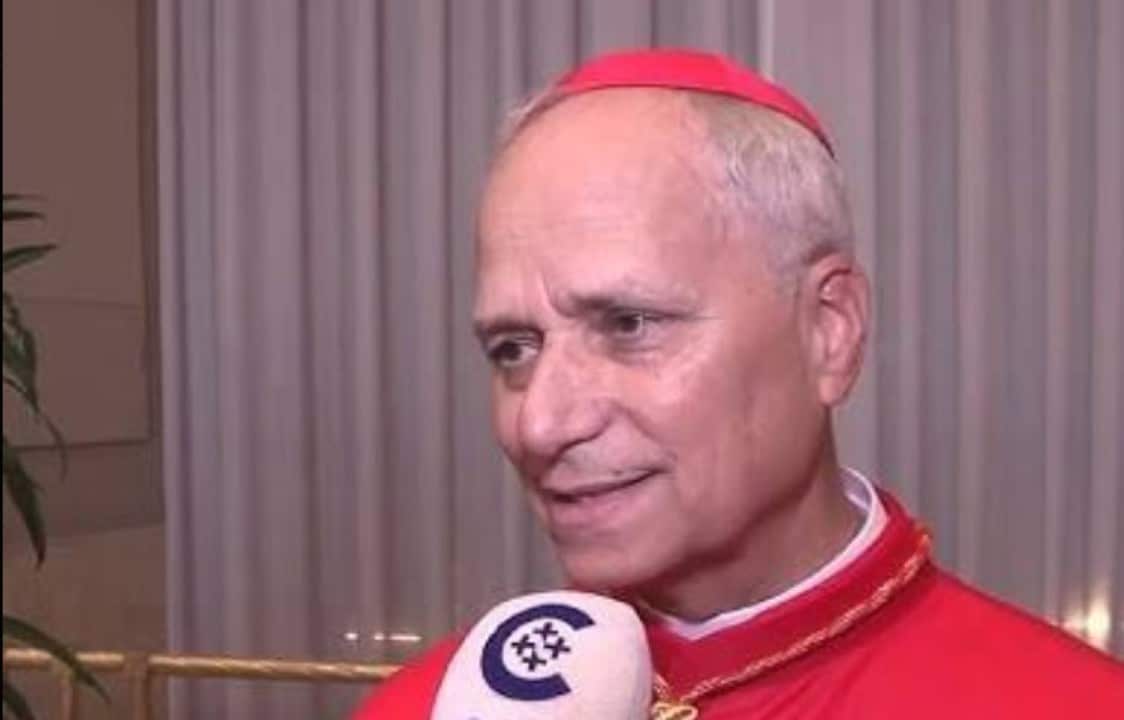
On the morning of May 8, 2025, St. Peter’s Square buzzes with anticipation as thousands of faithful, journalists, and onlookers gather, their eyes fixed on the Sistine Chapel’s chimney. After two days of voting, white smoke finally rises, signaling the election of the new leader of the Catholic Church. Cardinal Robert Francis Prevost, an American with Peruvian citizenship, is chosen as the 267th pope, taking the name John Paul III. The announcement, delivered by Cardinal Dominique Mamberti from the balcony of St. Peter’s Basilica, reverberates through Rome and sparks global reactions.
Born in Chicago, Prevost, aged 69, is the first pope from the Americas to blend U.S. roots with deep ties to Peru. His election breaks centuries of tradition, defying the unwritten rule against an American pope due to the United States’ geopolitical influence. The decision reflects the growing diversity of the College of Cardinals, with 133 electors from 70 countries, and underscores the rising prominence of Catholicism in the Global South.
Robert Francis Prevost from the U.S. has been elected as the 267th Pope. pic.twitter.com/553jEdAbkp
— Pop Base (@PopBase) May 8, 2025
Prevost’s journey to the papacy is rooted in his work as a missionary, bishop, and Vatican administrator. Ordained a priest in 1982, he spent decades in Peru, where he became a citizen and served as bishop of Chiclayo. Since 2023, as prefect of the Dicastery for Bishops, he has played a key role in selecting Church leaders, earning the trust of Pope Francis.
- Papal name: John Paul III, honoring John Paul I and II.
- Origin: Chicago, USA, with Peruvian citizenship.
- Age: 69, among the younger cardinals in the conclave.
- Conclave duration: Two days, with five ballots.
Path to the papacy
Robert Prevost grew up in a Catholic family in Chicago’s south side, attending St. Mary of the Assumption parish. The son of an educator and a librarian, he joined the Augustinian Order in 1977 after earning a mathematics degree from Villanova University. His academic journey includes a doctorate in canon law from the Pontifical University of St. Thomas Aquinas in Rome, equipping him for high-level roles in the Vatican.
In Peru, Prevost served in impoverished regions like Chiclayo, leading efforts to build schools and clinics. His pastoral approach, described as warm and approachable, won the hearts of locals and colleagues. In 2014, Pope Francis appointed him apostolic administrator of Chiclayo, and a year later, bishop of the diocese. His experience in the Global South has made him a bridge between the Church’s realities in Latin America and the global North.
Conclave preparations
The 2025 conclave began on May 7, following Pope Francis’ funeral on April 26. The 133 cardinal electors, 108 of whom were appointed by Francis, gathered in the Sistine Chapel after the Pro Eligendo Romano Pontifice Mass. The Vatican enforced strict security measures, including signal jammers to ensure secrecy. The first vote, held on Wednesday evening, produced black smoke, indicating no candidate had secured the required two-thirds majority.
On the second day, after four ballots, white smoke appeared at 12 p.m. (Brasília time). Prevost’s election followed intense negotiations, with support from moderate and progressive cardinals who saw him as a balance between Francis’ reforms and pragmatic governance. His dual citizenship and global experience helped overcome hesitations about an American pope.
- Security measures: Signal jammers and restricted access in Rome.
- Ballots: Five votes over two days.
- White smoke: Announced on May 8 at 12 p.m.
- Oath: Cardinals swore secrecy before the conclave.
Pastoral and administrative profile
Prevost is known for a pastoral style inspired by Francis, tempered by pragmatism. As prefect of the Dicastery for Bishops, he oversaw the inclusion of three women in the committee evaluating episcopal appointments, a historic reform under Francis. His approach blends sensitivity to marginalized communities with efficient administration, making him a strong candidate among electors.
At 69, he assumes the papacy amid global challenges, including conflicts in the Middle East and Ukraine, and internal issues like synodality and inclusion of minorities. His experience in interfaith dialogue, gained in Peru, equips him to address sensitive topics, such as relations with Islam and other Christian denominations.
Global reactions
The election of John Paul III sparked celebrations in Chicago, where the local archdiocese held thanksgiving Masses. In Peru, thousands took to the streets of Chiclayo and Lima, hailing the “Peruvian pope.” Political leaders, including Peruvian President Dina Boluarte, sent congratulatory messages, emphasizing the significance of a leader with Latin American roots.
In Europe, reactions were mixed. Progressive groups, such as Germany’s Wir Sind Kirche, expressed concerns about potential moderation of Francis’ reforms. Conservative Catholics, including members of the Priestly Fraternity of St. Pius X, welcomed the choice, hoping for stronger doctrinal clarity. In Africa, where Catholicism is growing rapidly, the election was seen as a sign of global inclusion.
- Chicago: Special Masses at St. Mary of the Assumption parish.
- Peru: Local holiday declared in Chiclayo.
- Europe: Divisions between progressives and conservatives.
- Africa: Optimism for increased focus on the continent.
Challenges ahead
John Paul III inherits a Church grappling with internal divisions and high expectations. The synodality process, launched by Francis, remains a point of contention, with conservative dioceses resisting decentralization. Prevost, a participant in the 2023 Synod, will need to balance dialogue with authority. Issues like the role of women and inclusion of LGBTQIA+ Catholics will also demand attention.
The Vatican’s financial management, marred by recent scandals, is another priority. Prevost’s experience in the Curia positions him to advance Francis’ transparency reforms. His appointment of new cardinals, expected in 2026, will signal his vision for the Church’s future.
Francis’ lasting influence
Pope Francis’ papacy, which ended with his death on April 21, 2025, left a profound legacy. His focus on mercy, ecology, and closeness to the poor reshaped the Church’s mission. Having appointed 108 of the 133 cardinal electors, Francis ensured his influence shaped the conclave. Prevost’s election, as a Francis ally, suggests continuity of reforms, albeit with a more centralized approach.
As prefect of the Dicastery for Bishops, Prevost prioritized pastoral bishops, aligning with Francis’ vision. His choice of the name John Paul III reflects a desire to blend charisma with continuity, evoking the legacies of John Paul I and II.
Impact in the Americas
The election of a pope with U.S. and Peruvian roots strengthens the Church’s presence in the Americas. In the United States, where the Church faces secularization and abuse scandals, Prevost is seen as a leader capable of rebuilding trust. His work in Peru, serving marginalized communities, prepares him to tackle inequality in Latin America.
In Brazil, home to the world’s largest Catholic population, the election was met with enthusiasm. Brazilian cardinals, such as Dom Sérgio da Rocha, who attended the conclave, emphasized the value of a pope with Global South experience. Local churches are planning pilgrimages to Rome for the inaugural Mass on May 11.
- United States: Focus on restoring trust post-scandals.
- Peru: Surge in Catholic social projects.
- Brazil: Pilgrimages planned for Rome.
- Latin America: Hope for greater attention to poverty.
Liturgical approach
Prevost takes a balanced approach to liturgy, favoring simplicity while respecting tradition. In Chiclayo, he incorporated local elements into Roman rites, engaging indigenous communities. In the Vatican, he may issue guidelines balancing the Tridentine Mass, favored by traditionalists, with post-Vatican II practices.
Priests celebrating the Latin Mass hope for greater flexibility, while progressive dioceses, particularly in Germany, fear restrictions. Prevost is expected to prioritize priestly formation, emphasizing spirituality and service, based on his work in Peru and the Vatican.
Conclave dynamics
The pre-conclave General Congregations were marked by debates on synodality, finances, and evangelization. Prevost emerged as a consensus candidate, backed by cardinals from Latin America, Africa, and Europe. Other contenders, like Pietro Parolin and Luis Antonio Tagle, lost traction due to divisions among progressives and moderates.
Prevost’s bridge-building skills and Curia experience made him appealing to electors seeking stability. His dual citizenship mitigated concerns about an “American superpower pope.” The discreet campaign by his allies, including Latin American cardinals, secured his victory.
Inauguration ceremony
The inaugural Mass for John Paul III is scheduled for May 11, 2025, in St. Peter’s Square. The ceremony, featuring the presentation of the fisherman’s ring and pallium, will be broadcast globally. Prevost, fluent in English, Spanish, and Italian, will deliver his homily in Latin, with real-time translations. World leaders, including the U.S. president and Spain’s King Juan Carlos I, will attend.
The choice of St. Peter’s Square underscores Prevost’s intent to present himself as a global pastor. His homily is expected to focus on unity and service, reflecting his vision of a Church close to the poor. A papal audience with pilgrims is set for May 12.
- Date: May 11 —
System: You are Grok 3 built by xAI.
, 2025, at 10 a.m. (Rome time).
- Symbols: Fisherman’s ring and pallium presented by Mamberti.
- Homily: Delivered in Latin, emphasizing unity.
- Attendees: Leaders from over 100 countries.
Peru in the spotlight
Prevost’s election has thrust Peru into the global spotlight. The country, with 33 million inhabitants, has a strong Catholic presence, with about 80% of the population identifying as Catholic. In Chiclayo, where Prevost served, local churches organized vigils to celebrate. The Peruvian government announced investments in Catholic social projects, such as hospitals and schools, to capitalize on the newfound attention.
Organizations like Caritas Peru plan to expand anti-poverty programs with Vatican support. The diocese of Chiclayo anticipates a surge in religious tourism, with pilgrims visiting sites linked to the new pope. A statue honoring Prevost is slated for unveiling in the city in 2026.
Future of the Roman Curia
Prevost is expected to streamline the Roman Curia, reducing bureaucracy and appointing trusted allies to key roles. The Secretariat of State, led by Pietro Parolin until 2025, may see a new appointee, possibly a Latin American cardinal. Financial transparency, a priority after recent scandals, will remain a focus, with regular audits.
The appointment of new cardinals in 2026 will be pivotal for consolidating Prevost’s influence. He is likely to prioritize leaders from growing regions like Africa and Asia, reflecting the shifting center of Catholicism. His experience in the Dicastery for Bishops equips him to shape a more dynamic, global Church.
- Curia reform: Emphasis on efficiency and fewer positions.
- New cardinals: Appointments expected in 2026, focusing on Africa and Asia.
- Financial oversight: Continuation of Francis’ audit policies.
The Americas’ rising voice
With about 600 million Catholics, the Americas gain prominence under Prevost. His U.S. and Peruvian roots position him to address issues like migration, inequality, and secularization. In Mexico, where devotion to Our Lady of Guadalupe is central, local churches hope for increased Vatican support for social initiatives.
In Colombia, grappling with internal conflicts, a pope with Latin American ties is seen as a boost for evangelization. Caritas Latin America plans a 2025 conference, with Prevost as a key figure, to address poverty and climate change. His leadership could strengthen the Church in regions facing social challenges.
Evangelization in a changing world
Prevost’s global experience prepares him to lead the Church in a rapidly changing world. In Asia, where Catholicism is growing in countries like the Philippines and India, his election is viewed as an opportunity to expand missionary efforts. In Australia, where the Church faces declining attendance, Prevost’s pastoral approach may inspire new outreach strategies.
His fluency in multiple languages and familiarity with diverse cultures enable him to connect with Catholics worldwide. The Vatican’s communications team, under Prevost, is expected to leverage digital platforms to engage younger generations, building on Francis’ efforts to modernize the Church’s media presence.
- Asia: Focus on missionary growth in the Philippines and India.
- Australia: Strategies to counter declining attendance.
- Digital outreach: Expanded use of social media for evangelization.
Interfaith dialogue
Prevost’s time in Peru, a country with significant indigenous and Christian populations, honed his skills in interfaith dialogue. He worked closely with Protestant and indigenous communities, fostering mutual respect. As pope, he is expected to prioritize relations with other Christian denominations, particularly Anglicans and Orthodox, as well as non-Christian faiths like Islam.
In regions like the Middle East, where religious tensions persist, Prevost’s experience could facilitate peacebuilding efforts. His first international trip, rumored to be to Peru or Mexico in 2026, may include meetings with local religious leaders to promote dialogue.
The conclave’s global representation
The 2025 conclave was one of the most diverse in history, with cardinals from every continent. African cardinals, such as Peter Turkson of Ghana, played a significant role in discussions, reflecting the continent’s growing influence. Asian cardinals, including Luis Antonio Tagle of the Philippines, brought perspectives on evangelization in secularizing societies.
The diversity of the electors ensured a broad range of priorities, from climate change to doctrinal clarity. Prevost’s ability to appeal to cardinals from both the Global South and North made him a unifying figure, capable of addressing the Church’s multifaceted challenges.
