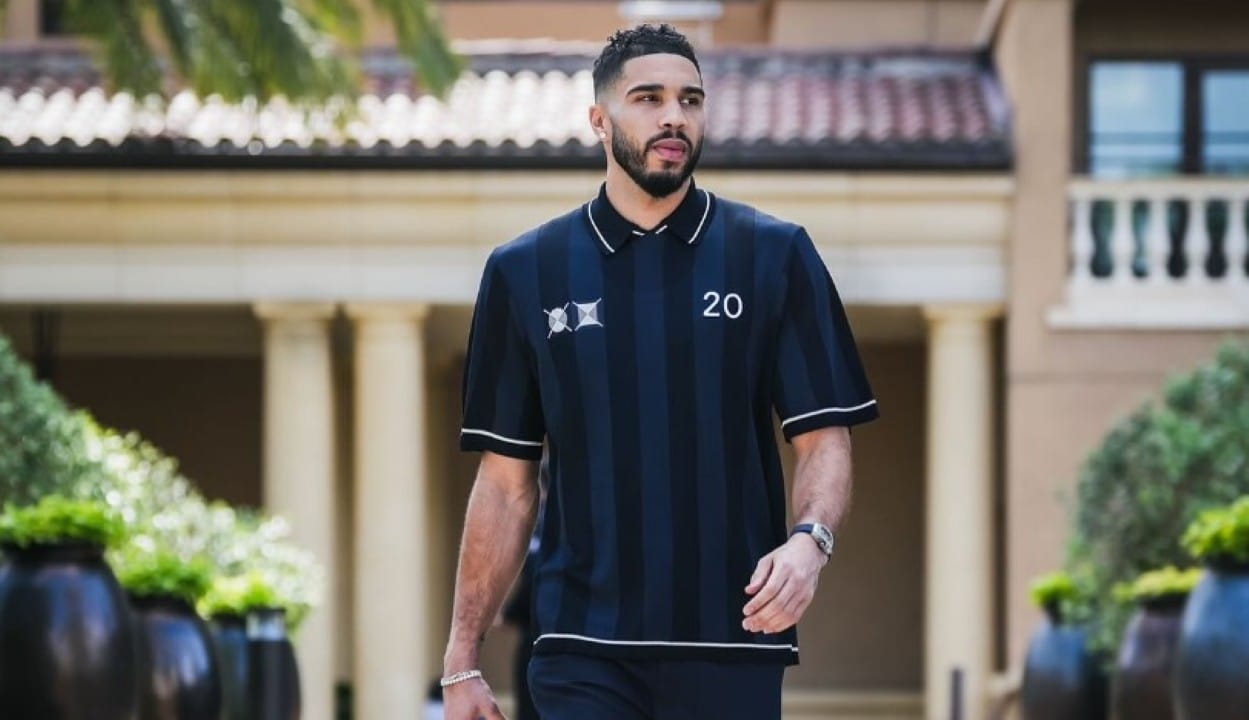
Jayson Tatum, the cornerstone of the Boston Celtics’ championship hopes, suffered a torn Achilles tendon during the 2025 playoffs, an injury that reverberated across the NBA. At just 27, the All-NBA forward faces a grueling recovery, with a return not expected until October 2026. The Celtics, once favored to dominate the Eastern Conference, now confront a future clouded by roster changes and financial constraints. This seismic event not only disrupts Boston’s trajectory but also opens opportunities for rivals to reshape the league’s hierarchy.
The injury occurred during a pivotal second-round series against the New York Knicks, where Boston trailed 3-1. Tatum’s absence effectively ended their postseason run, shifting betting odds dramatically from -900 favorites to +400 underdogs. The setback comes at a critical juncture for a team that secured a championship in 2024 and appeared poised for sustained contention.
For Tatum, the injury poses questions about his long-term performance and role. His youth offers hope, but historical precedents—like Kevin Durant and Dominique Wilkins—suggest a shift in playing style may be necessary.
- Immediate consequences:
- Tatum likely misses the entire 2025-26 season.
- Boston’s championship aspirations for 2026 are severely compromised.
- The Eastern Conference becomes a battleground for new contenders.
The NBA now faces a reshaped competitive landscape, with teams like the Knicks and Indiana eyeing a rare chance to seize control.
Nature of the injury
Tatum’s torn Achilles, sustained in May 2025, ranks among the most severe injuries an NBA player can endure. Medical experts note that recovery typically spans 12 to 18 months, with a full return to pre-injury form rare. Unlike older players like Kobe Bryant, who was 34 when he suffered a similar injury, Tatum’s age—27—offers a slight advantage. His physical prime should aid rehabilitation, but the injury’s impact on his explosive athleticism remains uncertain.
Only a few players have returned to elite status post-Achilles tear. Kevin Durant, injured at 30 in 2019, missed 18 months before resuming his career with the Brooklyn Nets. Dominique Wilkins, hurt at 32, adapted by relying more on three-point shooting. Tatum, known for his versatility, may need to adjust his game, potentially shifting from rim attacks to mid-range or post play.
- Recovery factors:
- Youth and conditioning improve Tatum’s prognosis.
- Access to advanced medical care supports rehabilitation.
- Psychological resilience will be critical during recovery.
- Historical data shows varied outcomes for Achilles injuries.
The Celtics’ medical staff, known for cautious approaches, will likely prioritize long-term health over a rushed return, delaying Tatum’s comeback to the 2026-27 season.
Tatum’s evolving role
Before the injury, Tatum was a top-five NBA talent, averaging 30.1 points, 8.8 rebounds, and 4.9 assists in the 2024-25 season. His ability to score, defend multiple positions, and handle the ball made him Boston’s offensive linchpin. However, Achilles injuries often reduce lateral quickness and explosiveness, qualities central to Tatum’s game. Players like Klay Thompson, who lost defensive agility after his 2019 Achilles tear, illustrate the potential challenges.
Tatum’s shot selection may shift toward mid-range jumpers, a style Durant adopted post-injury. His 38.6% three-point shooting in 2024-25 could become a larger focus, though his career 37.3% from deep suggests limitations as an elite shooter. Defensively, Tatum’s ability to guard centers may persist, but switching onto quicker guards could become problematic.
The Celtics may reposition Tatum as a power forward, leveraging his 6-foot-8 frame and post skills. This shift could preserve his offensive impact while reducing defensive demands. His pre-injury role as a quasi-point guard, handling 20% of Boston’s possessions, may also diminish, requiring new roster adjustments.
Celtics’ immediate challenges
Boston’s 2024 championship roster was built around Tatum and Jaylen Brown, with a supporting cast of Jrue Holiday, Kristaps Porziņģis, and Al Horford. Tatum’s absence forces a strategic overhaul. The team’s 3-1 deficit against the Knicks in May 2025 all but ended their playoff hopes, with oddsmakers adjusting Boston’s Finals odds to +1500. The 2025-26 season now looms as a developmental year, with no realistic championship path.
Financially, the Celtics face pressure. Their projected $230.5 million payroll for 2025-26, coupled with $262.5 million in tax penalties, places them above the NBA’s second apron. Avoiding the repeater tax, triggered after three tax-paying seasons in four years, is a priority. Ducking the tax entirely would require shedding $42.7 million in salary, a daunting task without trading key players.
- Financial constraints:
- Second-apron restrictions limit roster flexibility.
- Repeater tax penalties escalate in 2025-26.
- Trading high-salary veterans may be necessary.
- Young players like Payton Pritchard could see expanded roles.
The Celtics must balance short-term competitiveness with long-term planning, evaluating which players fit Tatum’s eventual return.
Roster decisions loom large
Al Horford, at 38, faces an uncertain future. His $9.5 million contract expires in 2025, and Boston’s financial constraints make re-signing him unlikely. Horford’s departure would mark the end of a stabilizing presence, having played alongside Tatum since 2017. His exit could free cap space but weaken Boston’s frontcourt depth.
Jrue Holiday, 34, signed a four-year, $135 million extension in 2024, but his declining performance and high salary make him a trade candidate. Teams like the Phoenix Suns, seeking a defensive-minded guard, or the Dallas Mavericks, needing backcourt help amid Kyrie Irving’s ACL recovery, could pursue Holiday. A trade might yield draft picks or a younger player, easing Boston’s tax burden.
Kristaps Porziņģis, with a $30.7 million expiring contract in 2025-26, is another trade possibility. His injury history—missing 25 games in 2024-25—makes him unreliable for a team needing stability. The Brooklyn Nets, with cap space, could absorb Porziņģis’ deal, though they may demand draft compensation.
Jaylen Brown, on a $315 million supermax deal, is less likely to be moved. His status as an All-Star and Tatum’s co-star makes him valuable insurance, though a blockbuster trade for a top draft pick or young star, like Memphis’ Desmond Bane, could be considered.
Young players step into spotlight
Tatum’s absence creates opportunities for Boston’s younger talent. Payton Pritchard, the 2024-25 Sixth Man of the Year, is poised to start at 27. His $6.7 million contract through 2027 is a bargain, and his 44.1% three-point shooting adds offensive punch. Pritchard’s playmaking, averaging 4.6 assists in 22.3 minutes, will be tested in a larger role.
Rookies Baylor Scheierman and Jordan Walsh, along with second-year guard JD Davison, are expected to see increased minutes. Scheierman, a 2024 first-round pick, brings shooting and size at 6-foot-6, while Walsh offers defensive versatility. Davison’s speed could spark Boston’s second unit. These players’ development will shape the Celtics’ roster when Tatum returns.
The focus on youth aligns with Boston’s financial strategy. By prioritizing cost-controlled contracts, the Celtics can avoid the second apron and preserve draft assets, including their 2032 first-round pick, currently frozen due to luxury tax rules.
Eastern Conference power shift
Tatum’s injury opens a window for Eastern Conference rivals. The New York Knicks, bolstered by 2024 additions Mikal Bridges and Karl-An personally Towns, are favorites to reach the 2025 Finals, with odds at -200. The Indiana Pacers, led by Tyrese Haliburton, also face a clear path, having pushed Boston in prior playoffs. Both teams aim to establish dominance in 2025-26, with young cores built for sustained contention.
The Philadelphia 76ers, holding the No. 3 pick in the 2025 draft, may accelerate their timeline. Trading the pick for a veteran like Cleveland’s Darius Garland could pair him with Joel Embiid, creating a formidable duo. The Orlando Magic, with Paolo Banchero and Franz Wagner, could pursue a scorer like Zach LaVine to capitalize on Boston’s absence.
Cleveland, despite a 64-win 2024-25 season, faces uncertainty after trailing Indiana 3-1 in the playoffs. Retaining Donovan Mitchell and Evan Mobley while navigating second-apron limits will test their front office. The Cavaliers may opt to keep their core intact, betting on a weaker East.
- Emerging contenders:
- Knicks leverage Bridges and Towns for a Finals run.
- Pacers rely on Haliburton’s playmaking to seize control.
- 76ers consider trading draft capital for immediate help.
- Magic and Cavaliers weigh aggressive roster moves.
The Eastern Conference, once anchored by Boston, is now a battleground for supremacy.
Western Conference dominance grows
The Western Conference, already stacked with talent, benefits indirectly from Tatum’s injury. The 2025 draft lottery saw the San Antonio Spurs leap to No. 2, positioning them to pursue Giannis Antetokounmpo, who reportedly seeks a trade from Milwaukee. The Dallas Mavericks, with the No. 1 pick, selected Cooper Flagg, pairing him with Luka Dončić. These moves strengthen an already formidable West, home to stars like Nikola Jokić, Shai Gilgeous-Alexander, and Anthony Edwards.
Boston’s absence as the East’s counterbalance amplifies this imbalance. The Oklahoma City Thunder, with a young core led by Gilgeous-Alexander, are projected as 2026 title favorites at +350 odds. The Denver Nuggets, with Jokić’s MVP-caliber play, remain a playoff staple. The West’s depth ensures fierce competition, while the East scrambles to fill Boston’s void.
Tatum’s recovery timeline
Tatum’s rehabilitation began immediately after surgery in May 2025. Typical Achilles recovery involves six months of immobilization and physical therapy, followed by six months of strength training and on-court work. Durant’s 18-month absence, from June 2019 to December 2020, is a likely benchmark. Tatum’s return is targeted for the 2026-27 season opener, though setbacks could delay this.
The Celtics will monitor Tatum’s progress closely, with input from specialists at Massachusetts General Hospital. His mental health, often overlooked in recoveries, will be supported through team resources. Tatum’s work ethic, evident in his 74-game 2024-25 season, suggests a disciplined approach to rehab.
- Recovery milestones:
- Surgery and initial healing: May to August 2025.
- Physical therapy and mobility: September 2025 to February 2026.
- Strength training and light practice: March to July 2026.
- Full clearance expected: October 2026.
Boston’s cautious approach aims to ensure Tatum’s long-term health, avoiding risks like Wes Matthews’ rushed 2015 return, which diminished his career.
Fan and league reactions
Tatum’s injury sparked widespread reactions across the NBA community. Fans on X expressed shock, with one post noting, “Tatum’s Achilles tear changes everything for Boston. The East is wide open now.” Another fan praised his resilience, writing, “Jayson’s young. He’ll be back stronger, like KD.” The Celtics’ official statement emphasized support for Tatum, promising a full recovery.
Players like LeBron James and Giannis Antetokounmpo sent public messages of encouragement, with James tweeting, “Stay strong, JT. The game needs you.” NBA Commissioner Adam Silver addressed the injury’s significance, noting its impact on league parity. The outpouring underscored Tatum’s status as a beloved figure and the injury’s far-reaching consequences.
Boston’s long-term strategy
The Celtics’ front office, led by Brad Stevens, faces a delicate balancing act. Trading veterans like Holiday or Porziņģis could yield assets to rebuild around Tatum and Brown. Acquiring a traditional center, such as Utah’s Walker Kessler or Cleveland’s Jarrett Allen, would bolster rim protection, complementing Tatum’s potential shift to power forward. A playmaking guard, like Utah’s Collin Sexton, could ease Tatum’s ball-handling duties post-recovery.
Boston’s draft assets are limited, with their 2032 first-round pick frozen. Prioritizing young talent and cap flexibility will guide decisions. The 2025-26 season will test Stevens’ ability to retool without Tatum, ensuring the roster remains competitive upon his return.
League-wide ripple effects
Tatum’s absence reshapes trade and draft dynamics. The 2025 draft, headlined by Flagg, saw Western teams strengthen, while the East’s contenders eye immediate upgrades. Philadelphia’s No. 3 pick could fetch a star like Portland’s Anfernee Simons, while Memphis may dangle Bane to pair with Ja Morant. The trade market for centers, including Dallas’ Daniel Gafford and Brooklyn’s Nic Claxton, is robust, offering Boston options.
The NBA’s competitive balance, already tilted West, faces further disruption. The East’s uncertainty, with no clear dominant team, contrasts with the West’s star-driven depth. Tatum’s injury, while devastating for Boston, creates a rare moment of flux, with every team reassessing its path to contention.
