BYD, the Chinese electric mobility giant, has taken a bold step by starting distribution of the e7 sedan, a model designed to revolutionize the affordable electric vehicle market. Targeting taxi fleets and ride-hailing services, the car is already in Chinese dealerships as a demonstration unit, sparking curiosity with an estimated price of 100,000 yuan, roughly $14,000. The model blends functional design, advanced technology, and generous dimensions, positioning itself as a practical option for urban mobility.
Although public sales have not yet begun, the e7 is drawing attention for its value-for-money proposition. It joins BYD’s “e” lineup, known for simple and cost-effective vehicles like the e2 hatchback, which is sold in international markets. The sedan, however, raises the bar with a modern interior and features that balance practicality and comfort.

What makes the BYD e7 stand out?
- Competitive pricing at an estimated $14,000, ideal for fleet operators.
- LFP battery, ensuring safety and durability.
- 15.6-inch floating multimedia screen with intuitive interface.
- Spacious dimensions, surpassing the Tesla Model 3 in length.
With a global market increasingly focused on electrification, the e7 launch reinforces BYD’s strategy to democratize access to electric vehicles. The sedan promises to be a game-changer, especially in cities where demand for sustainable transport is growing exponentially.
Competitive pricing for fleets
The estimated price of 100,000 yuan ($14,000) makes the BYD e7 one of the most affordable electric sedans in the Chinese market. This price point is particularly attractive for ride-hailing companies and taxi services seeking low-maintenance, cost-effective vehicles. Local media suggests the final cost may vary depending on government incentives, which often lower the price of electric cars in China.
Compared to other models in its class, the e7 offers a unique proposition. While the Tesla Model 3 starts at 231,000 yuan (about $32,000), the e7 delivers functionality at a fraction of that cost. BYD has used this strategy with the e2 hatchback, priced at around 89,000 yuan ($12,000), but the sedan adds space and versatility for fleet operators.
Official pricing details remain undisclosed, keeping the market on edge. Some dealerships indicate that packages with add-ons, such as a sunroof or advanced driver assistance systems, could increase the cost by up to 10,000 yuan ($1,400). Even so, the e7 remains competitive, especially for businesses prioritizing long-term savings.
Inspired and functional design
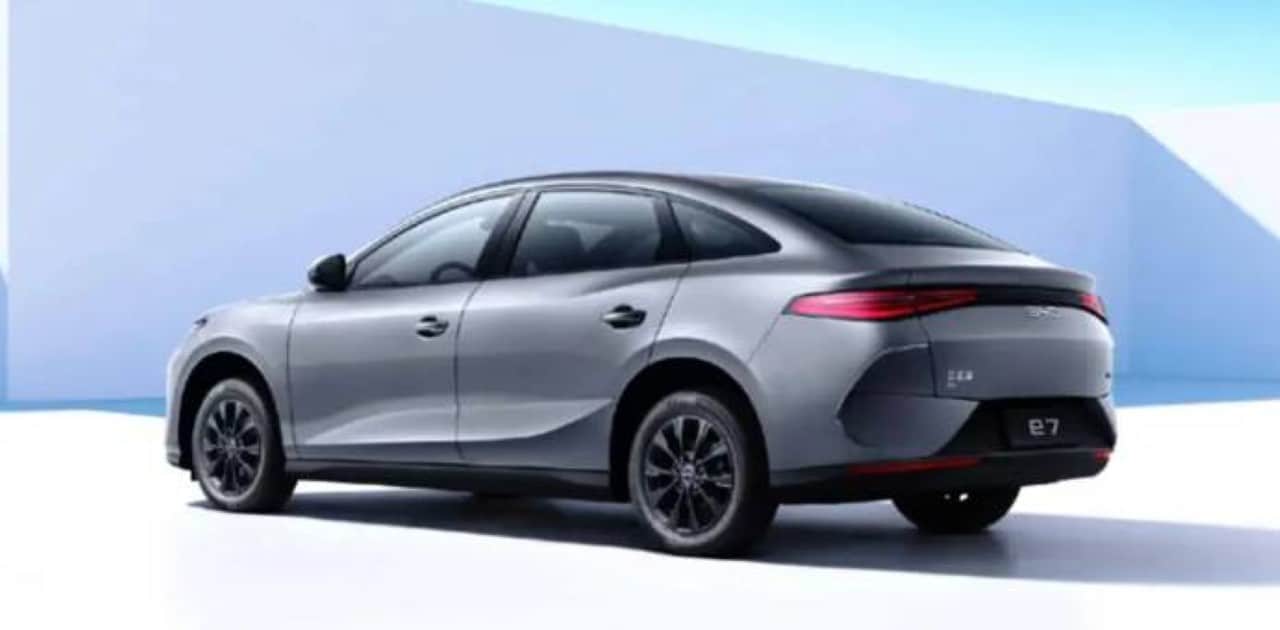
The e7’s aesthetics strike a balance between simplicity and sophistication. Its front end, inspired by BYD’s luxury Denza Z9, features sleek headlights and a minimalist air intake, giving it a sporty look. The 16-inch wheels and small rear spoiler enhance the design, while taillights connected by a darkened strip add modernity.
Measuring 4,780 mm in length, 1,900 mm in width, and with a 2,820 mm wheelbase, the e7 outSizes the Tesla Model 3, offering ample interior space. Its weight, ranging from 1,499 kg to 1,566 kg, reflects the use of lightweight materials paired with a robust LFP battery. The charging port, located on the right front fender, ensures easy access at urban charging stations.
The functional design also includes:
- 360° camera for safe urban maneuvering.
- Sunroof, available in select versions.
- Four-wheel disc brakes for enhanced safety.
- Conventional door handles to reduce production costs.
Comfort-focused interior
The e7’s cabin reflects BYD’s recent interior evolution, emphasizing technology and practicality. The 15.6-inch floating multimedia screen is the centerpiece, offering connectivity and intuitive controls, as seen in models like the BYD Dolphin and Seal. A compact digital instrument cluster, integrated behind the three-spoke steering wheel, keeps the driver informed without distractions.
The seats, upholstered in black synthetic material, reinforce the functional approach, while the rear offers comfortable space for three passengers. The lack of a rear armrest is offset by amenities like air vents, USB ports, and LED reading lights. The electronic gear selector, mounted on the steering column, frees up space in the center console, which houses a phone charging area and physical buttons.
For families and fleet operators, the e7 includes ISOFIX anchors for child seats, ensuring safety. The interior is optimized for long shifts, with ergonomics tailored for drivers spending hours behind the wheel. The center console, though simple, provides practicality with outlets and storage for personal items.
Advanced onboard technology
BYD equipped the e7 with technologies that boost its appeal in the entry-level segment. The LFP battery, known for safety and longevity, is a strategic choice, though its capacity and range remain undisclosed. Experts estimate the sedan could offer 300 to 400 km of range, sufficient for urban use and short trips.
The top speed of 150 km/h suits the vehicle’s purpose, prioritizing efficiency over sporty performance. The multimedia system supports over-the-air updates, enabling continuous improvements. Other features include:
- Smartphone integration via Apple CarPlay and Android Auto.
- Built-in navigation system optimized for urban routes.
- Voice controls for easier operation while driving.
- Parking sensors complementing the 360° camera.
Focus on fleets and urban transport
The BYD e7 was designed with fleet operators in mind. In China, where cities like Beijing and Shanghai face high demand for electric taxis, the sedan fills a market gap. The LFP battery’s durability and low maintenance costs make the e7 ideal for intensive operations, covering thousands of kilometers monthly.
Ride-hailing companies like Didi Chuxing have shown interest in the model, according to local media. BYD has a track record of partnering with fleet operators, supplying vehicles like the e6 and D1 for taxi services across Chinese cities. The e7 builds on this strategy, offering more interior space and updated technology.
Opting for a sedan over a hatchback or SUV reflects the preference of many drivers for vehicles with spacious trunks and easy passenger access. The e7 also benefits from China’s tax incentives, which lower acquisition costs for businesses, encouraging the adoption of electric fleets.
Expansion of the “e” lineup
BYD’s “e” lineup, which includes the e2 hatchback, gains prominence with the e7’s arrival. This series targets consumers and businesses seeking affordable electric vehicles without compromising technology. The e2 is exported to markets like Mexico and Thailand, where it retails for about $15,000 (R$82,000). The e7 could follow suit if BYD chooses to globalize it.
The sedan complements the brand’s strategy of offering diverse options in the entry-level segment. While the e2 focuses on compact urban vehicles, the e7 caters to those needing space and versatility. BYD has announced plans to expand the “e” lineup with new models, including a potential compact SUV, but the e7 remains the main highlight for now.
Transforming Chinese market
China leads the global electric vehicle market, with over 8 million units sold in 2024, according to the China Association of Automobile Manufacturers. The government’s aggressive incentives, such as subsidies and tax exemptions, drive adoption of models like the e7. Cities like Shenzhen already operate fully electric taxi fleets, and BYD’s sedan arrives at a strategic moment.
The e7 faces competition from models like the Geely Emgrand EV and Chery Arrizo E, which also target fleets with prices below 120,000 yuan ($17,000). BYD’s edge lies in its network of over 3,000 dealerships in China and the reputation of its LFP batteries, which pose lower fire risks compared to traditional lithium-ion batteries.
China’s charging infrastructure further supports the e7. With over 2 million public charging points, including fast chargers that recharge batteries in under 30 minutes, the country facilitates electric fleet operations, especially in densely populated urban areas.
Export potential
While the e7 is currently exclusive to China, BYD has a history of exporting “e” lineup models. The e2 hatchback is sold in Latin America and Southeast Asia, competing with vehicles like the Nissan Leaf. The e7’s export will depend on global demand for affordable electric sedans, a segment still dominated by SUVs.
Markets like India and Brazil, where BYD already operates, could be potential destinations. In Brazil, the brand sells models like the Dolphin and Song Plus, starting at $27,000. A sedan like the e7, priced near $18,000, would be competitive, especially for fleet operators in cities like São Paulo and Rio de Janeiro.
Factors influencing export potential:
- Compliance with safety regulations in each country.
- Battery adjustments for different climates.
- Price competitiveness against local models.
- Charging infrastructure in target markets.
Advances in LFP battery
The e7’s LFP battery reflects BYD’s commitment to a technology that balances safety, durability, and affordability. Unlike lithium-ion batteries, LFP batteries have lower energy density but excel in intensive charge cycles, making them ideal for fleets. BYD is a global leader in LFP battery production, supplying brands like Tesla and Toyota.
While the e7’s battery capacity is undisclosed, comparisons with the e2, which uses a 43.2 kWh battery, suggest the sedan may have 40 to 50 kWh. This would ensure competitive range, especially in urban settings where regenerative braking boosts efficiency.
BYD also invests in modular batteries, simplifying repairs and recycling. This approach lowers maintenance costs, a critical factor for fleet operators managing large vehicle volumes.
Competition in the entry-level segment
The affordable electric sedan market in China is highly competitive. Beyond the Geely Emgrand EV and Chery Arrizo E, brands like Xpeng and NIO have launched models priced near 100,000 yuan. The e7 stands out for its balance of price, space, and technology but must win over fleet operators in a sector dominated by electric SUVs.
BYD leverages its fleet expertise to differentiate the e7. The brand supplies vehicles to over 50 Chinese cities, with models logging millions of kilometers. The LFP battery’s reliability and BYD’s extensive service network are key advantages for the sedan.
Additional differentiators include:
- Lower maintenance costs compared to competitors.
- Versatile design suitable for taxis and private use.
- Extensive dealership network, streamlining sales and support.
- Support for remote updates, extending system longevity.

