The headquarters of the Brazilian Football Confederation (CBF) in Rio de Janeiro hosted a historic moment on Sunday, May 25, 2025. Samir Xaud, a 41-year-old infectious disease specialist and vice-president of the Roraima Football Federation, was elected the new president of the entity, with a term set to last until 2030. The voting, concluded this morning, marked the end of an unexpected electoral process triggered by the ousting of former president Ednaldo Rodrigues due to a judicial decision. The election, conducted with electronic voting machines for the first time in CBF history, featured only one slate, led by Xaud, sparking intense debates within the football community.
Although the vote count was swift, with the victory announcement confirmed minutes after voting ended, the process was not without controversy. The absence of competitors, combined with a boycott by 21 clubs from Series A and B, raised questions about the election’s representativeness. Xaud, who succeeded his father in leading the Roraima federation, entered the election with the support of 25 of the 27 state federations and 10 clubs but faced resistance from parts of Brazilian football.
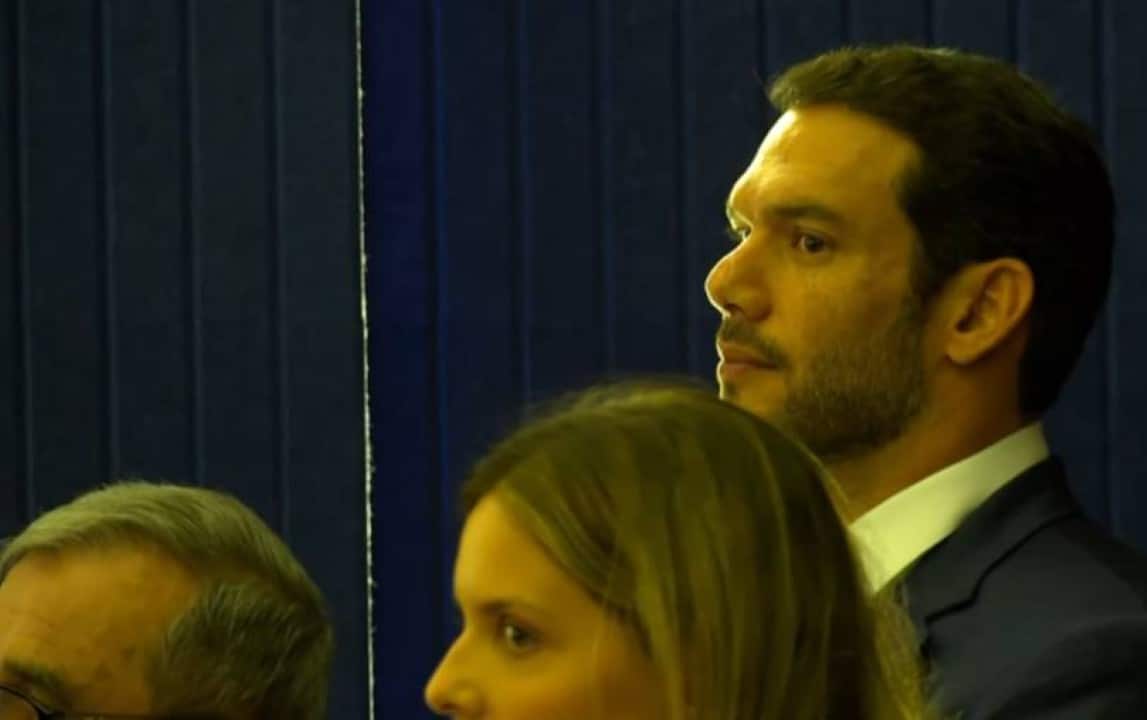
- Single slate: Samir Xaud was the sole candidate after Reinaldo Carneiro Bastos failed to secure the support of eight federations, as required by CBF rules.
- Club boycott: A group of 21 teams announced they would not participate in the vote, though some clubs attended.
- Electronic voting: For the first time, the election used technology to ensure speed and transparency in vote counting.
The new president, taking office at a delicate moment for Brazilian football, promises a management focused on modernization, dialogue with clubs and federations, and strengthening national competitions. The CBF, responsible for organizing the Brazilian Championship and the national team, faces challenges such as professionalizing refereeing and improving stadium safety.
Samir Xaud’s background
Samir Xaud, born in Roraima, was a relatively unknown figure in national football until this moment. Trained in medicine with a specialization in infectious diseases, he balanced his medical career with the vice-presidency of the Roraima Football Federation, an entity led by his father for nearly five decades. Xaud’s rise to the CBF presidency surprised many, particularly due to his roots in a state with little tradition in elite football.
His journey in the local federation began as an extension of his family’s legacy, but he insists his tenure will break with outdated practices. In an official statement, Xaud emphasized his intent to improve the CBF’s resource allocation, promoting transparency and efficiency. Choosing a figure from outside the major football hubs, such as São Paulo and Rio de Janeiro, was seen by some as an attempt to decentralize power within the organization.
- Academic background: Infectious disease specialist with experience in sports health and wellness.
- Family legacy: Succeeded his father in leading the Roraima federation, which had been under family control since the 1970s.
- Initial proposal: Focus on responsible management, open dialogue, and structural modernization.
- Political support: Backed by 25 state federations and clubs like Botafogo and Vasco da Gama.

Despite his reformist rhetoric, Xaud’s election was not unanimous. The lack of competitors, ensured by Reinaldo Carneiro Bastos’ inability to secure enough federation support, drew criticism from clubs seeking an alternative to the dominant slate.
Context of Ednaldo Rodrigues’ removal
Samir Xaud’s election was prompted by the removal of Ednaldo Rodrigues, who had been CBF president since 2022. Rodrigues, the first Black president of the entity, was ousted on May 15, 2025, by a decision from the Rio de Janeiro Court of Justice. The court deemed a deal securing his re-election until 2030 invalid due to suspected forgery in the signature of former president Antonio Carlos Nunes.
The case caused significant backlash, especially since Rodrigues had been re-elected by acclamation in March 2025, with unanimous support from the 27 state federations and Series A and B clubs. His removal, the second in less than two years, brought instability to the CBF, already criticized for issues in managing Brazilian football.
Before leaving office, Rodrigues announced the hiring of Italian coach Carlo Ancelotti to lead the Brazilian national team, a decision that marked his tenure. The transition to Xaud raises questions about the continuity of projects initiated by his predecessor, including preparations for the 2026 World Cup qualifiers.
Clubs’ reactions to the election
Samir Xaud’s election faced resistance. A group of 21 Series A and B clubs, including giants like Flamengo, Fluminense, Internacional, Fortaleza, and São Paulo, announced plans to boycott the election. The dissatisfaction stemmed from the perception that Xaud’s slate represented a continuation of the political practices dominating the CBF for decades.
Despite the boycott, some clubs attended the vote, causing friction within the opposition bloc. Reports suggest pressure from state federations and sponsors influenced certain teams’ decisions, as they feared retaliation in future competitions. The CBF confirmed that vote details would be released after Xaud’s inauguration speech, clarifying which clubs participated.
- Opposing clubs: Flamengo, Fluminense, São Paulo, Internacional, and Fortaleza led the boycott movement.
- Partial participation: Botafogo, Vasco da Gama, and Palmeiras, initially aligned with the opposition, supported Xaud’s slate.
- External pressures: Clubs reported threats from federations and sponsors to ensure attendance.
The divide among clubs reflects the polarization in Brazilian football, with major teams seeking greater influence in CBF decisions. The lack of a competing slate frustrated expectations for renewal within the organization.
Fernando Sarney’s role in the transition
During the transition period, Fernando Sarney, a CBF vice-president, took over as interim president after Ednaldo Rodrigues’ removal. The son of former Brazilian president José Sarney, he was appointed by the Rio de Janeiro Court of Justice to organize the election. Sarney, also part of Xaud’s slate as vice-president, played a central role in the election’s political coordination.
Sarney’s presence in the CBF leadership reignited debates about the influence of traditional families in the organization. Critics argue his involvement reinforces perceptions that Brazilian football remains under the control of established power groups. Nonetheless, Sarney defended the election’s legitimacy, highlighting the use of electronic voting as a step toward transparency.
Samir Xaud’s management proposals
Samir Xaud assumes the presidency with an agenda aimed at tackling chronic issues in Brazilian football. During his campaign, he presented a plan centered on modernizing CBF management, focusing on issues like professionalizing refereeing, improving stadium conditions, and revising the competition calendar.
Another key point raised by Xaud is strengthening regional and national leagues, with increased financial and logistical support for smaller clubs. The CBF, according to the new president, should act as an entity closer to the grassroots of football, promoting development in less prominent states like Roraima.
- Refereeing professionalization: Invest in training and technology, such as VAR, to reduce errors.
- Stadium safety: Expand measures to combat violence and improve infrastructure.
- Support for smaller clubs: Create financial incentive programs for Series C and D teams.
- Calendar revision: Seek balance between national and state competitions.
Implementing these proposals will depend on Xaud’s ability to unite federations and clubs, especially after an election marked by divisions. The expectation is that the new president will announce his first measures in the coming days, including confirmation of Ancelotti’s schedule with the national team.
Election with electronic voting
For the first time in CBF history, the presidential election used electronic voting machines, a milestone in modernizing the entity’s electoral process. Voting, which began at 10:30 a.m. at CBF headquarters, concluded in a few hours, with results tallied automatically. The measure was praised for its efficiency but did not silence criticism about the lack of competition in the election.
The adoption of electronic voting was a decision by the electoral committee, led by Fernando Sarney, in response to demands for greater transparency. The CBF stated that the system ensured vote security, with an independent audit to validate the results.
Reinaldo Carneiro Bastos’ resistance
Reinaldo Carneiro Bastos, president of the São Paulo Football Federation, attempted to form an opposition slate to run for the presidency. Backed by 32 clubs, including major Brazilian football names, Bastos aimed to represent an alternative to Xaud’s slate. However, CBF regulations required the endorsement of at least eight state federations, a barrier he could not overcome.
Bastos’ withdrawal cemented Xaud’s victory but exposed the challenges of forming opposition within the CBF. The concentration of power in state federations, which hold significant weight in the electoral process, was criticized by clubs advocating for reform in the voting system.
- Initial support: Bastos had 32 clubs but only two federations (São Paulo and Mato Grosso).
- Regulatory barrier: The eight-federation requirement made his candidacy unfeasible.
- System criticism: Clubs demand greater influence in CBF electoral decisions.
Bastos’ defeat reinforced the perception that structural changes in the CBF will require complex negotiations among clubs, federations, and the new leadership.
Influence of state federations
State federations played a decisive role in Samir Xaud’s election. With 25 of the 27 entities supporting his slate, Xaud secured a solid political base before the vote. Federations, representing regional football interests, have equal weight in the electoral process, regardless of their state’s size or sporting relevance.
This structure, which grants states like Roraima the same voting power as São Paulo or Rio de Janeiro, is one of the most debated issues in Brazilian football. Series A and B clubs, which generate most of the sport’s revenue, demand greater influence in CBF decisions but face resistance from less prominent federations.
Preparations for Carlo Ancelotti’s arrival
Samir Xaud’s election comes on the eve of Italian coach Carlo Ancelotti’s arrival, hired by Ednaldo Rodrigues to lead the Brazilian national team. Ancelotti, who will take over on May 26, will be the first foreign coach of the team in decades. His first squad call-up, for the 2026 World Cup qualifiers, is expected in the coming days.
Xaud has already expressed support for continuing Ancelotti’s project, which includes revamping the squad and implementing a more modern playing style. The CBF hopes the arrival of the coach, one of the most successful in football history, will bring stability to the national team, which has faced criticism after disappointing results, such as a 4-1 loss to Argentina in March 2025.
- First call-up: Ancelotti will announce the squad for matches against Ecuador and Paraguay.
- Playing style: Focus on ball possession and quick transitions, inspired by his Real Madrid tenure.
- Immediate challenges: Restore fan confidence after recent results.
Xaud’s leadership will be crucial to ensuring a smooth transition for the national team, especially amid institutional instability at the CBF.
