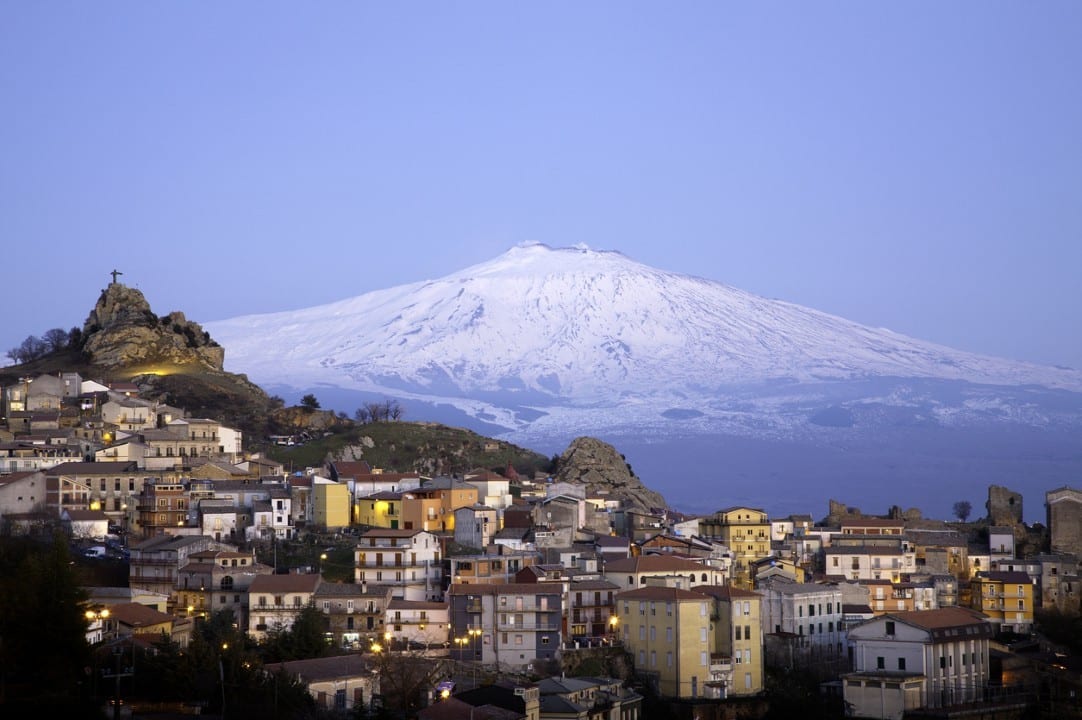
On the morning of June 2, 2025, Mount Etna, Europe’s largest active volcano, erupted on the island of Sicily, Italy, triggering scenes of panic among tourists and locals. Located near the city of Catania, the volcano spewed dense clouds of ash and smoke, followed by pyroclastic flows that raced down its slopes, forcing people to flee for safety. The volcanic activity, which began in the pre-dawn hours, was marked by intense strombolian explosions, as reported by Italy’s National Institute of Geophysics and Volcanology (INGV). The eruption, producing lava fountains and ashfall in nearby areas, prompted an orange alert for aviation, temporarily disrupting air traffic in the region. The event, with no immediate reports of casualties, underscored the power of one of the world’s most active volcanoes, with an eruptive history dating back to 425 B.C.
Mount Etna, standing over 11,000 feet, is renowned for its frequent activity, with near-annual eruptions in recent years. The June 2025 eruption, centered at the Southeast Crater, was preceded by volcanic tremors detected by the INGV during the early hours. Footage captured by visitors and drones revealed the event’s magnitude, with dark clouds blanketing the sky and lava flows illuminating the landscape.
- Key eruption features: Strombolian explosions, lava fountains, and pyroclastic flows.
- Affected areas: Nearby regions like Piano Vetore experienced volcanic ashfall.
- Immediate impact: Orange aviation alert and temporary tourist evacuations.
The lack of significant damage to nearby villages, unlike some historical eruptions, brought initial relief to authorities, but monitoring remains heightened.
Volcanic Activity in Focus
The June 2 eruption marked another chapter in Mount Etna’s long history as one of the planet’s most active volcanoes. According to the INGV, activity began with volcanic tremors at 4:30 a.m. local time, escalating to strombolian explosions by 7 a.m. These explosions, characterized by bursts of lava and rock fragments, intensified rapidly, culminating in lava fountains reaching hundreds of feet high.
The Southeast Crater, the eruption’s primary source, is known for its instability. Experts note that the collapse of material on the crater’s northern slope generated pyroclastic flows, hot clouds of ash and gas that descended the mountainside at high speeds. Fortunately, the flows did not breach the edge of the Valley of the Leo, a natural depression that often contains volcanic material.
Aviation and Tourism Impacts
The eruption triggered an orange aviation alert due to an ash cloud rising over 18,000 feet. Catania Airport, situated at Etna’s base, faced temporary disruptions, with flights diverted or delayed. The measure was precautionary, as volcanic ash can damage aircraft engines.
Tourists exploring the volcano at the time were caught off guard. Videos from the scene show groups running as thick smoke rose into the sky. Many visitors, drawn by Etna’s fame, underestimated the risks, disregarding earlier warnings about volcanic activity.
- Safety measures: Authorities ordered immediate evacuations from areas near the crater.
- Tourist attraction: Despite dangers, Etna draws thousands of visitors yearly.
- Ongoing monitoring: The INGV maintains 24-hour surveillance to predict further eruptions.
Etna’s Eruptive History
Mount Etna boasts one of the world’s most documented eruptive histories, with records dating back to 425 B.C. Positioned at the convergent boundary of the African and Eurasian tectonic plates, the volcano is fueled by constant geological movement. Its most devastating historical eruption, in 1669, destroyed 14 villages and caused thousands of deaths, reshaping Sicily’s landscape.
In recent years, Etna has seen frequent eruptions, with notable events in February, April, and May 2025. The February eruption produced lava flows that reached 6,400 feet in altitude, damaging vegetation and a service road. In April, strombolian activity evolved into lava fountains, with ash affecting the town of Zafferana Etnea.
Geological Features
Mount Etna is classified as a stratovolcano, primarily composed of basaltic lava flows. Its structure includes four main craters, with the Southeast Crater being the most active recently. The Valle del Bove, a 3-by-6-mile caldera, plays a critical role in containing lava flows and protecting populated areas.
The volcano’s height, currently exceeding 11,000 feet, fluctuates due to the accumulation of eruptive material. The INGV continuously monitors seismic activity, gas emissions, and ground deformation to forecast eruptions.
- Active craters: Southeast, Bocca Nuova, Voragine, and Northeast.
- Height: Approximately 11,000 feet, Italy’s highest peak south of the Alps.
- Monitoring tools: Seismic sensors and real-time surveillance cameras.
- Geological risks: Pyroclastic flows, ashfall, and potential earthquakes.
🚨 #BREAKING: MOUNT ETNA ERUPTS AGAIN
— ViralNewsHQ™ (@viralposts2323) June 2, 2025
Italy’s 🌍 most active volcano, Mount Etna, has started erupting—spewing 🌋 lava and 🌫️ ash high into the sky.
Authorities 🚨 are closely monitoring the situation. No reports of injuries so far.#MountEtna #Volcano #Italy #Europe… pic.twitter.com/jehbYzaL51
Authorities’ Response
Sicilian authorities acted swiftly to ensure safety. Rescue teams were deployed to assist with tourist evacuations and monitor areas near the volcano. Italy’s Civil Protection Agency issued warnings for visitors to stay at least 1,600 feet from lava flow zones, though some ignored the guidance.
The INGV employs a color-coded alert system, with orange indicating moderate risk. Should the eruption escalate, the alert could rise to red, potentially closing the regional airspace entirely.
Effects on Local Communities
Volcanic ash, though less severe in this eruption, reached areas like Piano Vetore, blanketing roads and properties. Local residents, accustomed to Etna’s activity, began immediate cleanups. In prior events, such as the July 2024 eruption, Catania was covered in thick ash, requiring significant cleanup efforts.
Agriculture, a vital sector in Sicily, faces risks from ash, which can harm crops like grapes, olives, and citrus. Yet, Etna’s volcanic soil is renowned for its fertility, supporting award-winning wine production in the region.
Tourism Appeal and Risks
Mount Etna is one of Italy’s top tourist destinations, attracting photographers, hikers, and volcanologists. Its eruptions, while hazardous, create natural spectacles that captivate visitors. However, the volcano’s proximity to populated areas and unpredictable activity pose challenges for authorities.
In February 2025, thousands of tourists clogged access roads, complicating rescue operations. The June eruption highlighted the need for stricter adventure tourism regulations, with proposals to limit access during high volcanic activity periods.
- Tourist activities: Hiking, skiing (in winter), and guided tours.
- Associated risks: Exposure to ash, toxic gases, and pyroclastic flows.
- Proposed regulations: Restrictions on access to high-risk zones during eruptions.
Monitoring and Prevention
The INGV uses advanced technology to monitor Etna, including seismic sensors, thermal cameras, and satellites. These systems detect changes in volcanic activity hours or days in advance. In 2025, the institute intensified surveillance due to increased eruptions, issuing regular alerts to the public and authorities.
Evacuation plans are in place to protect the over 600,000 residents of Catania’s metropolitan area. Natural barriers like the Valle del Bove help mitigate damage, but urban areas remain vulnerable to ash and potential lava flows.
Etna’s Cultural Significance
Mount Etna is not only a geological landmark but also a cultural icon. Designated a UNESCO World Heritage Site in 2013, the volcano inspires Sicilian legends and traditions.
- Ancient history: Eruptions documented since 425 B.C., with Greek and Roman records.
- Local culture: Etna is tied to myths, linked to deities like Hephaestus in Greek mythology.
- Volcanic wines: The region produces unique wines, thanks to mineral-rich soil.
- Sustainable tourism: Initiatives aim to balance visitation and environmental preservation.
