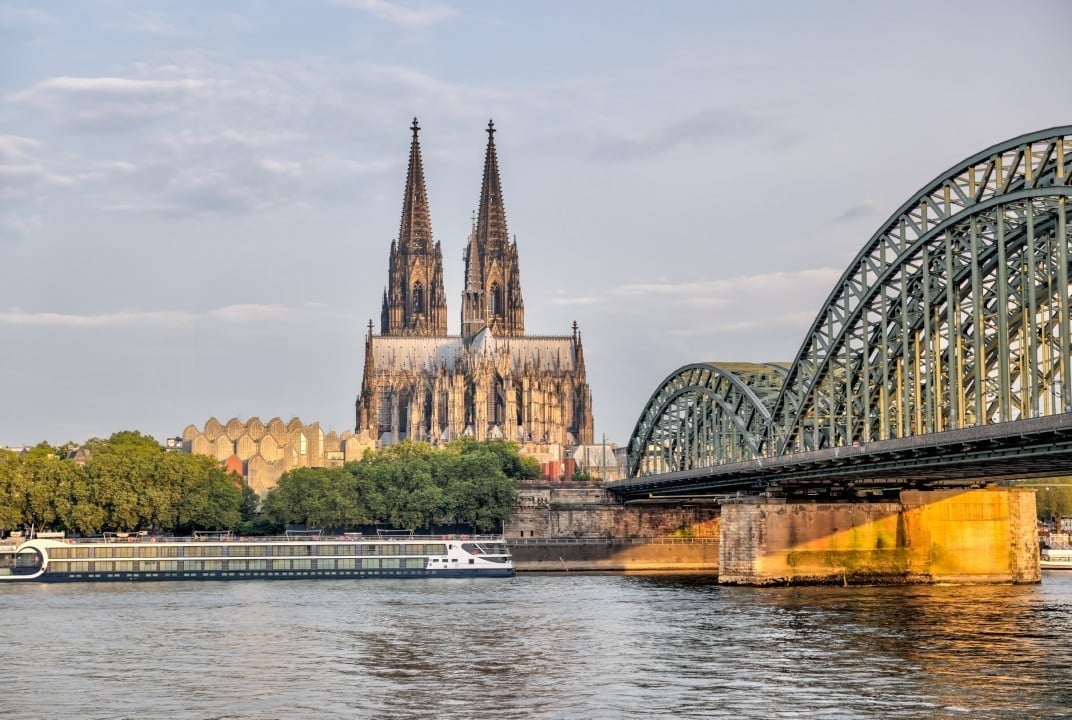
Cologne, Germany, underwent its largest evacuation since World War II on June 4, 2025, when over 20,000 residents were displaced from the city center to allow experts to defuse three unexploded U.S. bombs from the 1940s. Unearthed on Monday during preparatory road construction work, the bombs were neutralized in about an hour by specialists, city officials reported. The operation, which halted Rhine River traffic and closed bridges, schools, and hospitals, took place near Cologne’s historic center, close to its iconic cathedral. A brief delay occurred when one resident initially refused to leave their home, but the defusal proceeded without incident. The event underscores the persistent danger of wartime ordnance buried in German soil, a common challenge in the country.
The evacuation spanned 58 hotels, nine schools, a hospital, two nursing homes, and the Messe/Deutz train station. Suspended river and rail traffic disrupted regional mobility, highlighting the operation’s scale. The successful defusal reaffirmed Cologne’s preparedness for such historical hazards.
- Evacuation details:
- Over 20,000 people evacuated from the city center.
- Bombs discovered during road construction prep.
- Defusal completed in one hour, no incidents.
- Initial delay due to a resident’s refusal to leave.
Defusal operation
The defusal of the three bombs, conducted on June 4 afternoon, involved specialized explosive ordnance disposal teams. Authorities secured the site with protective screens, isolating the area near the Rhine River, just steps from Cologne’s historic core. Each U.S.-origin bomb was neutralized individually, with the process wrapped up in under an hour, per an official statement.
The bombs’ urban location demanded intricate logistics. The operation was overseen by North Rhine-Westphalia’s bomb disposal service, which frequently handles WWII relics. The absence of accidental detonations reassured both officials and residents.
Evacuation scope
Displacing over 20,000 people, the evacuation was Cologne’s largest since 1945, though smaller than some in other German cities like Dortmund. The perimeter covered homes, 58 hotels, nine schools, a hospital, two nursing homes, museums, offices, and the Messe/Deutz station. Three Rhine bridges, including the vital Hohenzollern railway bridge, were closed, impacting connectivity.
Rhine River traffic, a key commercial lifeline, was halted, affecting cargo and passenger transport. The disruption was short-lived, with normalcy restored post-defusal. The operation’s magnitude reflects the challenges of managing wartime relics in modern urban settings.
- Evacuated areas:
- City-center residences.
- 58 hotels and nine schools.
- A hospital and two nursing homes.
- Messe/Deutz station and Rhine bridges.
Historical background
Unexploded WWII bombs are a recurring issue in Germany, where Allied air raids left thousands of ordnance intact. Roughly 10% of bombs dropped between 1939 and 1945 failed to explode, remaining buried in urban and rural soil. Cologne, a frequent target due to its industrial significance, regularly uncovers such artifacts during construction.
Since 1945, over 2,000 metric tons of explosives have been neutralized nationwide. Large-scale evacuations, like Cologne’s, are common in populated areas. In 2017, Frankfurt evacuated 65,000 people to defuse a British bomb, setting a national record.
Resident delay
A brief setback occurred when a historic center resident initially refused to evacuate, delaying the defusal clearance. Authorities negotiated with the individual, who eventually complied, allowing the operation to proceed. The incident, though minor, highlighted the complexities of managing mass evacuations.
Such refusals are not uncommon, but German protocols mandate complete clearance of danger zones before action. The resolution ensured safety without further complications.
Mobility disruptions
The closure of three bridges, including the Hohenzollern, disrupted rail and road traffic in Cologne. The Hohenzollern, handling about 1,200 daily trains, is a key German transport artery connecting the central station to the city’s east. The shutdown affected thousands of commuters, but services resumed hours later.
Halted Rhine traffic impacted regional commerce, delaying cargo vessels and tourist cruises. The swift defusal minimized economic losses, though the incident underscored the river’s critical role.
Frequency of unexploded bombs
Germany contends with unexploded bombs regularly, neutralizing thousands yearly. In 2023, approximately 1,300 bombs were defused across the country, per North Rhine-Westphalia government data. Cologne’s wartime significance makes it particularly susceptible, with finds common during infrastructure projects.
These bombs, often weighing 250–500 kilograms, pose severe risks if triggered. Expert disposal teams and strict protocols have largely mitigated dangers, ensuring safe resolutions.
- WWII bomb facts:
- About 10% of WWII ordnance remains unexploded.
- Over 2,000 metric tons neutralized since 1945.
- Cologne targeted for its industrial role in the war.
- Around 1,300 bombs defused in 2023.
Large areas of the city center of Cologne were closed off as experts prepared to defuse three American bombs left over from World War II. pic.twitter.com/cbvnE59fOA
— DW News (@dwnews) June 4, 2025
Community response
Cologne residents expressed relief at the operation’s success, with many accustomed to smaller-scale evacuations. Social media posts shared images of the cordoned-off site, praising the authorities’ efficiency. Hotel guests and hospital patients were temporarily relocated, supported by city logistics.
The community demonstrated resilience, prioritizing safety despite disruptions. Cologne’s iconic cathedral, a UNESCO World Heritage Site, stood unscathed, reinforcing the city’s enduring spirit.
Authorities’ coordination
Cologne’s city hall orchestrated the evacuation with police, fire departments, and emergency services. The state’s disposal ordnance service led the defusal. Regular updates via apps and radio kept residents informed, ensuring compliance.
Decades of experience with wartime relics enabled a swift, organized response, minimizing disruption. The seamless coordination reflects Germany’s expertise in handling such incidents.
Cultural resonance
The bomb discovery in Cologne evokes memories of WWII, which ravaged the city. Targeted in 262 air raids, Cologne lost much of its infrastructure, yet preserved landmarks like the cathedral. Events like June 2025’s operation stir historical awareness, with local museums showcasing WWII’s impact.
The defusal underscores Cologne’s ability to confront its past while thriving as a cultural and economic hub. Its resilience in managing war’s legacy strengthens its identity.
- WWII legacy in Cologne:
- Endured 262 air raids during WWII.
- Cathedral stands as a resilience symbol.
- Museums preserve war’s impact.
- Evacuations reinforce historical memory.
