
In recent months, YouTube has faced a series of instabilities that affected millions of users worldwide, with significant outages reported in the United States, Brazil, and other countries. On June 6, 2025, around 3:15 PM, the term “YouTube down” trended in the US, reflecting user frustration over difficulties accessing videos, streaming, or using basic platform features. The issues, which began surfacing in May, included failures in video loading, interruptions in live streams, and problems accessing the app on devices like consoles and smart TVs. Reports indicate peaks in complaints on specific days, such as May 28 and June 3, with numbers reaching nearly 65,000 complaints in a single day. The instability, often linked to technical failures and, in some cases, infrastructure issues in the US, sparked discussions on social media and raised questions about the platform’s reliability.
The problems are not new to the platform, which has faced similar disruptions in the past, but the frequency and scale of recent failures drew attention. Users reported varied issues, from connection errors to missing metrics in YouTube Analytics. The situation impacted both content creators, who faced challenges uploading videos and tracking performance, and viewers, who couldn’t access desired content.
- Main reported issues:
- Failures in video loading and streaming.
- Instability in app access on mobile devices and consoles.
- Missing metrics in YouTube Studio for creators.
- Interruptions in live streams.
Social media, particularly X, became a space for venting and sharing information among affected users. Below, we explore the details of these instabilities, the most critical days, and user reactions.
Waves of instability in May and June
YouTube’s issues gained traction in May 2025, with sporadic reports escalating into more significant disruptions. On May 7, users in Brazil, like Diego from Rio de Janeiro and Reinaldo Santos Jr., reported that the platform “crashed completely,” with difficulties loading videos and uploading content. On the same day, X posts mentioned a supposed “general blackout” in the United States, which may have affected the platform’s server infrastructure. While there’s no official confirmation that power outages were the primary cause, the coincidence with reports of electrical instability in US cities fueled speculation.
By late May, on May 28, a peak of 57,988 complaints was recorded at 7:55 PM, according to Downdetector, with users in various regions facing issues. The instability persisted into June, with another peak on June 3, when 64,877 complaints were reported at 8:30 PM. These figures highlight the severity of the problem, which affected not only casual access but also creators relying on the platform for work.
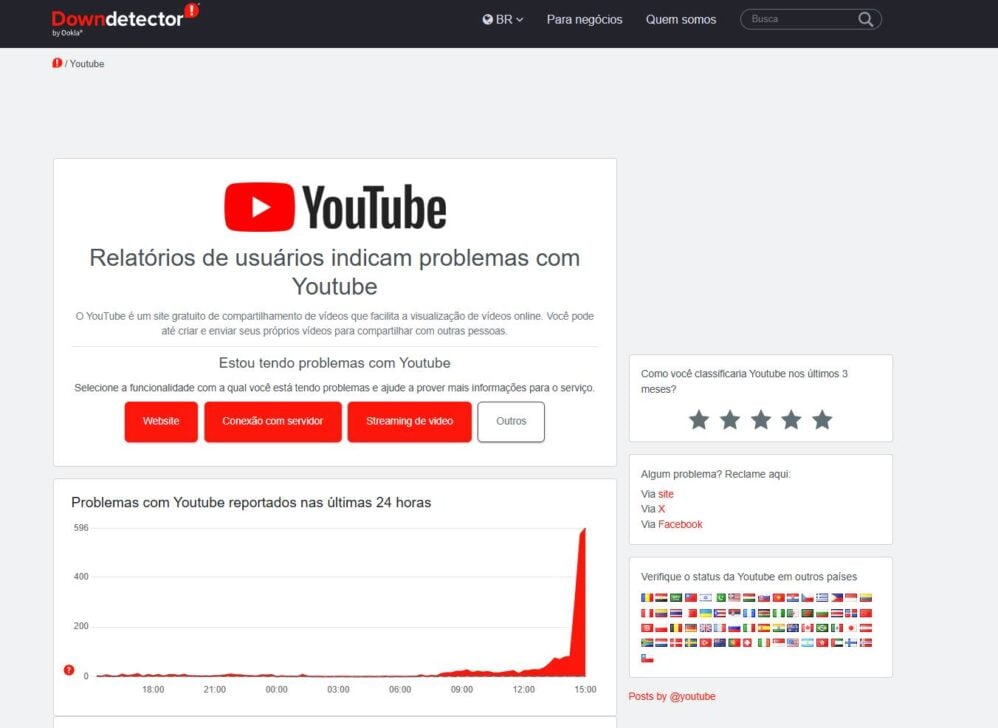
Technical issues reported by users
YouTube’s failures varied in type and intensity, impacting different platform functionalities. Users reported difficulties accessing the website, with error messages like “Video Playback Error” or “You’re offline.” Others faced app-specific issues, such as the disappearance of the bottom menu bar after an update, as noted by Peper Pimenta Pedro on June 3.
- Main types of failures:
- Website loading errors (57% of reports).
- Server connection issues (22%).
- Video streaming interruptions (21%).
- YouTube Studio failures, including missing metrics.
- Login issues on devices like PS5.
Content creators, such as Olavo and Antonio Martins, highlighted issues in YouTube Analytics, with view metrics not displaying correctly. In some cases, newly uploaded videos showed “0” views in YouTube Studio, causing frustration for those relying on this data to monitor channel performance.
Reactions on social media
Social media, especially X, was flooded with reports and complaints about YouTube’s outages. Users like @xZyahLLL directly questioned if the platform was down, while @elomazzcc expressed frustration over not being able to access videos to unwind. The hashtag #YouTubeDown was widely used, particularly on high-instability days like May 28 and June 3.
Beyond complaints, some users sought temporary fixes, like disabling ad blockers or restarting apps. However, most reports pointed to widespread issues independent of individual settings. Dissatisfaction also targeted the platform’s support, with users like @SbrStudiosTeam reporting difficulties resolving monetization and channel verification issues.
Critical days and complaint peaks
May 7, May 28, and June 3 were the most critical days, with complaint peaks recorded by Downdetector. On May 7, the instability was linked to a supposed US blackout, though unconfirmed officially. On May 28, the platform faced global issues, with reports of failures in countries like Brazil, Mexico, Australia, and the UK.
The most significant peak occurred on June 3, with 64,877 complaints within an hour. Users reported difficulties accessing videos, streaming live content, and logging into accounts. The situation was worsened by YouTube Studio failures, directly impacting content creators.
Impact on content creators
Content creators were particularly affected by the instabilities. Issues in YouTube Studio, such as missing metrics and upload failures, caused losses for those relying on the platform as a source of income. Radialista Amaury Junior reported that videos wouldn’t complete uploads and live stream thumbnails weren’t updating.
Additionally, view count instability, with numbers fluctuating or showing as “0,” hindered content strategy planning. Small creators, as noted by @Fatalisienne on X, faced added challenges, as technical failures exacerbated monetization and growth difficulties.
Speculation on technical causes
While YouTube hasn’t released official statements detailing the causes, speculation points to a mix of technical and external factors. The association with alleged US blackouts, mentioned in X posts, suggests that electrical infrastructure issues may have impacted servers. However, the lack of official confirmation leaves the issue unresolved.
Other hypotheses include failed app updates, as reported by users facing issues after interface changes, and server overload due to high access volumes. The platform, with over 2.7 billion monthly active users, faces constant challenges maintaining global stability.
Frequency of issues in 2025
The May and June instabilities were not isolated events. Reports indicate YouTube faced recurring issues throughout 2025, with minor disruptions in April and early May. The frequency of failures raised questions about the platform’s infrastructure and its ability to handle growing demand for streaming and live content.
Despite the issues, YouTube remains the leading online video platform, with 144 million users in Brazil and a global base representing over 25% of the world’s population. Resolutions typically occurred within hours, but the recurrence of problems fueled user dissatisfaction.
Complaints across devices
YouTube’s issues weren’t limited to one platform, affecting users across various devices. Samuel reported difficulties accessing the app on PS5, with accounts disappearing and login issues. Others mentioned failures on smart TVs, where the app displayed error messages or failed to load videos.
On mobile devices, app updates were cited as a possible cause of instability, with the bottom menu bar vanishing for some users. These failures underscore the complexity of maintaining platform functionality across different operating systems and devices.
Global instability scenario
YouTube’s 2025 outages weren’t confined to the US and Brazil. Reports of instability came from countries like the UK, Australia, Mexico, Japan, and India, as noted by Downdetector. The global nature of the issues suggests failures tied to the platform’s central servers, which operate in data centers worldwide.
In Brazil, with 144 million users, complaints were significant, especially in urban centers like Rio de Janeiro and São Paulo. The platform, a key source of entertainment and information in the country, faced criticism for not providing clear statements on the causes of disruptions.
