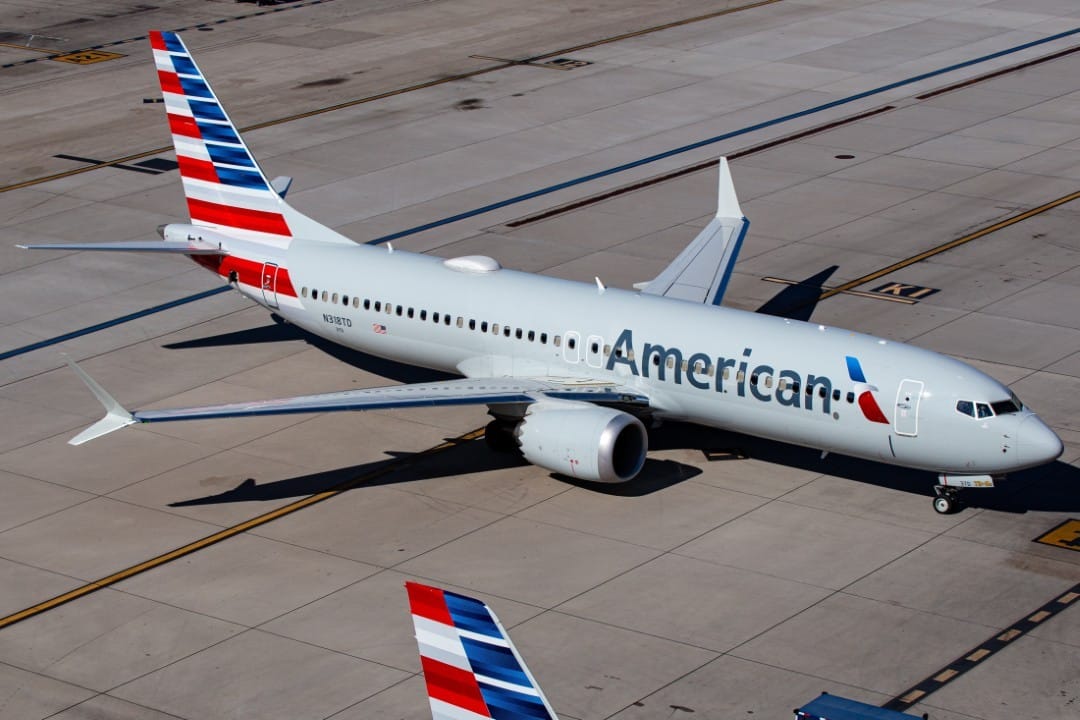
An American Airlines transatlantic flight from Philadelphia to Naples, Italy, was diverted to Rome on Tuesday, June 3, 2025, after the airline deployed a Boeing 787-9, a larger aircraft than the airport could accommodate. The flight, scheduled to land at Naples International Airport at 10 a.m., was rerouted due to operational restrictions, forcing passengers to travel by bus from Rome to Naples, a journey exceeding two hours. The incident, caused by the airline’s use of a plane too large for Naples’ infrastructure, sparked frustration among passengers and raised questions about operational planning. American Airlines issued an apology, but the event highlighted logistical oversights in international flight operations.
Flight AA780 departed Philadelphia at 7:42 p.m. on Monday and was approximately 70 miles from Naples when it abruptly changed course over the Tyrrhenian Sea. Data from Flightradar24 shows the plane, a Boeing 787-9, diverted north to Rome’s Fiumicino Airport, landing at 9:45 a.m. The decision stemmed from Naples’ inability to handle the larger aircraft, which requires enhanced rescue and firefighting services.
- Aircraft mismatch: The Boeing 787-9, 20 feet longer than the usual 787-8, demands Category 9 firefighting services, while Naples operates at Category 8.
- Ground transport: Passengers were bused 145 miles from Rome to Naples, a trip lasting over two hours.
- Operational impact: The plane remained in Rome for two and a half hours before departing for Chicago as Flight AA111.
The airline cited “operational limitations” as the reason for the diversion but provided no further details on why the larger aircraft was used. The incident, first noted by aviation enthusiast @xJonNYC on social media, exposed gaps in the airline’s fleet management.
Technical constraints at Naples
Naples International Airport, a key regional hub, faces limitations that restrict its ability to accommodate larger aircraft. According to Boeing and the International Civil Aviation Organization (ICAO), the Boeing 787-9 requires Category 9 rescue and firefighting services due to its size and capacity, while Naples is equipped only for Category 8. This classification allows the airport to handle smaller aircraft like the Boeing 787-8, regularly used by American Airlines on this route.
The 787-9’s additional 20 feet in length, compared to the 787-8, significantly alters operational requirements. Airports with Category 9 services, such as Rome Fiumicino, have advanced equipment and personnel to manage emergencies involving larger planes. Naples’ airport authority confirmed that the 787-9 is not permitted to land, a restriction echoed by aviation enthusiasts online.
This incident points to potential lapses in American Airlines’ planning. Deploying a larger aircraft to a route with known restrictions suggests deficiencies in pre-flight checks or internal communication. The airline has not clarified whether the 787-9 was intentionally assigned or substituted due to last-minute adjustments.
Passenger experience
Passengers on Flight AA780 faced significant inconvenience following the diversion. After landing in Rome at 9:45 a.m., they waited to board buses for the 145-mile journey to Naples. The road trip, lasting over two hours, was described as frustrating by some travelers who shared their experiences online.
- Delayed arrival: Passengers reached Naples hours later than planned, disrupting their schedules.
- Limited communication: Travelers reported minimal information about the diversion during the flight.
- Airline response: American Airlines apologized but offered no details on compensation.
The added ground travel compounded the fatigue of a nine-hour transatlantic flight. While the airline arranged the bus transfer, the lack of clear communication and the unexpected detour fueled passenger dissatisfaction. The incident sparked discussions about airline accountability for operational errors.
American Airlines’ operational framework
American Airlines typically operates the Boeing 787-8 on its Naples route, a model compatible with the airport’s infrastructure. The decision to use a 787-9, whether deliberate or accidental, may reflect adjustments in fleet availability or scheduling. The airline maintains a diverse fleet of Dreamliners, but assigning the right aircraft to each route requires precise coordination.
The Naples incident was not an isolated case that week. On Wednesday, June 4, a Ryanair flight was diverted due to severe turbulence, forcing passengers to travel by bus from Memmingen, Germany, to Milan, Italy, a four-and-a-half-hour journey. While the Ryanair case involved weather-related issues, both incidents underscore the challenges of managing unexpected disruptions in air travel.
As one of the world’s largest airlines, American Airlines serves millions of passengers annually. However, errors like the Naples diversion can erode customer trust, particularly on international routes where logistics are complex. The airline has not announced specific measures to prevent similar incidents.
Boeing 787-9 specifications
The Boeing 787-9, part of the Dreamliner family, is designed for long-haul routes with greater passenger and cargo capacity than the 787-8. Measuring 206 feet in length, it is 20 feet longer than its counterpart, which impacts its operational requirements.
- Capacity: The 787-9 can carry up to 296 passengers, compared to 242 for the 787-8, in standard configurations.
- Range: Both models offer a similar range of approximately 7,500 nautical miles.
- Infrastructure needs: The 787-9 requires Category 9 firefighting services, limiting its use to larger airports.
American Airlines deploys the 787-9 on routes to major hubs like London, Tokyo, and São Paulo, where airports meet these requirements. The Naples incident highlights the importance of matching aircraft to destination capabilities.

Ground transfer logistics
The bus transfer from Rome to Naples, organized by American Airlines, drew criticism for its execution. Covering 145 miles in about two and a half hours, the journey required multiple buses to accommodate all passengers. The process, while logistically sound, was marred by delays and limited communication, adding to passenger frustration.
Coordinating ground transport across two Italian cities involved local operators, but the lack of real-time updates during the transfer process was a point of contention. For passengers already fatigued from a long flight, the additional road trip was a significant inconvenience. The incident underscores the challenges of managing diversions in international operations.
Aviation community response
The Naples diversion gained traction among aviation enthusiasts, particularly on platforms like X, where user @xJonNYC first highlighted the issue. The community noted that the 787-9’s incompatibility with Naples reflects broader challenges in fleet management. Discussions focused on the technical limitations of regional airports and the need for rigorous pre-flight planning.
Enthusiasts also compared the incident to other recent diversions, emphasizing that operational errors can have cascading effects on passenger experience. The case sparked calls for airlines to enhance systems for matching aircraft to airport capabilities, a critical factor in avoiding similar disruptions.
Other recent diversions
The American Airlines incident coincided with other aviation disruptions that week. The Ryanair flight diverted on Wednesday due to turbulence injured eight passengers, three of whom required hospitalization. The subsequent bus journey from Memmingen to Milan took over four hours, illustrating the logistical challenges of ground transfers.
While the Ryanair case was weather-related, the American Airlines diversion resulted from a preventable error. Both incidents highlight the importance of contingency planning in aviation, where unforeseen events can significantly impact operations. The reliance on bus transfers in both cases points to a common fallback strategy for diversions.
Naples airport specifications
Naples International Airport, located 7 km from the city center, is a major hub in southern Italy, handling around 10 million passengers annually. Its 2,628-meter runway supports aircraft like the Boeing 737, Airbus A320, and Boeing 787-8, but larger planes face restrictions.
- Classification: Category 8 rescue and firefighting services.
- Traffic: Approximately 10 million passengers per year.
- Operations: Limited to aircraft compatible with its infrastructure.
The airport’s inability to accommodate the 787-9 is typical of regional facilities, which prioritize efficiency over capacity for larger aircraft. Major hubs like Rome Fiumicino, with Category 9 services, are better equipped for such operations.
Future planning at American Airlines
American Airlines has not outlined specific steps to address the Naples incident, but it may prompt internal reviews. Fleet allocation involves balancing demand, aircraft availability, and destination requirements, a process that failed in this case. The use of a 787-9 suggests either a scheduling oversight or an intentional decision that overlooked Naples’ limitations.
Operating hundreds of daily flights, many international, American Airlines faces ongoing challenges in maintaining seamless operations. The Naples diversion serves as a reminder that even minor oversights can lead to significant disruptions, particularly on transatlantic routes.
