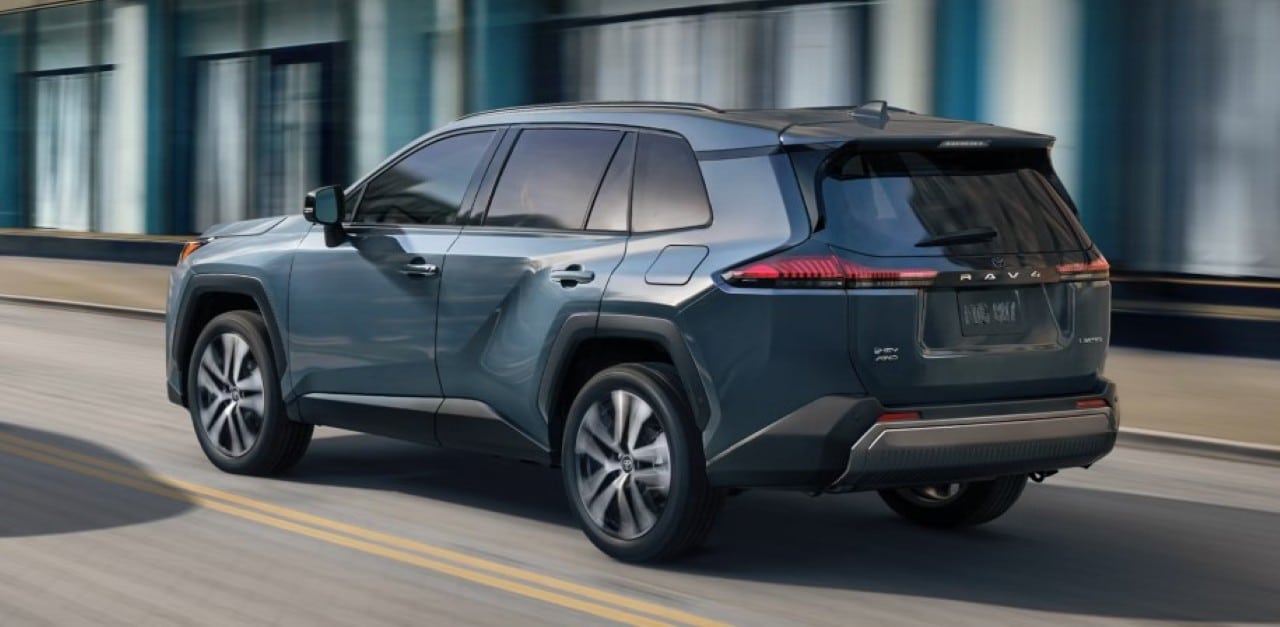
The Toyota RAV4 2026, spotted during tests in the United States, promises to revolutionize the SUV segment with a redesigned look and advanced hybrid technology. The next generation of the model, slated to hit the market in early 2026, was captured in photos on the roads of Detroit and Utah, showcasing a more aggressive and aerodynamic design. The Japanese automaker is betting on futuristic lines, boomerang-shaped headlights, and a robust rear to keep the RAV4 as the global sales leader. The tests, conducted under varied weather conditions, indicate a focus on performance and energy efficiency. Toyota is also benchmarking the SUV against competitors like the Tesla Model Y, reinforcing its commitment to sustainability. This launch marks the sixth generation of the model, aiming to blend innovation, reliability, and versatility to meet demanding consumers.
The visual overhaul of the RAV4 2026 draws inspiration from recent Toyota models like the Prius and C-HR. The SUV appears longer and lower, suggesting improvements in handling and fuel economy. Additionally, the presence of a hybrid powertrain, with plug-in options for select markets, aligns the model with sustainable mobility trends.
- Key observed changes:
- Aerodynamic lines for enhanced efficiency.
- Sharp headlights with a modern design.
- Redesigned rear with prominent taillights.
The expectation is that the new RAV4 will hit dealerships with cutting-edge technologies and a more refined interior, solidifying its position in the competitive automotive market.
Revamped design for the future
The RAV4 2026 sports a look that breaks away from the model’s traditional aesthetics. Prototype photos reveal an SUV with more dynamic proportions, featuring a sloped windshield and a smaller front grille. These changes aim not only to modernize the vehicle but also to enhance its aerodynamic performance, reducing fuel consumption. The rear, with more angular taillights, reinforces the model’s sporty identity.
During testing, the vehicle was covered in camouflage, but details like the boomerang-shaped headlights already hint at a connection to the Prius’s design. Toyota seems to be striking a balance between sophistication and ruggedness, preserving the RAV4’s global appeal.
The interior, though not yet officially revealed, is expected to follow the minimalist trend of Toyota’s recent launches. A floating digital dashboard and high-quality materials are anticipated, creating a more comfortable and tech-forward cabin.

Hybrid technology in the spotlight
Toyota is doubling down on hybrid systems for the RAV4 2026, retaining an internal combustion engine paired with an electric motor. This choice reflects the automaker’s strategy of offering a gradual transition to electrification, as charging infrastructure for fully electric vehicles still faces limitations in many markets.
The U.S. tests included direct comparisons with the Tesla Model Y, suggesting Toyota is optimizing the RAV4’s efficiency and range. Visible exhaust pipes on the prototypes confirm the hybrid system’s continuation, but with significant performance enhancements.
- Benefits of the RAV4’s hybrid system:
- Extended range for long trips.
- Reduced reliance on charging stations.
- Lower emissions compared to traditional engines.
- Cost-effective compared to fully electric models.
The inclusion of plug-in versions for markets like Europe and Japan highlights Toyota’s flexibility in meeting diverse regional demands.

Testing in extreme conditions
The RAV4 2026 tests were conducted in strategic locations, such as Detroit’s icy roads and Utah’s arid terrains. This approach ensures the SUV upholds the lineup’s reputation for durability and versatility. The decision to test alongside competitors like the Tesla Model Y underscores Toyota’s intent to position the RAV4 as a competitive option in the sustainable SUV segment.
The automaker also evaluated the vehicle’s performance on rugged terrains, indicating the new RAV4 may offer improved off-road capabilities. These features are vital for maintaining the model’s appeal in markets where consumers prioritize toughness.
Interior and connectivity
While interior images remain undisclosed, speculation based on Toyota’s recent models points to a modern and functional cabin. The RAV4 2026 is expected to feature an updated multimedia system with advanced smartphone integration and voice assistants.
Interior space may also be expanded, offering greater comfort for drivers and passengers. The use of premium materials, such as synthetic leather and metallic accents, is likely to elevate the SUV’s sophistication.
A legacy of success
Since its debut in 1994, the RAV4 has solidified its status as a cornerstone of the compact SUV segment. The first generation introduced the concept of blending passenger car traits with off-road capabilities, quickly capturing the global market.
- Key RAV4 milestones:
- 1994: Launch of the first generation.
- 2005: Introduction of hybrid versions in select markets.
- 2018: Established as the world’s best-selling SUV.
The sixth generation, set for 2026, aims to continue this legacy by addressing demands for sustainability and innovation.
Global market competition
The RAV4 2026 will face stiff competition from models like the Honda CR-V, Hyundai Tucson, and Tesla Model Y. Toyota appears to be fine-tuning the SUV to rival electric models while retaining the practicality of hybrids. The comparison with the Tesla Model Y during testing signals an effort to match efficiency performance.
The automaker’s strategy includes tailoring the RAV4 for different markets, with region-specific versions for Asia, Europe, and the Americas. This adaptability has been a cornerstone of the model’s global success.
Launch expectations
Toyota has yet to confirm the exact debut date for the RAV4 2026, but it is expected to be unveiled in late 2025. Sales are projected to begin in the first quarter of 2026, starting in the U.S. and Europe, with expansion to other markets throughout the year.
The automaker plans to showcase the RAV4 at global auto shows, such as the Los Angeles Auto Show, to attract consumer and media attention.
Sustainability focus
The hybrid powertrain choice underscores Toyota’s commitment to reducing emissions. The automaker is a leader in the hybrid segment, with over 15 million units sold globally since the Prius debuted in 1997. The RAV4 2026 will further this mission, blending energy efficiency with robust performance.
Toyota is also investing in recycling technologies and sustainable materials for the SUV’s production, aligning with global carbon neutrality goals.
Market preparation
Production of the RAV4 2026 is expected to take place in factories in the U.S., Japan, and China, ensuring broad global availability. Toyota has announced investments in its assembly lines to incorporate next-generation hybrid technologies, potentially lowering costs and speeding up delivery.
The SUV will be offered in various configurations, from entry-level to premium models with luxury finishes. Prices are expected to remain competitive, keeping the RAV4 accessible to a wide consumer base.
