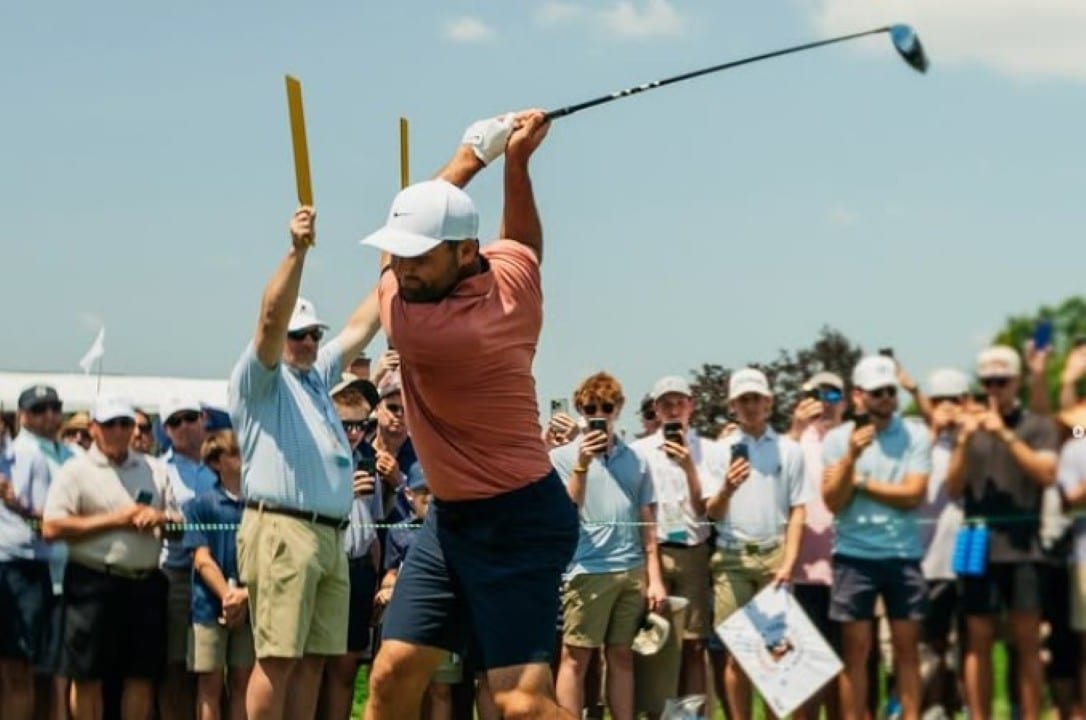
The 2025 US Open, one of golf’s most prestigious tournaments, kicked off on Thursday, June 12, at the formidable Oakmont Country Club in Pennsylvania, United States. Renowned for its lightning-fast greens, iconic bunkers like the “Church Pews,” and narrow fairways, Oakmont tested the world’s top golfers, including Rory McIlroy, JJ Spaun, and Ludvig Åberg. The opening round delivered moments of brilliance, such as McIlroy’s jaw-dropping 392-yard drive, but also penalized errors with costly bogeys. Featuring major champions and rising stars vying for glory, the event promises high-stakes drama on one of golf’s toughest stages. Precision is proving critical in a course where every shot can shift the leaderboard.
Stretching 7,652 yards with a par of 70, Oakmont is unforgiving. Having hosted the US Open nine times, the course is notorious for humbling even the most seasoned players. Veterans like Justin Rose, the 2013 champion, and Matt Fitzpatrick, the 2022 winner, tackled greens demanding pinpoint accuracy. The first round saw a fluid leaderboard, with Spaun seizing a temporary lead through strategic birdies.
- Key moments from the round:
- JJ Spaun led at -2 with birdies on the 12th and a chance on the 13th.
- Rory McIlroy wowed with a 392-yard drive on the 12th hole.
- Ludvig Åberg stumbled with a bogey on the 12th after a tactical misstep.
- Adam Scott and Eric Cole bounced back with consecutive birdies.
Oakmont’s challenge extends beyond technique—it demands mental fortitude. Each hole presents a unique puzzle, forcing players to adapt swiftly to the course’s relentless conditions.
Oakmont’s legacy of difficulty
Founded in 1903, Oakmont Country Club is a golfing institution. Its greens, among the fastest globally, can turn short putts into daunting tasks. The third hole’s “Church Pews” bunker was a focal point in the first round, with Evan Beck navigating its perils while others faltered. Designed by Henry Fownes, Oakmont emphasizes strategy, with tight fairways and punishing bunkers positioned to exploit errors.
In the opening round, the par-5 12th hole proved pivotal. McIlroy capitalized on the fairway’s downslope for his monster drive, but players like Shane Lowry struggled with bunkers and slick greens. Oakmont’s reputation for difficulty is well-earned—Johnny Miller’s record-setting 63 in the 1973 US Open final round remains a testament to its challenge. Modern equipment has done little to tame the course’s classic design.
The course’s setup for 2025, with denser roughs and narrower fairways, reinforces Fownes’ vision of golf as a mental and technical gauntlet. Players must balance aggression with caution, as Oakmont rarely rewards reckless play.
Rory McIlroy’s power and precision
Rory McIlroy, a favorite entering the tournament, showcased his star power in the first round. On the 12th hole, he unleashed the longest drive of his season at 392 yards, a shot that rode the fairway’s slope and nearly reached a gallery crossing point. The drive set up an ideal approach, though his eagle putt rolled 52 feet past the hole, leaving a tricky downhill birdie attempt.
McIlroy’s composure shone through as he sank the birdie putt, briefly taking the lead. Earlier, on the 10th hole, he opted for an iron off the tee for accuracy, landing his approach 12 feet from the pin but missing the birdie. His round was a blend of raw power and calculated decisions, reflecting the delicate balance Oakmont demands. Playing alongside Shane Lowry and Justin Rose, McIlroy’s group brought a mix of camaraderie and fierce competition.
JJ Spaun’s steady ascent
JJ Spaun emerged as the early pacesetter with a disciplined performance. His birdie on the par-5 12th and a precise tee shot on the par-3 13th, landing 10 feet from a tucked pin, underscored his course management. Spaun, a runner-up at this year’s Players Championship, avoided the costly mistakes that plagued others.
His approach on the 13th, where bunkers guarded a challenging pin position, highlighted his precision. Though he missed the birdie putt, Spaun’s -2 score gave him sole possession of the lead. His ability to stay composed on a course that punishes errors positions him as a contender heading into the next rounds.
Ludvig Åberg’s learning curve
Ludvig Åberg, a rising star, faced Oakmont’s wrath on the 12th hole. Aiming for the pin with his third shot, he landed in a bunker, then struggled to recover, finding the rough. His chip rolled eight feet past, but Åberg salvaged a bogey with a clutch putt. The sequence highlighted Oakmont’s ability to turn opportunity into adversity.
Despite the setback, Åberg remained in contention at -1, showcasing resilience. His experience on the 12th serves as a reminder that Oakmont demands respect, even from the game’s brightest talents. The young Swede’s ability to regroup will be critical in the rounds ahead.
Standout performances across the field
The first round featured notable efforts from several players:
- Adam Scott: After a bogey on the 10th, the Australian rallied with birdies on the 11th and 12th, reaching -1.
- Eric Cole: Starting with a bogey, Cole responded with birdies on the 12th and 14th, staying competitive.
- Matt Fitzpatrick: The 2022 champion opened with a confident 30-foot birdie putt on the first hole.
- Justin Rose: The 2013 winner nearly birdied the 11th, aiding McIlroy’s read on the green.
Conversely, Tommy Fleetwood endured a rough start, taking two penalty drops in his first two holes for a +2 score. Shane Lowry, McIlroy’s playing partner, also struggled, carding a bogey on the 12th after bunker trouble.
The greens’ relentless challenge
Oakmont’s greens, with Stimpmeter readings approaching 14, are a defining feature. Their speed caught players like McIlroy and Åberg off guard, with putts rolling far beyond intended targets. The par-3 13th exemplified this, as Spaun’s tee shot to 10 feet was a rare feat given the pin’s bunker-surrounded placement.
The greens’ firmness and subtle slopes make even short putts treacherous. Players must master both distance control and line reading to avoid three-putts, which plagued several competitors in the opening round. Oakmont’s greens ensure that no lead is safe and no shot is routine.
Oakmont’s storied US Open history
Oakmont has hosted iconic US Open moments, from Tommy Armour’s 1927 victory to Ernie Els’ triumph in 1994. In 2007, Angel Cabrera conquered brutal conditions to claim the title. Each edition cements Oakmont’s status as a crucible for golf’s elite.
The 2025 setup, with tighter fairways and thicker rough, upholds this legacy. The course’s timeless design continues to challenge modern players, proving that Oakmont’s difficulty transcends eras. The first round’s leaderboard volatility reflects the course’s ability to reshape the field with every hole.
What lies ahead
With the leaderboard still taking shape, the US Open is poised for intense battles. Spaun, McIlroy, and Åberg are names to watch, but Oakmont’s unpredictability invites surprises. Players like Scott and Cole, who showed early resilience, could climb the ranks.
Pennsylvania’s weather, with mild temperatures and moderate winds, has been favorable, but forecasts suggest potential shifts that could add complexity. Adapting to Oakmont’s nuances—its greens, bunkers, and fairways—will determine who hoists the trophy on Sunday.
