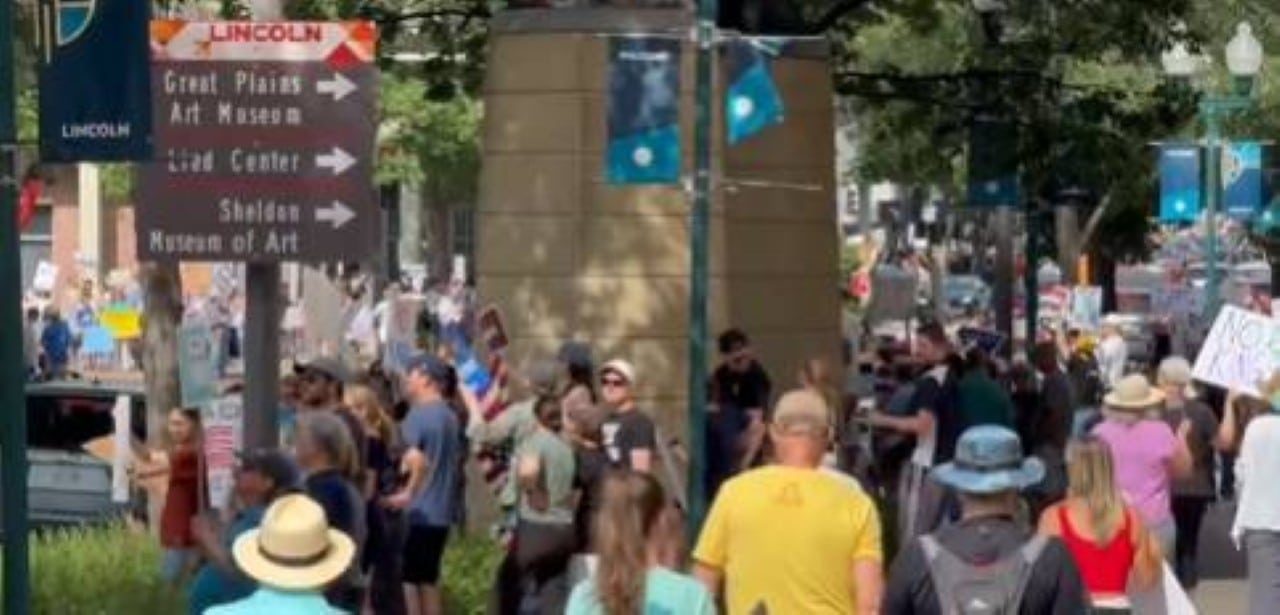
On June 14, 2025, millions of Americans took to the streets in protests dubbed “No kings” to denounce what they call authoritarian policies by President Donald Trump, coinciding with a grandiose military parade in Washington, D.C. The demonstrations, organized in various cities, criticize the militarization of democracy and the recent escalation of actions against immigrants, such as ICE raids in Los Angeles. The parade, celebrating the 250th anniversary of the US Army and Trump’s 79th birthday, showcases tanks and heavy weaponry but faces resistance from activists who see the event as a display of power. The day was marked by tensions, with event cancellations and heightened police presence in several regions.
The No kings demonstrations gained momentum after a week of protests against deportation operations in major cities. In Atlanta, protesters gathered in front of the Georgia State Capitol, chanting phrases like “No kings in America.” Meanwhile, the military parade, costing around $45 million, drew thousands of onlookers to the National Mall despite unstable weather. The presence of Abrams tanks and displayed helicopters intensified debates over the use of public funds.
- Main points of tension: ICE raids, federalization of the California National Guard, and the military parade.
- Protest locations: Washington, Atlanta, Los Angeles, and other cities.
- Key date: June 14, 2025, the Army’s anniversary and Trump’s birthday.
Local authorities bolstered security in response to the demonstrations, with Los Angeles maintaining a nightly curfew after episodes of violence. The combination of protests and military celebrations put the country on alert, highlighting deep political divisions.
Origin of the No kings movement
The No kings movement emerged as a direct response to the actions of Donald Trump’s second term, which began in January 2025. Organized by coalitions like Indivisible, the group criticizes what it sees as a centralization of power and the glorification of military symbols. In Atlanta, activist Kristin Crowe emphasized the core message: power belongs to the people, not authoritarian figures.
The protests gained traction with recent ICE operations that intensified deportations in states like California. Videos of agents chasing farmworkers in Oxnard shocked the public, broadening support for the movement. Trump’s decision to federalize the California National Guard, deploying 4,000 troops to Los Angeles, also drew criticism, particularly from Governor Gavin Newsom, who accused the president of diverting resources from efforts against fentanyl trafficking.
Military parade: celebration or intimidation?
The military parade in Washington, scheduled for 6:30 p.m., was planned as the largest display of military equipment in the capital since 1991. Featuring 28 Abrams tanks, 6,700 soldiers, and aircraft flyovers, the event celebrates the Army’s 250 years. However, critics like Renee Hall-George, a social worker from Atlanta, question the $45 million cost, arguing that the funds could be used for healthcare and education.
The event coincided with the Army Birthday Festival, which began in the morning at the National Mall. Visitors could interact with unloaded weapons, such as sniper rifles and grenade launchers, and watch obstacle course demonstrations. Despite humid weather and storm warnings, Trump assured on his Truth Social platform that the parade would proceed “rain or shine.”
- Displayed equipment: Abrams tanks, Huey helicopters, howitzers.
- Estimated cost: $45 million.
- Main schedule: 6:30 p.m., with enlistment ceremonies and fireworks.
- Participants: Soldiers, Army astronauts, and Medal of Honor recipients.
Tensions in Los Angeles
In California, the week was marked by protests against ICE raids targeting workers in agriculture and construction. United Farm Workers President Teresa Romero reported widespread fear among immigrants, many of whom cannot afford to miss work. The operations, aimed at meeting Trump’s deportation goals, have impacted economic sectors reliant on immigrant labor, which accounts for up to 20% of the workforce in areas like crop production.
The curfew in Los Angeles, in place since Tuesday, was extended through the weekend, with police preparing for around 30 protests. Incidents of violence, such as fires set to police vehicles and damage to LAPD headquarters, prompted intervention by ATF investigators. Police Chief Jim McDonnell stated that authorities are ready to ensure safety but will not tolerate vandalism.
Cancellation in Minneapolis
In Minneapolis, a No kings event was canceled after a “politically motivated” attack resulted in the death of a state lawmaker. The organization Indivisible Twin Cities opted to hold a demonstration at the state Capitol, where it pledged to maintain a peaceful vigil. The decision reflects the tense climate in several cities, with authorities on alert for potential clashes.
The group issued a statement emphasizing the importance of gathering despite the tragedy. The Capitol demonstration was planned with police coordination to avoid incidents, but the cancellation of the original event sparked debates about protest safety amid political polarization.
Reactions in Atlanta
In Georgia, the protest at Liberty Plaza drew hundreds, including activists and political leaders. Signs reading “Our veterans didn’t fight for fascism” expressed outrage against the military parade. Social worker Lyn Stubbs criticized the parade as an attempt at intimidation, while other protesters called for reallocating public funds to social needs.
The event featured 13 speakers addressing issues from government militarization to the immigration crisis. Organized by the Indivisible Georgia Coalition, the demonstration reinforced the message that American democracy rejects monarchical figures. The presence of American flags among protesters symbolized a claim to democratic values.
Security preparations
Authorities nationwide strengthened security measures for the weekend of protests. In California, the Highway Patrol reported that at least 200 demonstrations were planned, requiring coordination between local and federal agencies. In Los Angeles, Sheriff Robert Luna highlighted resource mobilization to prevent violence, while the ATF investigates arson linked to the protests.
In Washington, the military parade is under tight security, with potential storms adding logistical challenges. Weather forecasts indicate rain and thunderstorms between 6 p.m. and 9 p.m., but the event was maintained, with Trump promising an unprecedented “patriotic” celebration.
- Security measures: Curfew in Los Angeles, increased police presence at state capitols.
- Weather threats: Storms forecast in Washington, with flood risks.
- Ongoing investigations: ATF analyzing fires in Los Angeles.
Economic impact of ICE raids
ICE operations have affected not only immigrant workers but also critical economic sectors. Agriculture, reliant on 15-20% immigrant labor, faces challenges with workers staying home out of fear of deportation. The same occurs in construction and hospitality, where labor shortages are already driving up operational costs.
Businesses report declining productivity, while workers, despite fear, continue attending jobs out of financial necessity. The situation has sparked debate about the sustainability of strict immigration policies in a country where immigrants, documented or not, support essential sectors.
Symbolism of June 14
The choice of June 14 for the military parade carries symbolic weight, coinciding with Flag Day, the Army’s anniversary, and Trump’s birthday. The date was used by the president to reinforce a narrative of patriotism, but No kings protests reinterpreted it as a moment of resistance. For demonstrators, the display of tanks and weapons is an affront to democratic values, while the government presents it as a tribute to the military.
The polarization surrounding the event reflects the country’s political divisions, with groups like Indivisible vowing to maintain pressure against what they call an “authoritarian drift.” The protests, which included veterans and military families, showcase the diversity of voices opposing Trump’s agenda.
Nationwide mobilization
Beyond Washington, Atlanta, and Los Angeles, No kings protests were reported in dozens of cities, with organizers estimating millions of participants. The scale of the demonstrations, combined with the visibility of the military parade, placed the issue on the national agenda. Activists plan further actions in the coming days, while the government maintains its stance on immigration policies and military celebrations.
The mobilization reflects a turning point, with citizens demanding transparency and accountability from the government. The presence of community leaders and local politicians at the protests underscores the movement’s significance, which seeks to sustain pressure against controversial measures.
