
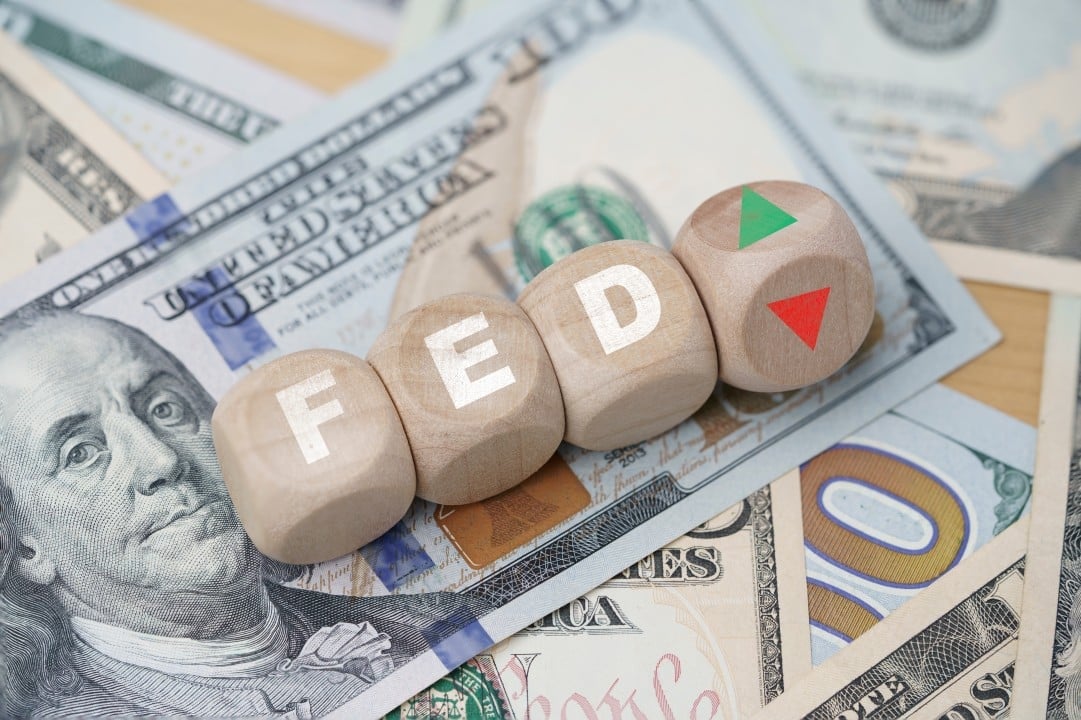
The Federal Reserve, the U.S. central bank, announced on Wednesday, June 18, 2025, that it will maintain the benchmark interest rate in the range of 4.25% to 4.50%, following a unanimous decision by the Federal Open Market Committee (FOMC). The move, anticipated by markets, reflects caution amid global economic uncertainties, such as import tariffs imposed by President Donald Trump and escalating tensions in the Middle East. Despite solid economic growth and low unemployment, inflation, still above the 2% target, prompted the Fed to adopt a conservative stance. Fed Chair Jerome Powell faces public criticism from Trump, who is pushing for immediate rate cuts. The decision was accompanied by a statement emphasizing the need to monitor economic data and global risks.
The choice to keep rates unchanged reflects a delicate balance. The Fed is observing signs of slowdown in sectors like retail and the labor market, while inflation remains persistent. Trump’s tariffs, which disrupt global supply chains, and rising oil prices, driven by Middle East conflicts, complicate the outlook.
The FOMC statement highlighted the economy’s strength but acknowledged that uncertainty remains high. Key factors considered include:
- Robust economic growth, but with recent indicators showing weakness.
- Inflation persistently above the 2% target, requiring vigilance.
- Potential impact of Trump’s trade policies and geopolitical crises.
- Need for clear data before adjusting monetary policy.
This cautious approach is seen as a direct response to external pressures and domestic economic challenges.
Caution amid external pressures
The Fed’s decision comes amid intense political pressure. Donald Trump, who returned to the presidency in January 2025, publicly criticized Fed Chair Jerome Powell again. Speaking at the White House, Trump called Powell “stupid” and suggested the Fed should cut rates to boost the economy. He even floated the idea of taking charge of the central bank himself.
Powell, however, maintained his stance of independence. In a press conference following the decision, he avoided directly addressing Trump’s criticism, emphasizing that the Fed’s decisions are data-driven, focusing on inflation, employment, and growth. Trump’s insistence on rate cuts, including a one-percentage-point reduction, contrasts with the Fed’s concern that premature easing could reignite inflation.
The clash between Trump and Powell is not new. During his first term, Trump frequently challenged the Fed’s autonomy, breaking with the tradition of presidents avoiding interference in monetary policy. The current escalation of criticism reflects the president’s frustration with the central bank’s resistance to his demands.
Impact of Trump’s tariffs
Trump’s trade policies have dominated the Fed’s radar. Since taking office, the president has announced import tariffs, including 10% on most goods and up to 145% on Chinese products. While some measures have been delayed, their potential impact concerns monetary policymakers.
Tariffs could raise consumer prices, fueling inflation at a time when it is already above target. Sectors like retail and manufacturing are reporting higher costs due to supply chain disruptions. A report from the Institute for Supply Management noted that U.S. metal manufacturers face rising prices, with domestic producers capitalizing on the opportunity to adjust their values.
Moreover, tariffs could slow economic growth. A recent report showed that U.S. GDP contracted in the first quarter of 2025, the first decline in three years. The Fed revised its growth forecast to 1.7% for 2025, down from 2.1% projected in December 2024, signaling concerns about the impact of Trump’s policies.
Global tensions and oil prices
Another factor weighing on the Fed’s decision is geopolitical instability, particularly in the Middle East. The recent Israeli attack on Iran, followed by missile exchanges, has driven up oil prices. This increase pressures energy and transportation costs, which ripple through to consumer prices.
The Fed acknowledges that inflation, which reached 2.9% in December 2024, could be exacerbated by these external shocks. Uncertainty about the conflict’s duration and economic consequences reinforces the central bank’s wait-and-see approach.
Recent economic data paints a mixed picture:
- The labor market remains strong, but job growth slowed, with 139,000 jobs added in May 2025.
- Retail sales show signs of weakness, reflecting consumer caution.
- Business confidence has declined, partly due to tariffs and global uncertainty.
These indicators suggest the Fed is grappling with a dilemma, balancing the risk of persistent inflation against the possibility of a sharper economic slowdown.
Recent decision history
The Fed cut rates three times in 2024, lowering the range from 5.25%-5.50% to the current 4.25%-4.50%. The last cut, of 0.25 percentage points, occurred in December 2024. Since then, the bank has kept rates unchanged in four consecutive meetings, including June 2025.
This string of pauses reflects the FOMC’s conservative approach. Analysts note that the Fed is avoiding abrupt moves amid heightened uncertainty. Dario Perkins, an economist at TS Lombard, observed that the central bank prefers to wait for clarity on the effects of Trump’s policies and global developments before adjusting its strategy.
Market reactions
The decision to hold rates was widely expected, but markets reacted with volatility. Following the announcement, major U.S. stock indices, such as the S&P 500 and Dow Jones, recorded declines, reflecting concerns about inflation and growth. The S&P 500 entered correction territory in March 2025, down 10% from its recent peak.
Yields on U.S. Treasury bonds rose, increasing borrowing costs for consumers and businesses. Mortgage and auto loan rates, which track long-term yields, remain high, straining household budgets.
Investors are now looking for clues about the future. The “dot plot,” which shows FOMC members’ rate projections, indicated in March 2025 that the Fed expects two 0.25-point cuts by year-end. However, persistent inflation and uncertainties may lead to revisions in these forecasts.
Economic outlook
The Fed faces a complex scenario. Inflation, though down from its 2022 peak, remains above target. November 2024 data showed a 2.7% annual increase in consumer prices, driven by housing and food costs. The potential for new inflationary pressures, whether from tariffs or energy shocks, keeps the bank on high alert.
At the same time, signs of economic slowdown are concerning. Unemployment, though low at 4.2%, could rise to 4.5% by the end of 2025, according to Fed projections. The GDP contraction in the first quarter and declining consumer confidence reinforce fears of a recession. Banks like Goldman Sachs and JPMorgan have raised their recession odds to 45% and 60%, respectively.
Fed’s independence under scrutiny
Trump’s pressure raises questions about the Fed’s independence. Powell, whose term ends in May 2026, has stated that the law protects him from being removed by the president. The U.S. Supreme Court upheld this protection in May 2025, but Trump’s ongoing criticism fuels speculation about potential interference attempts.
The Fed’s autonomy is seen as critical for economic stability. Economists like Austan Goolsbee, president of the Chicago Fed, argue that independence enables data-driven decisions, avoiding instability tied to political pressures.
What to expect from upcoming meetings
The Fed has meetings scheduled for July, September, and October 2025. Goldman Sachs analysts predict 0.25-point cuts at each, lowering the rate to 3.5%-3.75% by year-end. However, these cuts hinge on clear signs of cooling inflation or a more significant economic slowdown.
For now, the central bank maintains its “wait-and-see” approach. The evolution of Trump’s tariffs, Middle East developments, and U.S. economic indicators will be critical in shaping the next steps.
