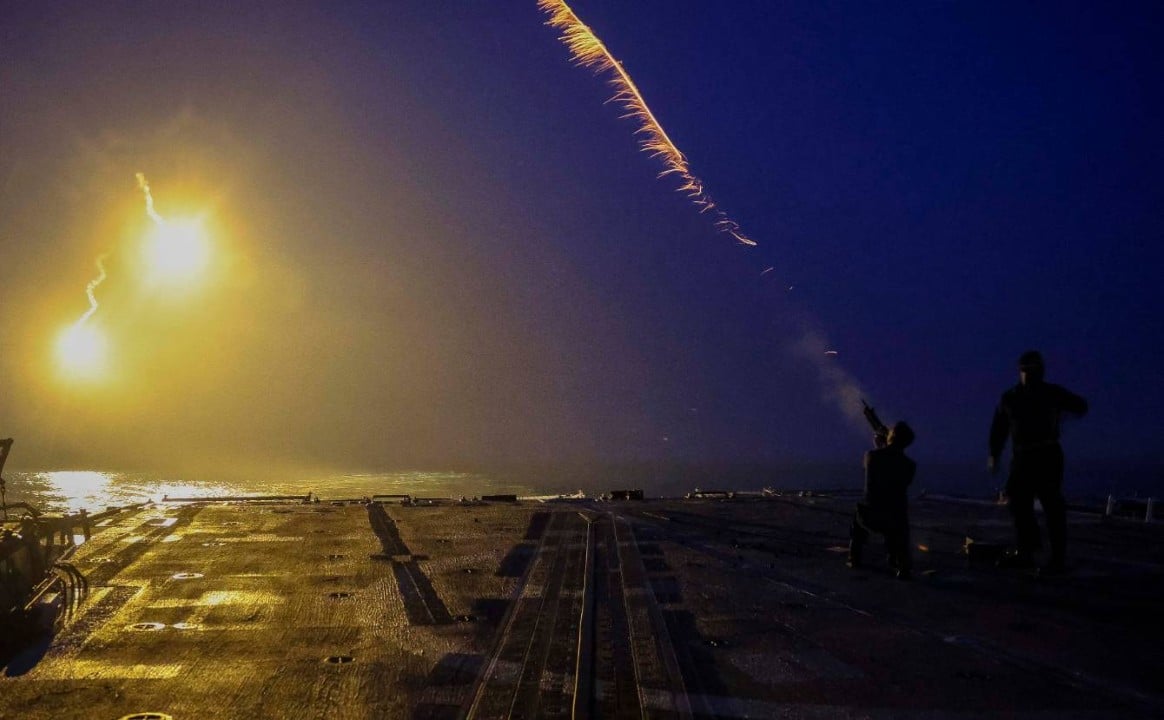
On the morning of Monday, June 23, 2025, Iran launched a ballistic missile attack on U.S. military bases in Qatar and Iraq, marking a significant escalation in Middle East tensions. The operation, named Victory Announcement, was a direct response to the U.S.-led Midnight Hammer operation on Saturday, June 21, which destroyed Iranian nuclear facilities in Fordow, Natanz, and Isfahan. Explosions were reported in Doha, Qatar’s capital, as the region’s airspace was closed. The Iranian action, according to Tehran officials, aims to punish the U.S. for its intervention in the conflict already involving Israel and Iran. The White House is monitoring the situation, while regional allies, such as the United Arab Emirates, follow developments cautiously. The attack reignites fears of a broader regional conflict.
The Pentagon confirmed that the Al Udeid airbase in Qatar was a primary target. Considered the largest U.S. military facility in the Middle East, it houses over 10,000 troops and is a strategic hub for regional operations. An Israeli official reported that six ballistic missiles were fired at the bases, though damage assessments are ongoing. In Doha, witnesses reported explosions, heightening insecurity in the Qatari capital.
In Iraq, the Al Asad airbase was also hit, according to Iranian news agencies. The choice of these targets reflects Iran’s intent to directly retaliate against U.S. interests without, so far, striking civilian areas. Iran’s armed forces issued a statement asserting that “no attack on Iranian territory will go unpunished,” signaling potential further actions if the escalation continues.
Al Udeid: the epicenter of Iran’s response
The Al Udeid airbase, located about 30 kilometers from Doha, is a symbol of U.S. military power in the Persian Gulf. Built in the 1990s and expanded over the years, it serves as the headquarters for the U.S. Central Command (Centcom) and houses fighters, bombers, and missile defense systems. Its strategic importance makes it a natural target for Iran, especially after the Midnight Hammer operation, which, according to the Pentagon, severely crippled Iran’s nuclear program.
Regional impact: The attack shook the confidence of Gulf allies, such as Qatar, which relies on the U.S. for security.
Military capacity: Al Udeid supports up to 100 aircraft, including F-22 fighters and B-52 bombers, as well as surveillance drones.
Stationed troops: Over 10,000 personnel, including forces from the UK and other allies, operate at the base.
Missile defenses: Equipped with Patriot and THAAD systems, the base has robust defenses, though their effectiveness against Iranian ballistic missiles remains uncertain.

The Qatari government, which maintains delicate relations with Iran due to geographic proximity, closed its airspace immediately after the attacks. The measure, also adopted by the United Arab Emirates, reflects fears of a broader Iranian retaliation, possibly involving drones or cruise missiles, as seen in previous attacks on targets in Saudi Arabia.
The Midnight Hammer operation and its consequences
The U.S. offensive that triggered Iran’s response was a military milestone. In the early hours of June 21 to 22, stealth B-2 bombers, escorted by fighters and supported by aerial refuelers, took off from Whiteman Air Force Base in Missouri. The mission, planned in secrecy, used 75 precision-guided munitions, including 14 GBU-57 “bunker-buster” bombs. A submarine in the Arabian Sea also launched dozens of Tomahawk missiles, striking targets in Isfahan.
General Dan Caine, Chairman of the Joint Chiefs of Staff, described the operation as “historic” for its precision and unprecedented use of GBU-57 bombs in combat. The nuclear facilities in Fordow, Natanz, and Isfahan sustained significant damage, according to satellite imagery released by the Pentagon. President Donald Trump celebrated the attack, stating it “will change history” and permanently weakened Iran’s nuclear ambitions. However, Tehran downplayed the damage, claiming its air defenses thwarted much of the assault.
Israeli Prime Minister Benjamin Netanyahu congratulated Trump, highlighting the collaboration between the two nations. The U.S. operation followed a series of Israeli strikes on Iranian targets, including the Natanz facility on June 15. The direct U.S. involvement in the conflict, however, elevated the confrontation to a new level, with unpredictable implications for regional stability.
Iran’s retaliation and the risk of escalation
Iran’s attack on U.S. bases was carefully calibrated, according to analysts. Targeting military sites without hitting civilian areas suggests Tehran aims to send a message without provoking all-out war. However, the retaliation exposes the vulnerability of U.S. bases in the Middle East, which house about 40,000 troops in countries like Qatar, Bahrain, Kuwait, and Iraq.
- Al Asad in Iraq: The base, previously targeted in 2020 after the assassination of Qasem Soleimani, sustained limited damage, according to initial reports.
- Iran’s response capacity: Iran possesses an arsenal of over 3,000 ballistic and cruise missiles, capable of hitting targets up to 2,000 kilometers away.
- Militia support: Shia groups in Iraq, allied with Tehran, may intensify attacks on U.S. troops, broadening the conflict.
- Strait of Hormuz closure: Iran has threatened to block this vital route, through which 20% of the world’s oil passes, as an extreme measure.
The White House, aware of potential retaliation, strengthened security at its regional facilities. Defense Secretary Pete Hegseth stated that the U.S. is prepared to respond to any further Iranian actions but emphasized the goal of avoiding a broader conflict. The statement reflects Washington’s delicate position, balancing shows of strength with the need to prevent a prolonged war.
Regional and international reactions
Iran’s attack elicited mixed responses in the Middle East and beyond. Qatar, host of the Al Udeid base, expressed “deep concern” over the escalation but avoided directly condemning Iran, reflecting its neutral stance in regional disputes. Saudi Arabia, a U.S. ally, called for restraint and advocated for a political solution, while Oman, a mediator in nuclear talks, condemned the U.S. attacks as a violation of Iranian sovereignty.
Internationally, the International Atomic Energy Agency (IAEA) confirmed damage to the entrances of tunnels at the Isfahan facility but warned of the risk of radioactive leaks at Fordow, where uranium enrichment centrifuges are located. The UN, through its Security Council, plans an emergency meeting to address the crisis, though divisions among powers like Russia, China, and the U.S. hinder a unified response.
Israel’s role in the conflict
Israel, which intensified its attacks on Iran since June 13, plays a central role in the crisis. Tel Aviv’s initial offensive, which killed key figures like Hossein Salami, head of the Revolutionary Guard, and nuclear scientists, paved the way for U.S. intervention. Netanyahu justified the strikes as necessary to neutralize Iran’s “nuclear threat,” but the resulting escalation put Israel on high alert, with missile defenses like the Arrow 3 in operation.
Iran, in turn, launched 30 missiles at Tel Aviv in retaliation for U.S. involvement, though most were intercepted. The exchange of attacks between the two nations, combined with Iran’s response to U.S. bases, signals a multifaceted conflict that could involve other regional actors, such as Hezbollah in Lebanon or militias in Iraq.
Uncertainty on the horizon
The situation in the Middle East remains volatile, with the potential for further attacks and counterattacks. Iran, despite its belligerent rhetoric, faces logistical and economic constraints, exacerbated by international sanctions and damage to its nuclear facilities. The U.S., meanwhile, seeks to maintain its regional influence without engaging in a prolonged conflict, while Israel presses for tougher actions against Tehran.
The international community watches with concern, as Gulf countries bolster their defenses and airlines avoid the region’s airspace. The possibility of a miscalculation, such as an Iranian attack causing significant U.S. casualties, could trigger a massive military response, altering the balance of power in the Middle East.
