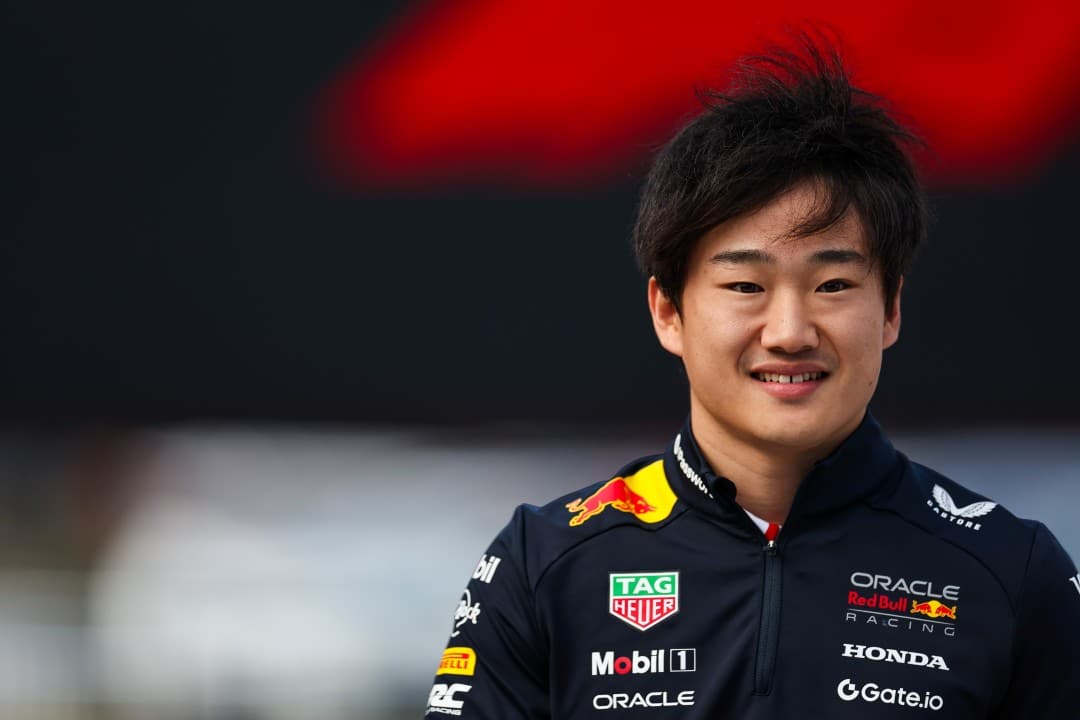
Yuki Tsunoda, Japan’s Formula 1 prodigy, will not continue with Red Bull Racing after the 2025 season, marking the end of a brief and challenging stint with the top team. The decision, confirmed internally by the Austrian outfit, reflects the driver’s struggles to adapt to the demanding RB21 and contribute to the team’s technical development. After just ten Grand Prix weekends, Tsunoda scored only seven points, falling short of expectations as Max Verstappen’s teammate. Honda, Tsunoda’s longtime backer, is now exploring options to relocate him, with Aston Martin, their new engine partner starting in 2026, as a likely destination, though only as a test driver. Tsunoda’s exit raises questions about his F1 future and underscores the challenges of racing in Verstappen’s shadow.
Tsunoda’s journey at Red Bull Racing began with high expectations. Promoted from Racing Bulls to replace Liam Lawson at the third race of 2025, the Japanese Grand Prix, the 25-year-old saw the move as a chance to cement his name among the elite. However, the RB21, known for its narrow operating window, proved a near-insurmountable hurdle. While Verstappen secured victories at tracks like Suzuka and Imola, Tsunoda struggled to find consistency, often exiting in Q1 and scoring just seven points in ten races.
- Key moments from Tsunoda’s Red Bull tenure:
- Promising debut in Japan, finishing ninth at Suzuka.
- Points in Bahrain and Imola, but no podiums or standout results.
- Crash in Imola, highlighting struggles with the RB21.
- Limited technical feedback for car development.
The Red Bull decision reflects not only on-track performance but also the need for a driver who can support Verstappen in title pursuits and car development for 2026, when new regulations take effect.
Technical challenges of the RB21
The RB21, designed under Pierre Waché’s technical direction, was a major obstacle for Tsunoda. Unlike the Racing Bulls car, which offered more margin for error, the RB21 demanded pinpoint precision. Verstappen, with his technical prowess and adaptability, maximized the car’s potential, winning races even as Red Bull trailed McLaren in the constructors’ championship. Tsunoda, however, struggled with the car’s instability, particularly at the rear, limiting his competitiveness.
In an interview before the Miami Grand Prix, Tsunoda noted he needed more time to grasp the RB21’s limits. “The car isn’t impossible to drive, but the performance window is tight. Sometimes I feel it sliding, yet the lap time is decent. I need to embrace that and find the rhythm,” he said. Despite early optimism, results didn’t follow, and the team noted Tsunoda’s inability to provide actionable feedback for car adjustments.
- Factors hindering Tsunoda’s RB21 adaptation:
- Narrow operating window requiring precise driving.
- Limited experience with top-tier F1 cars.
- Difficulty translating simulator data to on-track performance.
- Constant comparison to Verstappen’s results.
Tsunoda’s exit also aligns with Red Bull’s strategy to prioritize drivers who can contribute technically. With the switch to Red Bull Powertrains-Ford engines in 2026, the team seeks a second driver to accelerate the new car’s development.
Uncertain future at Aston Martin
Honda, which has supported Tsunoda since his junior career, is committed to keeping him in Formula 1. With their Red Bull partnership ending in 2025, the Japanese manufacturer is turning to Aston Martin, their engine partner from 2026. Koji Watanabe, president of Honda Racing Corporation, expressed hope for Tsunoda to race in a Honda-powered car but acknowledged limitations, as Fernando Alonso and Lance Stroll are contracted with Aston Martin through 2026.
One scenario is Tsunoda taking a test and reserve driver role at Aston Martin. “If there’s an opportunity for Yuki at Aston Martin, it will be welcomed, but we don’t control the team’s decisions,” Watanabe said. However, Tsunoda has shown reluctance to accept a secondary role, indicating a preference for a full-time seat elsewhere.
- Possible scenarios for Tsunoda in 2026:
- Reserve driver at Aston Martin, focusing on development.
- Talks with smaller teams, such as the upcoming Cadillac outfit.
- Temporary exit from F1 to other categories, like endurance racing.
- Potential return to Racing Bulls, if Red Bull keeps the seat open.
The move to Aston Martin, while logical due to Honda’s partnership, faces hurdles. Alonso, a two-time world champion, is central to the project, and Stroll, son of team owner Lawrence Stroll, is unlikely to be replaced, reducing Tsunoda’s chances of a full-time seat.
Tsunoda’s F1 journey
Tsunoda’s Formula 1 career began in 2021 with AlphaTauri (now Racing Bulls), where he quickly emerged as a promising talent. A product of the Honda Formula Dream Project, he won the Japanese F4 championship in 2018 and finished third in F2 in 2020, earning his F1 seat. His best season was 2024, scoring 15 points and outperforming teammate Daniel Ricciardo in several races.
At Racing Bulls, Tsunoda thrived in a supportive environment with a less demanding car. His promotion to Red Bull Racing, however, exposed his struggles under pressure and with a car tailored to Verstappen’s style. “At Racing Bulls, I could attack freely. The RB21 demands precise decisions all the time, and I’m still learning that,” Tsunoda admitted after the Saudi Arabian Grand Prix.
- Milestones in Tsunoda’s F1 career:
- 2021 debut with AlphaTauri, fourth place in Abu Dhabi.
- Seventh place in the 2024 Miami GP, his best result to date.
- 2025 promotion to Red Bull Racing, replacing Liam Lawson.
- Just seven points in ten 2025 races.
Despite the setbacks, Tsunoda remains Japan’s most successful F1 driver, surpassing figures like Takuma Sato and Kamui Kobayashi in consistency and longevity.
Pressure and culture at Red Bull
Red Bull Racing is notorious for its ruthless approach to driver selection. Since Max Verstappen became the team’s cornerstone, drivers like Pierre Gasly, Alex Albon, Sergio Pérez, and Liam Lawson have struggled to match his pace. Tsunoda, though showing flashes of speed, fell into the same trap. The team’s culture, which prioritizes immediate results and detailed technical feedback, proved incompatible with Tsunoda’s style, which analysts say thrives in less hierarchical settings.
The departure of Christian Horner as team principal, replaced by Laurent Mekies, sparked hopes of a more balanced approach. Mekies, who worked with Tsunoda at Racing Bulls, praised his growth. “Yuki is a fast driver with potential. He needs a car that lets him explore his speed without so many constraints,” Mekies said. Yet, even with the new leadership’s support, Tsunoda’s exit was finalized.
- Cultural and technical reasons for Tsunoda’s departure:
- Struggles with independent decision-making under pressure.
- Japanese group-oriented work culture, less aligned with Red Bull.
- Lack of synergy with engineers on RB21 development.
- High expectations racing alongside Verstappen.
Red Bull’s next steps
With Tsunoda’s exit, Red Bull is evaluating options for 2026. Isack Hadjar, who shone at Racing Bulls in 2025 with 21 points, is the frontrunner to join Verstappen. Arvid Lindblad, a rising star in F2, is also under consideration. The switch to Red Bull Powertrains-Ford engines demands a driver who can provide precise feedback, a strength Hadjar displayed at Racing Bulls.
The 2025 season was tough for Red Bull, finishing fourth in the constructors’ championship. Verstappen, with 165 points, carried the team, while Tsunoda contributed just seven. The arrival of Mekies and Adrian Newey’s move to Aston Martin signal a rebuilding phase, with Red Bull aiming to reclaim dominance in 2026.
- Candidates for Tsunoda’s 2026 seat:
- Isack Hadjar, with strong Racing Bulls performance.
- Arvid Lindblad, a standout in junior categories.
- Possible return of Liam Lawson, if he shows progress.
- External names from rival teams.
Tsunoda’s departure marks the end of an era for Red Bull, now focused on reshaping its lineup for the 2026 regulatory changes. For Tsunoda, the F1 future is uncertain, but his speed and determination suggest he may yet find a place on the grid, whether with Honda or another ambitious project.
