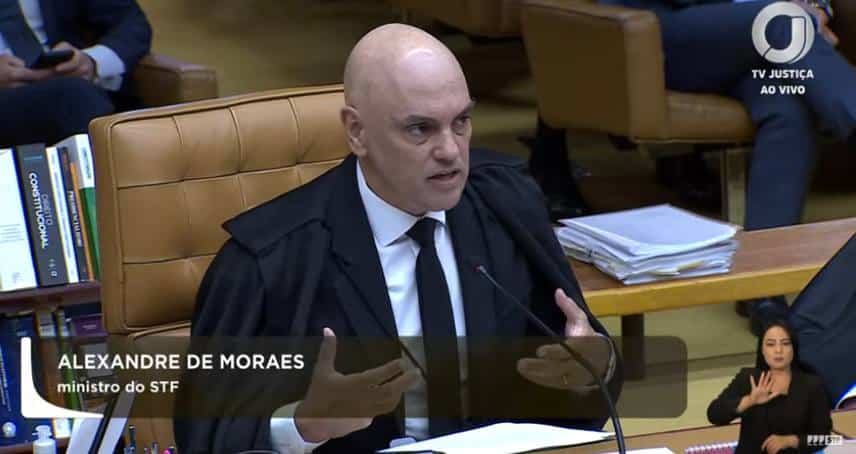
The United States government, under Donald Trump’s leadership, imposed sanctions on Supreme Federal Court (STF) Justice Alexandre de Moraes using the Magnitsky Act, causing direct impacts on Brazil’s financial system. Announced on July 30, 2025, the measure blocks Moraes’ dollar-based financial operations and American-branded credit cards, such as Visa, Mastercard, and American Express. The decision, issued by the Office of Foreign Assets Control (OFAC), is justified by alleged human rights violations and censorship, particularly in the case against former President Jair Bolsonaro. Brazilian banks, after legal consultations, adopted a conservative stance, suspending Moraes’ cards. The sanction, considered a “financial death penalty,” also prohibits transactions with American companies and access to assets in the US. The STF and the Brazilian government reacted, calling the measure an unacceptable foreign interference.

Brazilian financial institutions faced initial disagreements on how to apply the restrictions imposed by the Magnitsky Act. After analyses by Brazilian and American law firms, they chose to suspend operations involving American-branded cards, even for transactions in reais. The Attorney General’s Office (AGU) and the STF were notified of the limitations, which follow a generic executive order from Trump. The measure sparked diplomatic tensions, with President Luiz Inácio Lula da Silva expressing solidarity with Moraes and criticizing Brazilian politicians who encouraged the sanctions.
- Allowed operations: Transactions in reais in bank accounts in Brazil.
- Blocked operations: Use of American-branded credit cards and dollar transactions.
- Possible developments: Trump may detail sanctions, expanding financial restrictions.
- STF’s reaction: The Court expressed support for Moraes, reinforcing the legality of his decisions.
Details of the Magnitsky Act’s application
The Magnitsky Act, passed in 2012 during Barack Obama’s administration, was initially created to punish Russian officials involved in the death of lawyer Sergei Magnitsky, who exposed corruption schemes. In 2016, the law gained global reach, allowing sanctions against individuals accused of corruption or serious human rights violations. In Moraes’ case, the Trump administration claims the justice led a “witch hunt” against opponents, including Bolsonaro, and imposed censorship on American platforms like Rumble and Trump Media. The OFAC’s executive order freezes Moraes’ assets in the US and prohibits American citizens from transacting with him.
Sanctioning Moraes is unprecedented against a Supreme Court justice, comparable to measures applied to officials from countries like Venezuela and Russia. Experts note that the sanction reflects the politicization of the law, as Moraes’ STF decisions were endorsed by other justices and supported by the Federal Prosecutor’s Office. The impact extends beyond finances, affecting Moraes’ mobility, as his US visa was revoked on July 18, 2025, along with those of family members and seven other STF justices, except Luiz Fux, André Mendonça, and Kassio Nunes Marques.
Reactions in Brazil and diplomatic implications
The sanction prompted strong reactions in Brazil, with the government and STF condemning it as an attempt to interfere in domestic affairs. President Lula, in a statement, said the sanctions are driven by Brazilian politicians who “betray the homeland” for personal interests, referring to efforts by Eduardo Bolsonaro in the US. The AGU called the measure unacceptable and promised to take appropriate actions. International law experts, such as Priscila Caneparo, note that there are no direct legal mechanisms to reverse the sanctions, but Brazil could resort to diplomacy or the International Court of Justice to challenge the decision.
Diplomatic tensions were heightened by other Trump administration actions, such as imposing 50% tariffs on Brazilian products, announced on July 9, 2025. Trump’s justification for the tariffs, described as retaliation for Bolsonaro’s “persecution,” intensified friction between the two countries. Brazilian senators on a mission to the US warned that further sanctions could be imposed, including on countries maintaining ties with Russia, potentially impacting Brazil further.
- Lula’s response: Solidarity with Moraes and criticism of Brazilian politicians.
- AGU’s action: Pledge to counter foreign interference.
- Trade tensions: 50% tariffs on Brazilian products.
- New threats: Potential sanctions for ties with Russia.
Financial and operational impact on Moraes
Brazilian banks, after legal consultations, opted to block Moraes’ American-branded credit cards, such as Visa, Mastercard, and American Express, even for reais transactions. This preliminary decision reflects banks’ fear of facing US penalties, where they maintain operations. If Trump details the sanctions, Moraes could face stricter restrictions, such as bans on transactions with any company using the American financial system, which experts call “financial death.”
Although Moraes has no declared assets in the US, according to the STF, the card and digital service blockages, such as subscriptions to American platforms (Netflix, Google, Amazon), could significantly limit his financial operations. Brazilian financial institutions, even those operating outside the US, may be affected if they process transactions on American servers. For example, a transaction with a Brazil-issued card processed in the US could be blocked.
Background of the accusations against Moraes
The sanctions stem from the STF case against Jair Bolsonaro, where Moraes is the rapporteur. The former president is a defendant for attempting a coup after the January 8, 2023, events. The Trump administration, backed by Bolsonaro allies like Congressman Eduardo Bolsonaro, accuses Moraes of arbitrary arrests and censoring free speech. A cited case is the arrest of journalist Jackson Rangel Vieira, detained between 2022 and 2023 for spreading misinformation, which the US considers a rights violation.
Additionally, Moraes’ actions against American platforms, such as blocking profiles on the social network X and the Rumble platform, motivated the sanctions. These measures, justified by the STF as combating misinformation and hate speech, are seen by the Trump administration as violations of the US Constitution’s First Amendment. Trump Media, the president’s company, sued Moraes in a Florida court, alleging his orders undermine US sovereignty.
- Bolsonaro’s case: Moraes is rapporteur for the coup attempt case.
- Journalist’s arrest: Jackson Rangel Vieira case cited by the US.
- Platform blockages: Actions against X and Rumble prompted sanctions.
- Florida lawsuit: Trump Media challenges Moraes’ decisions in court.
Legal and international perspectives
Applying the Magnitsky Act to Moraes is seen by experts as a political move, as US accusations lack robust evidence of serious violations, such as torture or extrajudicial killings, required by the law. In the UK, for instance, Moraes would not qualify for similar sanctions, as British criteria are stricter. In Brazil, national sovereignty prevents US sanctions from directly affecting STF decision legitimacy, but the financial and reputational impact is significant.
Lawyers consulted by Brazilian banks note that, without an international treaty, US sanctions have no automatic application outside the US. However, financial institutions exposed to the American system, such as global banks or tech companies, tend to adopt preventive measures to avoid penalties. Moraes’ ability to hire US lawyers to contest the sanctions is limited, as the decision rests with the US president, who must notify Congress 15 days in advance for potential reviews.
- Law’s criteria: Requires evidence of serious violations, like torture.
- National sovereignty: Sanctions do not affect STF decisions in Brazil.
- Legal limits: Reversal depends on US presidential decision.
- Global impact: Banks with US operations comply with sanctions.
Political and social repercussions
The sanction on Moraes sparked polarized reactions in Brazil. Congressman Eduardo Bolsonaro celebrated the measure in a social media video, thanking Trump and Marco Rubio for “recognizing human rights violations” in Brazil. Conversely, STF Justice Flávio Dino expressed solidarity with Moraes, emphasizing that the Court’s decisions are collective and legal. Brazilian society, particularly in online forums, split between support for the sanctions, by STF critics, and rejection, by defenders of national sovereignty.
The measure also reignited debates about Brazilian politicians’ influence in the US. Eduardo Bolsonaro, who moved to the US to push for sanctions, is under investigation in Brazil for actions against authorities. His involvement, combined with Jair Bolsonaro’s R$2 million donation for his US stay, was cited by Moraes as an attempt to extort Brazilian justice.
