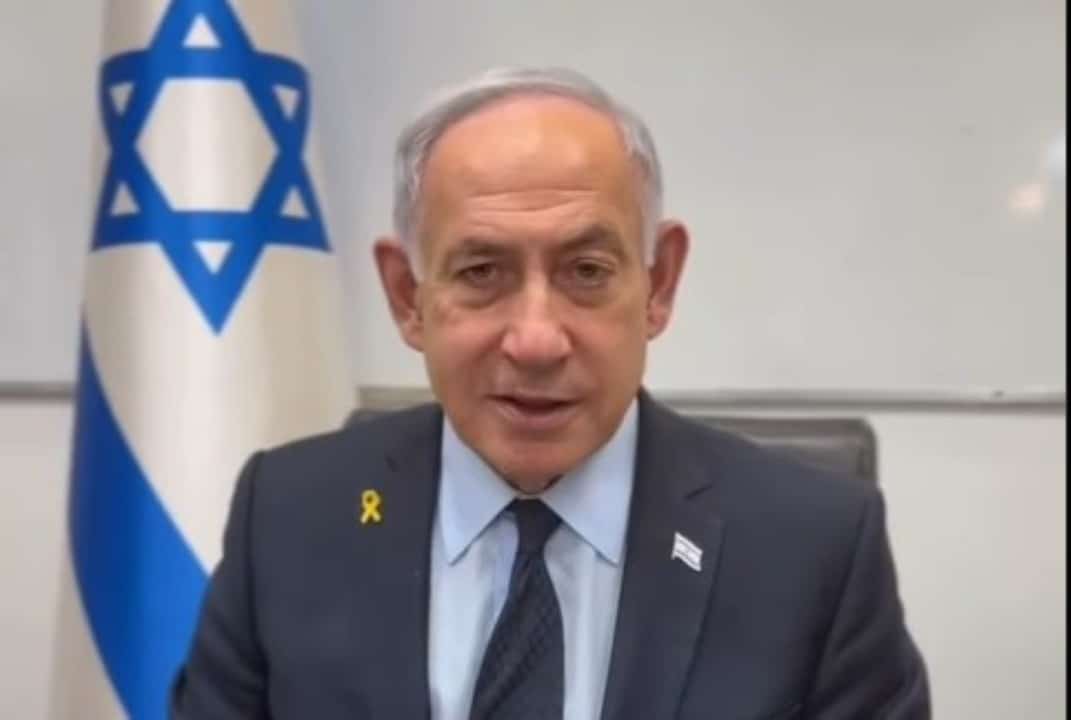
The Prime Minister of Israel, Benjamin Netanyahu, sent this Sunday (30) a formal request for pardon to President Netanyahu, who denies all allegations of bribery, fraud and breach of trust, declared in a video that the measure would promote national reconciliation.
The request comes weeks after the president of Estados Unidos, Donald Trump, sent a letter to Herzog defending the pardon, describing the case as political persecution. Herzog classified the request as extraordinary and with significant implications, promising responsible analysis following expert opinions.
- Main accusations: receiving luxurious gifts valued at around R$1.1 million.
- Duration of the trial: started in May 2020, with interruptions due to regional conflicts.
- Netanyahu’s position: maintains innocence and hopes for acquittal, but prioritizes public interest.
The initiative takes place in a context of internal political divisions, worsened by two years of instability in the Oriente Médio.
Formal order details
Lawyers for Netanyahu delivered the letter to the presidential office on Jerusalém, highlighting that the prime minister prefers the trial to continue to prove innocence, but that national circumstances demand immediate intervention. The text emphasizes that weekly deposits in court unbalance the government’s agenda.
Herzog, whose role is largely ceremonial, has the authority to grant pardons in exceptional situations, although precedents are rare before convictions. The request was forwarded to Departamento of Indultos of Ministério of Justiça to collect opinions.
Likud, party of Netanyahu, released the video in which the leader appeals for support from those who wish Israel well, without admitting guilt or showing remorse – an optional requirement under Israeli law.

Accusations in the three cases
Netanyahu faces three interconnected cases, all indicted in 2019 after prolonged investigations. In the first, he is accused of exchanging regulatory favors for positive coverage in a mass circulation newspaper.
The second involves negotiations with a telecommunications company for beneficial legislation in exchange for personal benefits. Já the third refers to gifts from businessmen, such as champagne and cigars, totaling almost 700 thousand shekels.
- Case 1000: Fraude and breach of trust with the media.
- Case 2000: Suborno linked to the communications sector.
- Case 4000: Recebimento of luxury items from wealthy donors.
Ministério Público alleges that these conducts undermined public trust, while the defense classifies them as routine practices without irregularities.
The trial, the only one of a sitting prime minister in the history of Israel, attracted more than 300 witnesses and was paused by events such as the regional war that began in 2023.
Reactions in the opposition and allies
Yair Ele argued that pardon without these steps would weaken Estado’s Direito.
Government ministers, such as Israel Katz, defended the measure as essential for national unity in times of external threats. The request gained echo among supporters, who see the process as a left-wing maneuver to overthrow the right-wing leader.
Watchdog groups, such as Movimento by Governo of Qualidade, warned that a pardon prior to the verdict would represent a blow to equality before the law.
External influence of Trump
Trump’s letter, sent in November, describes the trial as unjustified and praises Netanyahu for alliances against Irã. Durante visits Israel in October, the American reiterated the suggestion publicly on Parlamento, receiving applause.
Herzog responded with gratitude for Trump’s contributions to Israeli security, but strengthened formal procedures for pardons. Analistas point out that the intervention increases pressure, but does not alter judicial independence.
The episode reflects strengthened bilateral ties, with Trump prioritizing allies like Netanyahu in its foreign agenda.
Historical precedents for pardons
Israel has granted presidential pardons in sensitive cases, such as the 1986 case involving Shin Bet, where a pre-indictment was authorized by Suprema Corte to preserve public interests. However, experts differ on the applicability of corruption without conviction.
In 2023, Herzog indicated the possibility of intervention if the case burdened society, but emphasized solemn rites. Historiadores note that political pardons are scarce, with a focus on post-conflict reconciliation.
The current scenario, marked by judicial debates, tests the limits of presidential authority amid polarization.
Chronology of main events
Investigations against Netanyahu began in 2016, with indictments on November 21, 2019. The court of Tel Aviv opened hearings on May 24, 2020, postponed due to the pandemic and tensions in Gaza.
In 2023, outages occurred during offensive against Hamas, with Netanyahu testifying remotely. Recentemente, in October 2025, Trump visited and openly defended the ally.
The November 30 order marks escalation, with Herzog anticipating analysis within weeks, depending on consultations with Ministério Público and Suprema Corte.
Testimonies from the prime minister began in December 2024, with more than 50 sessions so far, including cross-examinations that last hours.
Defense position and Ministério Público
The defense maintains that the evidence is circumstantial and politically motivated, predicting full acquittal. Eles argue that forgiveness does not imply guilt, but prioritizes government stability.
Ministério Público, in turn, insists on continuity, stating that the process reveals patterns of abuse of power. Promotores reject strikes, citing impact on leaders’ accountability.
Legal experts predict that, even approved, the pardon does not prevent appeals or parallel investigations.
