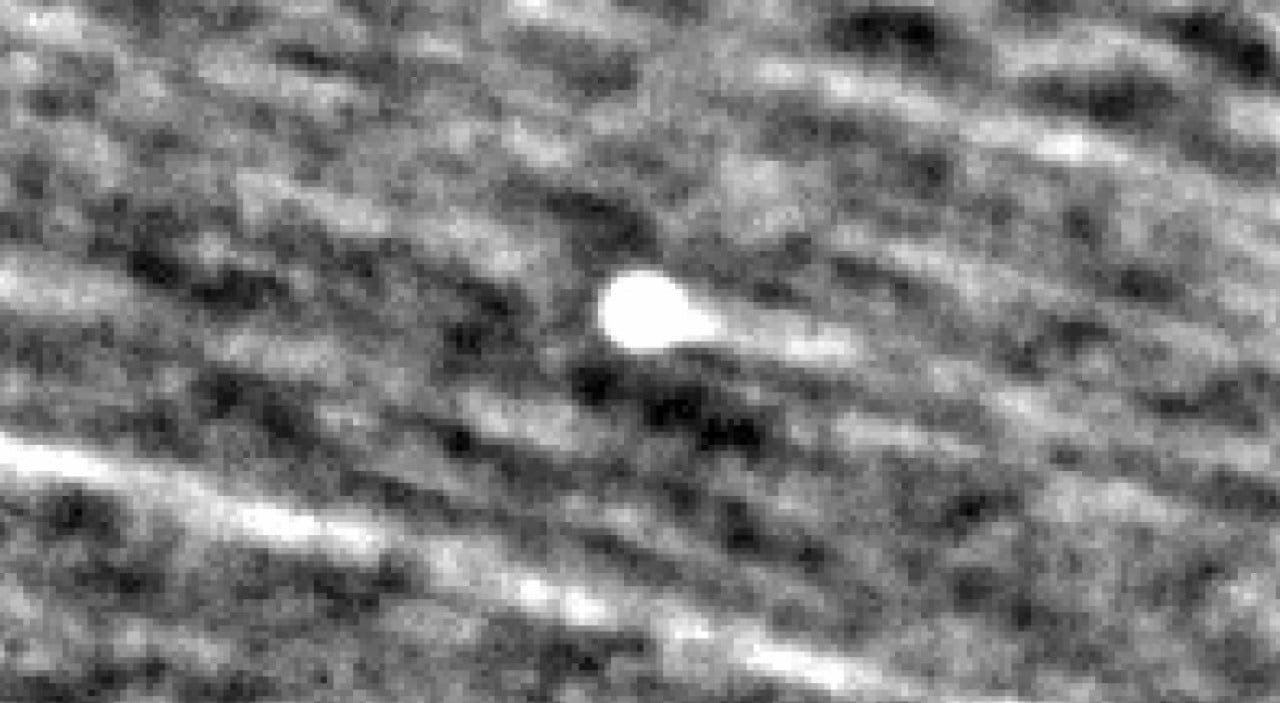
The scientific community is buzzing with anticipation as preparations escalate for the potential close approach of a new interstellar comet, tentatively identified as 3I Atlas, expected to be observable in late 2025. This celestial visitor, if confirmed, represents a rare opportunity for astronomers worldwide to study material from beyond our solar system, offering invaluable insights into cosmic origins.
Initial projections, based on early hypothetical trajectory data, suggest 3I Atlas could offer a unique viewing window, providing a glimpse into the composition and characteristics of an object formed in another star system. Researchers are meticulously planning observation campaigns, leveraging an array of ground-based telescopes and space-borne instruments to capture every possible detail.
NASA, alongside international partners, is at the forefront of these preparatory efforts, allocating significant resources to track and analyze the comet’s journey. The agency’s deep space missions and advanced observatories are poised to gather critical data, enhancing our understanding of these enigmatic interstellar wanderers.
Anticipating the interstellar visitor’s path in 2025
The designation “3I” signifies this potential object as the third confirmed interstellar visitor to our solar system, following ‘Oumuamua and Borisov. Such objects originate from outside our sun’s gravitational influence, carrying pristine material from their birth star system, untouched by the Sun’s radiation and solar wind.
Astronomers consider each interstellar object a time capsule, preserving clues about the conditions and processes of exoplanetary formation. The detection of 3I Atlas by the ATLAS survey system would underscore the critical role of automated sky surveys in identifying these fast-moving, elusive celestial bodies.
NASA’s advanced observational strategies for celestial objects
NASA’s robust network of observatories, including the Hubble Space Telescope and potentially the James Webb Space Telescope, stands ready to play a pivotal role in the study of 3I Atlas. These instruments offer unparalleled resolution and spectral analysis capabilities, crucial for determining the comet’s chemical makeup, size, and activity.
Furthermore, NASA’s planetary defense coordination office, while primarily focused on Earth-crossing asteroids, contributes significantly to tracking any object approaching our solar system, regardless of its origin. This includes developing advanced algorithms for trajectory prediction and risk assessment for all celestial travelers. The agency also supports initiatives to develop rapid response observation protocols for unexpected astronomical events, ensuring that valuable data is not missed.
The ATLAS network’s crucial role in early detection
The Asteroid Terrestrial-impact Last Alert System (ATLAS) is a robotic astronomical survey and early warning system designed to detect near-Earth objects. Its wide field of view and frequent scanning of the night sky make it exceptionally adept at spotting fast-moving objects like comets, often long before other observatories.
ATLAS’s ability to provide early alerts is paramount for interstellar objects, which typically exhibit hyperbolic trajectories, indicating they are not gravitationally bound to our Sun. This early detection allows astronomers precious time to mobilize resources and schedule observation time on larger, more powerful telescopes around the globe. The system’s continuous monitoring ensures that few surprises escape notice.
Scientific insights from cosmic wanderers
Studying interstellar comets like the anticipated 3I Atlas can reveal unprecedented details about the chemical diversity of other star systems. Scientists can analyze the volatile compounds released by the comet, such as water ice, carbon monoxide, and various organic molecules, to compare them with the composition of comets native to our own solar system.
These comparisons provide critical data points for understanding the processes of planet formation across the galaxy. The presence or absence of specific elements and compounds can indicate differences in the protoplanetary disks where these objects originated, shedding light on the universal or unique nature of solar system development.
Preparing for future interstellar encounters in 2025
The scientific community is continuously refining protocols for rapid response to interstellar object discoveries. This includes establishing communication channels for immediate data sharing among observatories and developing standardized procedures for follow-up observations. The goal is to maximize the scientific return from these fleeting cosmic encounters.
Collaborative efforts extend beyond data collection, encompassing theoretical modeling and numerical simulations to better predict the behavior and origins of these objects. Such comprehensive preparation ensures that by 2025, the global astronomical community is more coordinated and equipped than ever to unravel the mysteries carried by interstellar visitors.
Public engagement and ongoing monitoring efforts
Public interest in interstellar objects remains high, fueled by the wonder of discovering material from beyond our cosmic neighborhood. NASA and other scientific institutions are committed to sharing findings and updates with the public through various outreach programs, fostering a deeper appreciation for astronomy and space exploration.
Continuous monitoring by professional and amateur astronomers alike plays a vital role in tracking these objects. Citizen science initiatives often contribute valuable observations, especially for objects that remain visible for extended periods, complementing the work of large observatories.
Challenges in tracking rapid celestial travelers
Observing interstellar comets presents unique challenges due to their high velocities and often unpredictable behavior. Their rapid movement across the sky necessitates quick reaction times and sophisticated tracking software.
Key challenges include:
These factors highlight the complexity and excitement surrounding the potential observation of 3I Atlas.
