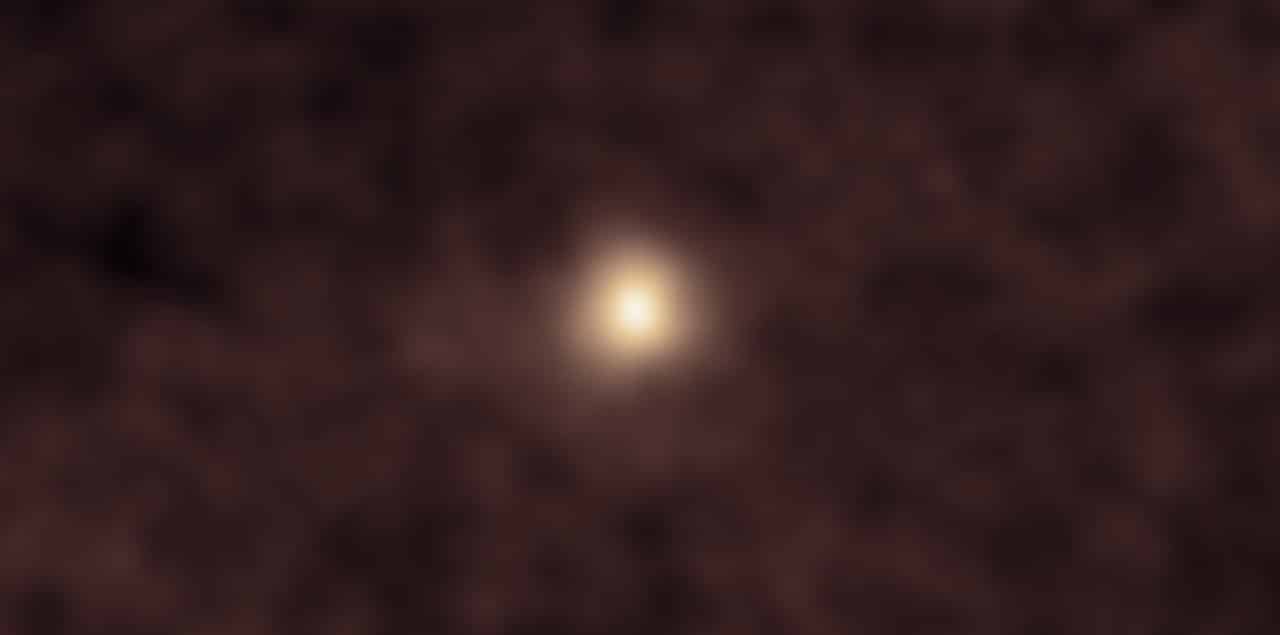
The mysteries of the cosmos continue to unfold as NASA scientists intensely analyze data from the enigmatic interstellar comet 3I Atlas. This celestial visitor, which first captured global attention, offers a unique window into planetary formation processes beyond our solar system, with ongoing research promising significant breakthroughs by 2025. The detailed examination of its composition and trajectory provides crucial information, shedding light on the diverse chemical environments present in other star systems.
Observations from various telescopic arrays have allowed researchers to model the comet’s origin and predict its long-term implications for our understanding of interstellar objects. The scientific community anticipates that advanced computational models, currently under development, will refine our knowledge of such transient visitors significantly in the coming year.
Discovery and initial observations
Comet 3I Atlas was initially identified by the Asteroid Terrestrial-impact Last Alert System (ATLAS) in late 2019, quickly drawing the attention of astronomers worldwide. Its hyperbolic trajectory unequivocally confirmed its interstellar origin, making it only the second such object ever detected after ‘Oumuamua.
Initial spectroscopic analyses revealed unexpected chemical signatures, indicating a composition distinct from typical comets originating within our solar system. This early data sparked intense interest, prompting NASA and other space agencies to prioritize its study. The unique chemical makeup suggests it formed in an environment vastly different from our own stellar neighborhood, providing invaluable comparative data.
Unique characteristics of 3I Atlas
The distinguishing features of 3I Atlas provided scientists with unprecedented opportunities for study. Its highly elongated nucleus and the unexpected fragmentation observed during its closest approach to the Sun were key areas of investigation. These characteristics challenge existing models of comet resilience and behavior.
Scientists hypothesize that its interstellar journey subjected it to extreme conditions, altering its structural integrity. The fragmentation events, though challenging for direct observation, offered rare insights into its internal layers and materials. Researchers are particularly interested in:
These elements are critical for understanding how comets evolve across vast cosmic distances and what they might carry between star systems.
NASA’s research methodologies and instruments
NASA’s comprehensive study of 3I Atlas involved a collaborative effort utilizing multiple observatories and advanced analytical techniques. Telescopes like the Hubble Space Telescope and ground-based facilities played pivotal roles in gathering high-resolution imagery and spectroscopic data. These instruments allowed scientists to track the comet’s path and analyze its escaping gases and dust.
The data collected is being processed through sophisticated algorithms to reconstruct the comet’s history and predict its future behavior. Researchers are employing machine learning models to identify patterns in the fragmentation events and correlate them with internal stresses or compositional variations. This multidisciplinary approach ensures a robust and thorough investigation into the comet’s properties.
Interstellar object implications for planetary science
The study of interstellar objects like 3I Atlas has profound implications for planetary science, offering direct evidence of material exchange between star systems. Understanding these objects helps scientists refine theories on how planets form and how life’s building blocks might spread across the galaxy. It provides tangible samples of extrasolar material for direct analysis.
These comets act as natural probes, carrying information about their home systems directly to us. By studying their composition, scientists can infer details about the protoplanetary disks where they originated, including temperature, pressure, and the abundance of various elements. This expands our knowledge beyond what exoplanet observations alone can provide.
Future of interstellar comet research and 2025 projections
Looking ahead to 2025, the scientific community anticipates significant advancements in interstellar comet research, largely driven by the insights gained from 3I Atlas. New observatories and improved data analysis techniques are poised to enhance our ability to detect and characterize these objects earlier and more effectively. Dedicated missions to intercept and study future interstellar visitors are also being conceptualized.
The lessons learned from 3I Atlas are directly informing the design of next-generation telescopes and observational strategies. Scientists project that by 2025, we will have a clearer framework for classifying interstellar objects, understanding their origins, and assessing their potential role in galactic material transport. This ongoing work is fundamental to mapping the universe’s chemical diversity.
Public interest and educational outreach
The fascination with 3I Atlas extends beyond scientific circles, captivating public imagination. NASA’s ongoing efforts to communicate its findings through educational programs and public outreach initiatives aim to inspire future generations of scientists and space enthusiasts. The unique nature of an object from another star system resonates deeply with curiosity about our place in the universe.
