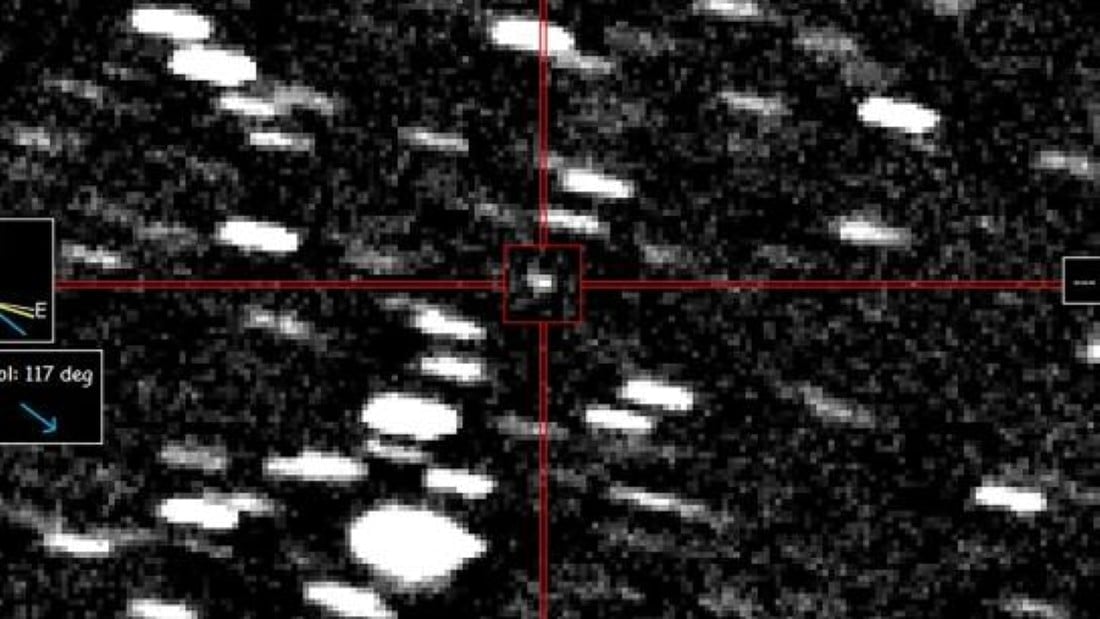
An interstellar object, identified as 3I/ATLAS, will make a close pass to Terra on December 19, 2025. The comet will approach at a safe distance of approximately 270 million kilometers.
This comet, the third of its kind to be recognized within our solar system, was discovered on July 1, 2025, using the ATLAS survey system. Sua current trajectory suggests an origin outside the boundaries of our star system.
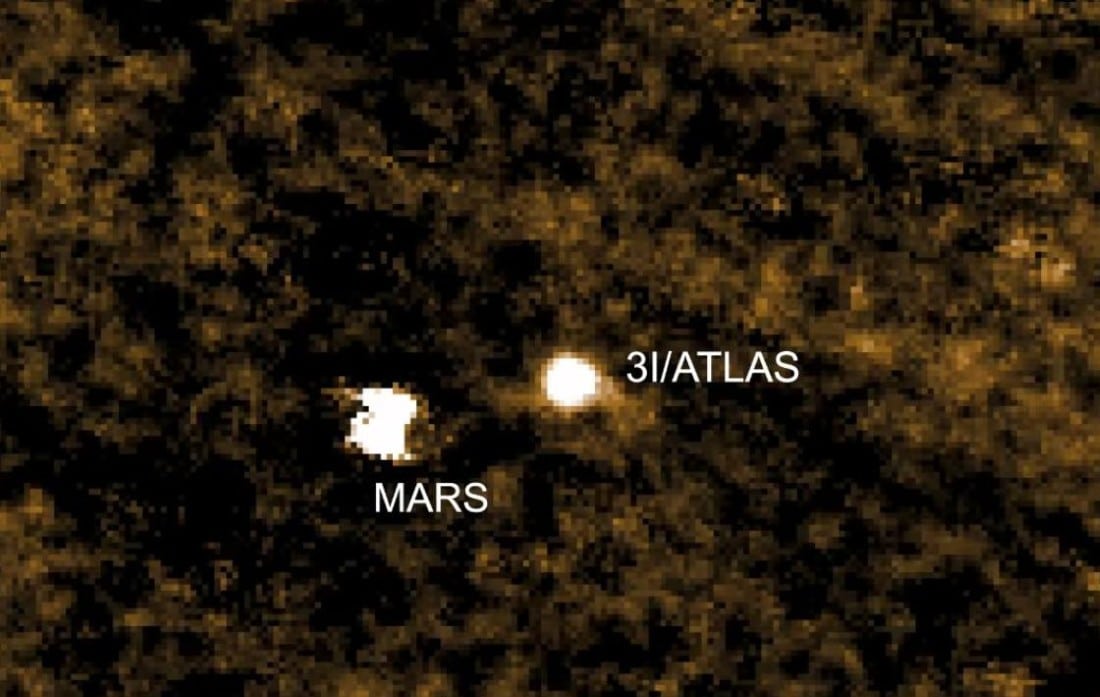
Recent observations, including those made by advanced telescopes, indicate the presence of a distinct coma and a forming tail, characteristic signs of an active comet. Sua luminosity peaked in October, and the celestial body is now being monitored as it moves away from Sol.
Experts reinforce important data about the visit:
Discovery and classification
Astronomers initially identified comet 3I/ATLAS through the ATLAS survey system, located at Havaí. Essa detection marked the beginning of an intense period of observation and analysis.
[[_0]
Subsequent analyzes confirmed the existence of its coma and tail, which led to its classification as an active comet. The hyperbolic orbit, with an eccentricity greater than 6, provided conclusive evidence of its interstellar origin, distinguishing it from comets born in our solar system.
Chemical composition details
Observations carried out by the Atacama Large Millimeter/submillimeter Array (ALMA) revealed the presence of methanol and hydrogen cyanide in large quantities in the comet’s coma. Esses organic compounds are crucial to understanding the conditions under which celestial bodies form.
The detection of these organic substances indicates that the comet formed in an extremely cold environment. Comparado compared to comets originating in our solar system, 3I/ATLAS has a smaller amount of water ice and a higher concentration of carbon monoxide ice.
Studies on the composition of volatile elements of interstellar comets are fundamental to understanding the formation of planets and the possible origin of water in bodies like Terra. The detailed analysis of 3I/ATLAS will contribute significantly to this area.
Recent observations and space missions
Telescópio Espacial Hubble made detailed observations of the comet on November 30, 2025, when the object was 286 million kilometers from Terra. The images captured showed a faint coma and a developing gaseous tail.
The Juice mission Agência Espacial Europeia (ESA) also observed the comet, recording a clear tail within the coma. Além In addition, other space missions, such as Psyche, Lucy and MAVEN, are collecting external data and orbital information that complement the analyses.
Trajectory and orbital speed
Comet 3I/ATLAS entered the solar system at a remarkable speed of 58 kilometers per second, surpassing the speed of other previously observed interstellar comets. Essa high speed is indicative of its external origin.
On October 29, 2025, the comet reached its perihelion, the closest point to Sol, at a distance of 1.4 astronomical units. Após its passage through Terra on December 19, it will follow its trajectory out of the solar system, returning to interstellar space.
Its hyperbolic orbit is irrefutable proof that the comet did not originate in our system, with an orbital period estimated to be between 76 million and 140 million years. Essa characteristic makes it a valuable object of study for understanding the dynamics of celestial bodies in distant galaxies.
Visibility for observers
Amateur observers had the opportunity to see the comet in November 2025, taking advantage of dark skies in remote regions. Visibility for these enthusiasts has been a highlight during the 3I/ATLAS passage.
Space telescopes play a crucial role in facilitating long-term observations, providing continuous, high-quality data that would be impossible to obtain with ground-based instruments alone. Collaboration between observatories is essential to maximize information collection.
At the ALMA observatory, the comet’s coma appears as a point of light that covers the tail, offering a unique perspective on its structure and particle emission dynamics. Essa Detailed visualization helps scientists model the comet’s behavior.
The visibility of 3I/ATLAS is expected to extend until January 2026, after which the comet will begin to decrease in luminosity and become more difficult to observe. Esse deadline ends the window for intensive studies from Terra.
Unusual activity and its meaning
The comet’s nucleus, with an estimated diameter of between 440 meters and 5.6 kilometers, has emitted gas at varying speeds. Pequenas particles are ejected at 22 meters per second, while larger particles are expelled at 2 meters per second.
In August, the comet’s tail reached a length of 56 thousand kilometers, a considerable length that reflects the intensity of its activity. The emission of material has remained stable, without registering unexpected explosions.
This constant activity, but without major outbreaks, is an important factor for researchers. Ela allows for a more controlled analysis of the rate of ice sublimation and dust release, offering clues about the comet’s internal composition.
Importance to astronomical science
Comet 3I/ATLAS is an invaluable scientific tool for investigating the origins of other planetary systems. Sua composition and behavior provide essential comparative data for understanding how comets form and evolve in different cosmic environments.
Observations conducted by NASA and ESA are contributing to the improvement of orbital models, allowing the trajectory of future interstellar objects to be predicted with greater accuracy. The focus of current research is on the composition of volatile ices and prebiotic organic compounds.
