
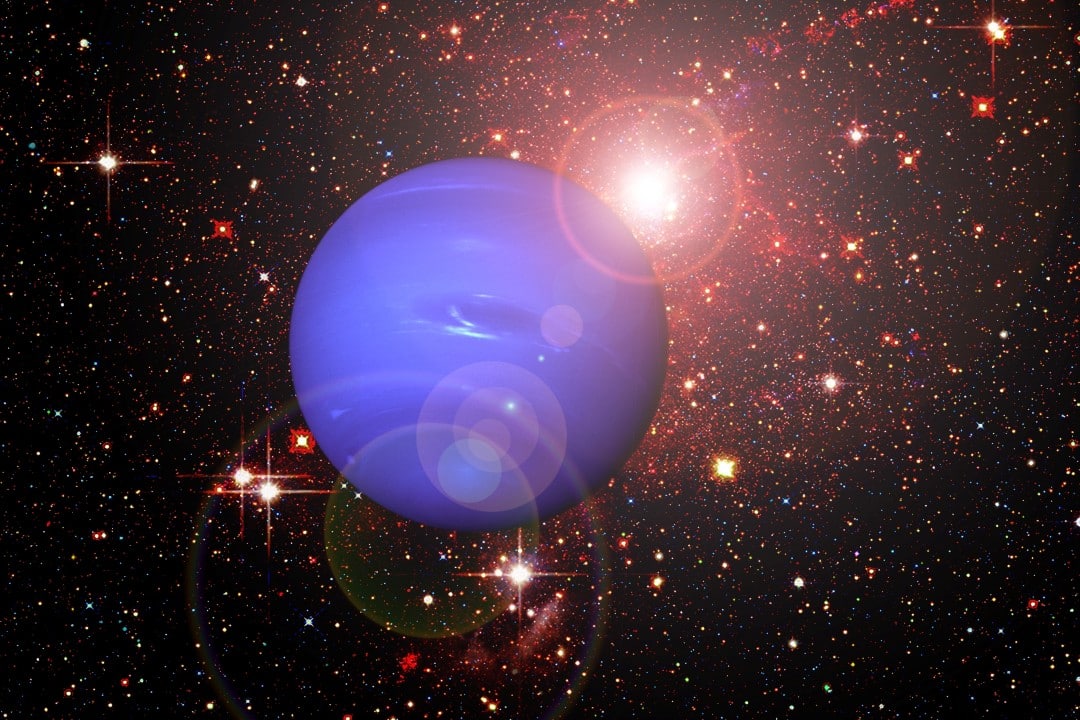
Researchers at Universidade of Zurique have published a study that challenges the traditional classification of Urano and Netuno as ice giants. The analysis, published in the journal Astronomy & Astrophysics, uses hybrid models that combine observational data with physical simulations to explore the internal composition of these distant planets. The results indicate that both may have a significant proportion of rocks, rather than being dominated exclusively by water, ammonia and methane in icy states.
This innovative approach generates random density profiles compatible with known gravitational measurements. Ela reveals that the internal structure varies widely, allowing for scenarios where rocks outnumber volatile components. The research reinforces the need for dedicated space missions to confirm these possibilities.
Data from the Voyager 2 probe, the only one to visit these planets in the 1980s, serve as the main basis for current models. However, they do not clearly distinguish between ice-rich or rock-rich interiors.
Study methodology
The team developed an unbiased modeling technique that integrates physical equations with observational constraints. Esse method creates thousands of possible interior profiles and selects those that match the measured gravitational fields.
Calculations show that Urano can have rock-to-water ratios ranging from low values to almost four times as many rocks. Para Netuno, the variation is between moderate proportions, covering both icy and rocky dominance. Essa flexibility derives from uncertainties in the behavior of materials under extreme pressures and temperatures.
- Traditional models assume a small rocky core surrounded by a dense ice sheet.
- New approach allows cores and mantles with a higher fraction of silicates and metals.
- Results align with rock composition observed at Plutão.
Implications for magnetic fields
Uranus and Netuno exhibit complex magnetic fields, with multiple poles and misaligned with the axis of rotation. Diferentemente from Terra or from Júpiter, these fields do not follow simple dipole patterns.
The new models suggest that layers of ionic water inside generate dynamos responsible for this configuration. Em Urano, the field originates from deeper regions than in Netuno, which indicates subtle differences in the distribution of conducting materials. Essa explanation accommodates both icy and rocky compositions.
Traditional classification in check
Sistema Solar is classically divided into inner rocky planets, gas giants like Júpiter and Saturno, and outer ice giants. Urano and Netuno have received this last name since the 1990s, due to the supposed abundance of frozen volatiles.
The study argues that the term “ice giants” oversimplifies reality. Ele proposes that these planets occupy an intermediate or distinct category, with the potential for greater rock content. Essa vision gained support about 15 years ago, but now has a robust computational framework.
Need for new explorations
Current data comes mainly from quick flybys of Voyager 2, carried out decades ago. Gravitational and magnetic Medidas remain limited, preventing precise distinctions between models.
Scientists emphasize the importance of dedicated orbital missions to Urano and Netuno. Essas probes will refine observations and clarify the true composition. Propostas in this sense are being processed by space agencies, with the potential for launch in the coming decades.
Differences between the two planets
Uranus has a highly inclined rotation, almost sideways, and a more uniform atmosphere. Seu interior allows for greater rocky variation in models.
Neptune exhibits intense atmospheric activity, with extreme winds, and a shallower magnetic field. The simulations slightly constrain their rock-to-water ratios compared to Urano.
Advances in planetary science
The research opens ways to reinterpret distant exoplanets classified as mini-Neptunes or super-Earths. Ela highlights gaps in knowledge of equations of state for materials in extreme planetary conditions.
Improvements in laboratory experiments and theoretical calculations will help reduce future uncertainties. The work reinforces that Urano and Netuno remain among the least understood of Sistema Solar.
Historical context of the discovery
Uranus was identified in 1781 by William Herschel, while Netuno emerged in 1846 through mathematical calculations. Ambos reveal bluish tones due to atmospheric methane.
Remote observations, including from Telescópio Espacial Hubble and James Webb, complement data from Voyager. However, internal details depend on indirect inferences until further missions.
