
Researchers at Universidade of Zurique have released a study that reshapes the way Urano and Netuno are understood, challenging the traditional classification of these celestial bodies as “ice giants.” The analysis, published in the journal Astronomy & Astrophysics, employs hybrid models that integrate observational data with detailed physical simulations to investigate the internal composition of Sistema Solar’s most distant planets.
The results obtained indicate that Urano and Essa new perspective emerges as a crucial point for planetary science.
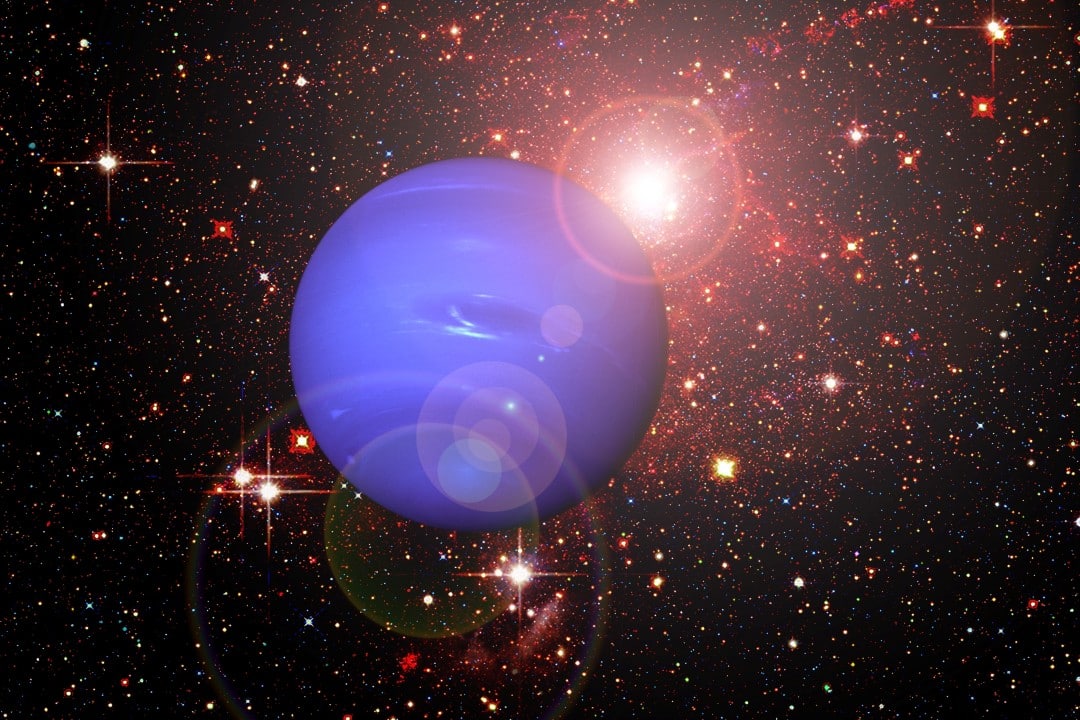
The innovative methodology adopted by the scientists generated random density profiles that proved to be consistent with already known gravitational measurements. Ela revealed that the internal structure of these planets presents a wide variation, paving the way for scenarios where the amount of rocks significantly exceeds that of volatile components.
These discoveries reinforce the urgency of future space missions dedicated to Urano and Netuno, the only ones capable of providing more precise data to confirm the hypotheses raised. Atualmente, most of the detailed information still comes from the Voyager 2 probe, which flew over these planets in the 1980s.
Challenging planetary classification
Sistema Solar is classically categorized into the inner rocky planets such as Terra and Marte, gas giants represented by Júpiter and Saturno, and the outer ice giants, where Urano and Essa The last name, in use since the 1990s, is based on the supposed abundance of frozen volatiles in its compositions.
The recent study, however, argues that the term “ice giants” may be an oversimplification of the actual complexity of these worlds. Research suggests that Urano and Netuno may actually occupy an intermediate or even distinct category, with a much greater potential to contain a significant volume of rock material.
This vision, which has been gaining traction in the scientific community for approximately 15 years, is now supported by a robust computational framework. The proposed reset has the potential to fundamentally alter our understanding of the formation and evolution of similar planets in other star systems.
Innovative methodology reveals composition
The team of researchers developed an unbiased modeling technique that integrates complex physical equations with observational constraints obtained over decades. Esse method allowed the creation of thousands of possible internal profiles for Urano and Netuno.
From these profiles, only those that accurately corresponded to the measured gravitational fields were selected, ensuring compatibility with existing data. Detailed calculations reveal that Urano may have a rock-to-water ratio ranging from low values to almost four times more rocks than expected.
For Netuno, the simulations indicate a variation between moderate proportions, considering both the dominance of ice and rocks in its interior. Essa flexibility in the results is due, in part, to uncertainties about the behavior of various materials under the extreme pressures and temperatures that prevail at the centers of these planets.
The enigmatic innards of Urano and Netuno
The traditional approach to the internal structure of Urano and Netuno generally assumes the existence of a small rocky core, surrounded by a dense mantle composed mostly of ice. However, the new modeling offers a broader perspective, allowing both cores and mantles to have a much higher fraction of silicates and metals. The results obtained by this methodology align with the rock composition observed at Plutão, a distant celestial body that, although smaller, shares certain formation characteristics with the outer Sistema Solar. The ability to consider such a wide range of internal compositions is a significant advance, as it allows for a more complete understanding of the structural possibilities of these planets. Essa flexibility is crucial, given limited knowledge about the properties of materials under such extreme pressure and temperature conditions.
Magnetic fields and the new theory
Uranus and Netuno are notable for exhibiting complex magnetic fields, which differ markedly from the simple, dipolar patterns found in Terra or Júpiter. Seus magnetic fields have multiple poles and are significantly misaligned with respect to their respective axes of rotation.
Newly developed models suggest that the presence of layers of ionic water inside these planets is responsible for the generation of dynamos, which in turn produce this peculiar magnetic configuration. Em Urano, the magnetic field appears to originate in deeper regions than in Netuno, indicating subtle variations in the distribution of conducting materials between the two planets. Essa explanation is capable of accommodating both predominantly icy compositions and those with greater rock content, providing a more comprehensive theoretical basis.
Uranus and Netuno: internal and external differences
Uranus stands out for its highly inclined rotation, which makes it appear to rotate on its side, and for an atmosphere that, at first glance, appears more uniform. Seus internal models allow for a wider rock variation, suggesting greater flexibility in its composition.
Neptune, on the other hand, exhibits intense atmospheric activity, characterized by extreme winds and visible storms, as well as a magnetic field that appears to originate from shallower layers. The simulations carried out by the researchers impose slightly greater restrictions on its rock-water ratios when compared to those of Urano.
Both planets share the characteristic of their bluish tones, attributed to the presence of methane in their atmospheres, which makes them visually distinct. Essas differences, both superficial and internal, are crucial to deepen the understanding of each person’s formation and evolution. The ability of new models to reconcile these particularities is a significant advance in planetary science.
Future of space exploration and science
The data currently available on Urano and Netuno largely comes from rapid flybys of the Voyager 2 probe, carried out decades ago. The gravitational and magnetic measurements obtained by this mission remain limited, which prevents a precise distinction between the different internal composition models proposed.
Scientists around the world emphasize the critical importance of future orbital missions dedicated specifically to Urano and Netuno. Tais probes would be able to substantially refine existing observations and ultimately clarify the actual composition of these planets. Propostas for these missions are already underway at several space agencies, with the potential for launch in the coming decades.
Implications for exoplanets and the universe
The research in question opens new avenues for the reinterpretation of distant exoplanets, especially those classified as mini-Neptunes or super-Earths. Further understanding the composition of Urano and Netuno could offer valuable insights into planetary diversity beyond our system.
This work also highlights gaps in knowledge of the equations of state for materials under extreme planetary pressure and temperature conditions. Melhorias in laboratory experiments and theoretical calculations are essential to reduce future uncertainties and advance the field. The research reinforces that Urano and Netuno remain two of the least understood celestial bodies in our own Sistema Solar.
