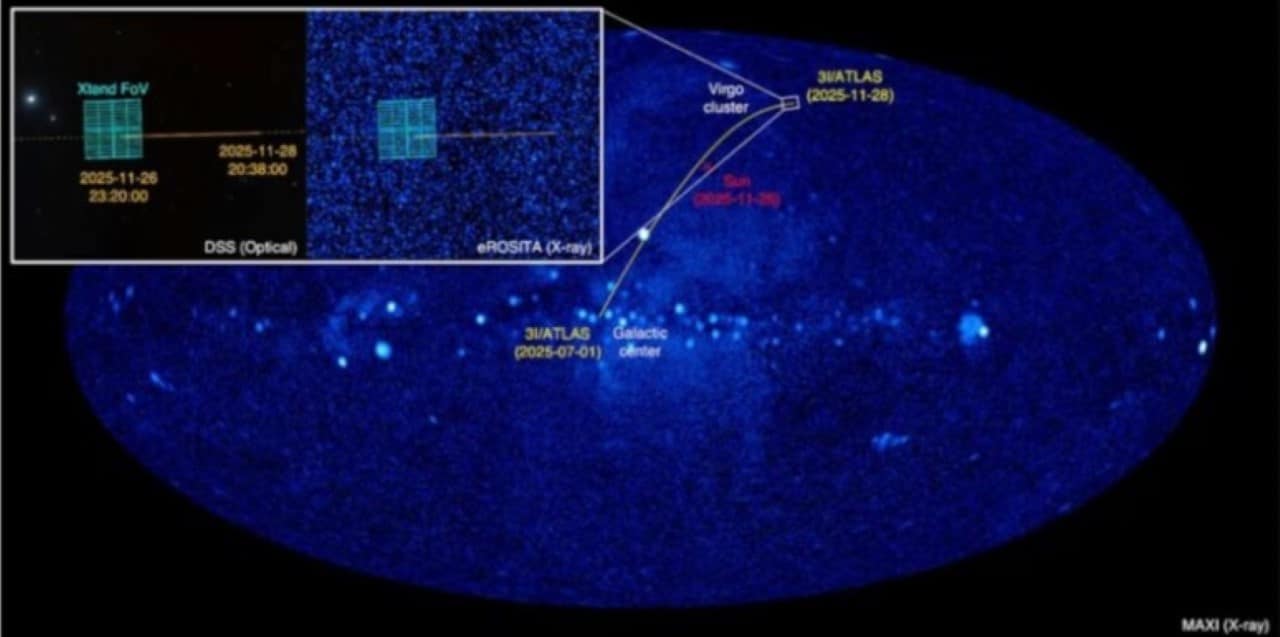
The enigmatic interstellar visitor, Comet 3I Atlas, first detected in 2020, continues to be a focal point for NASA scientists, whose ongoing analysis of its unique trajectory and composition promises to reshape our understanding of cosmic phenomena well into 2025 and beyond. Its passage through our solar system offered an unprecedented opportunity to study material originating from another star system, providing invaluable data that fuels current research into the early universe and the potential diversity of planetary building blocks. This rare encounter underscored the critical need for advanced observational capabilities, pushing the boundaries of astronomical detection and follow-up. Scientists are still sifting through the wealth of information gathered, refining models of interstellar object behavior and preparing for future encounters. The comet’s brief but impactful visit has left a lasting legacy on exoplanetary science.
Designated ‘3I’ for its interstellar origin, the comet’s rapid journey provided a fleeting glimpse into the vastness beyond our sun’s gravitational influence. Its observation was a testament to the collaborative efforts of global astronomical surveys and NASA’s dedicated space-based assets.
Key aspects of 3I Atlas that remain under active investigation include:
- Its unusual chemical signature, which differed from typical solar system comets.
- The implications of its fragmentation during its closest approach to the sun.
- How such objects are ejected from their home star systems.
An interstellar journey captured by NASA
NASA instruments, including the Hubble Space Telescope, played a crucial role in observing Comet 3I Atlas, confirming its interstellar status and gathering detailed imagery of its behavior. The comet’s path indicated it originated from outside our solar system, making it only the second such object ever identified after ‘Oumuamua.
The agency’s rapid response teams coordinated observations across multiple observatories worldwide, maximizing the scientific return from this fleeting cosmic visitor. This coordinated effort highlighted the importance of global astronomical collaboration in studying unpredictable celestial events.
Unveiling the comet’s enigmatic composition
Initial spectroscopic analyses of Comet 3I Atlas revealed a composition that presented both similarities and stark differences to comets native to our solar system. These findings suggest potential variations in the stellar nurseries where comets form across the galaxy, offering clues about exoplanetary environments.
The presence of specific volatile compounds and dust characteristics provided a unique fingerprint of its distant home star system. Understanding these differences helps astronomers refine their models of planet formation and the chemical evolution of planetary systems beyond our own.
Scientists continue to compare 3I Atlas’s data with other comets, both interstellar and indigenous, to build a more comprehensive picture of cometary diversity. This comparative study is vital for developing robust theories about the origins of water and organic molecules in different stellar environments.
The ATLAS survey’s crucial role in detection
The Automated Terrestrial-impact Last Alert System (ATLAS) was instrumental in the early detection of Comet 3I Atlas, providing astronomers with critical lead time for follow-up observations. ATLAS, a robotic astronomical survey system, scans the night sky for moving objects, primarily asteroids that might pose a threat to Earth.
Its ability to identify fast-moving, faint objects proved invaluable in catching the interstellar comet as it approached the inner solar system. This early warning allowed for the deployment of more powerful telescopes and specialized instruments to study the comet in detail before it faded.
Without the vigilance of surveys like ATLAS, such fleeting visitors could easily go unnoticed, depriving scientists of rare opportunities to study material from other star systems. The system’s continuous operation enhances our planetary defense capabilities and our understanding of the cosmic environment.
The success with 3I Atlas reinforces the value of ongoing, wide-field sky surveys in modern astronomy. These automated systems are essential for monitoring the dynamic universe and responding to unexpected astronomical events with scientific rigor.
Advancements in interstellar object tracking for 2025
The experience gained from tracking Comet 3I Atlas has significantly advanced methodologies for detecting and characterizing future interstellar objects. By 2025, new protocols and enhanced computational models are being implemented to improve the speed and accuracy of identifying these rare visitors, leveraging machine learning and AI algorithms to sift through vast datasets from observatories like the Vera C. Rubin Observatory once it becomes fully operational.
These technological leaps aim to provide even longer observation windows for scientists, allowing for more comprehensive studies of their origins, compositions, and trajectories. The ultimate goal is to move beyond mere detection to a more proactive and predictive approach to interstellar object research, potentially enabling dedicated missions in the distant future.
Future prospects for cometary science
The insights gleaned from Comet 3I Atlas are profoundly influencing the direction of cometary science and astrobiology. Its study contributes to a broader understanding of how planetary systems form and evolve, offering tangible evidence of material exchange between stars. This knowledge is crucial for refining theories about the distribution of life-sustaining elements throughout the galaxy. The comet’s unique chemical signature suggests that interstellar objects can carry diverse materials, potentially seeding planetary systems with novel compounds. This ongoing research, extending through 2025, emphasizes the interconnectedness of cosmic phenomena and the potential for a deeper understanding of our own solar system’s origins by studying objects from beyond its confines, highlighting the role of comets as cosmic couriers of fundamental building blocks.
Challenges in tracking fleeting visitors
Tracking interstellar objects like 3I Atlas presents immense challenges due to their high velocities and often faint magnitudes, requiring rapid astronomical response and precise orbital calculations. Their brief presence in our solar system means observation windows are narrow, demanding immediate coordination among telescopes globally to capture crucial data before they depart.
