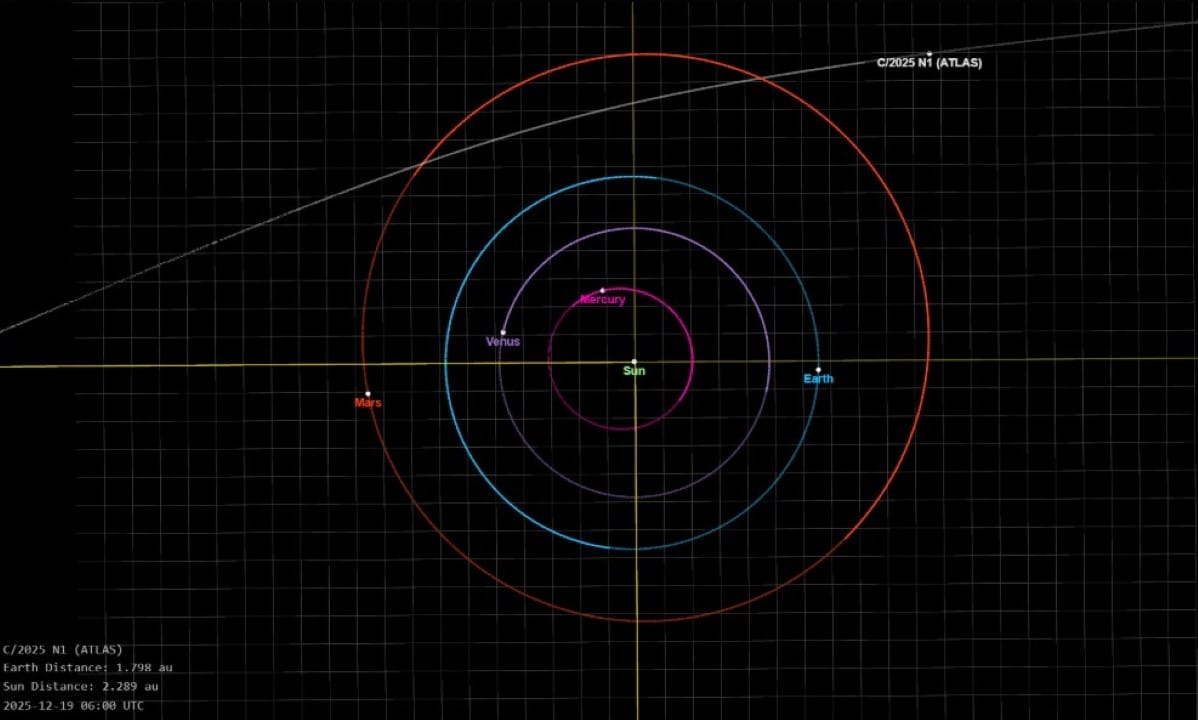
The dramatic disintegration of Comet 3I Atlas in 2020 continues to shape NASA’s approach to celestial object observation in 2025, highlighting its profound impact on space agency protocols and scientific understanding. This event, initially anticipated to deliver a spectacular sky display, instead provided invaluable, real-time data on cometary fragmentation, fundamentally altering how astronomers study these icy wanderers. The lessons learned from this unexpected celestial event are directly influencing the development of next-generation tools and methodologies for monitoring objects across our solar system.
The unforeseen breakup of 3I Atlas, a comet that once promised a dazzling performance for sky-gazers worldwide, transitioned from a potential spectacle to a crucial scientific case study. Its demise offered a unique opportunity for scientists to observe the processes of cometary destruction up close, yielding insights that would have been impossible to gather otherwise. These observations are now cornerstones of current research.
Key areas significantly impacted by the 3I Atlas event and actively being developed in 2025 include:
Understanding the 3I Atlas event
Comet 3I Atlas, formally designated C/2019 Y4 (ATLAS), was first detected by the Asteroid Terrestrial-impact Last Alert System (ATLAS) in December 2019. Its rapid brightening in early 2020 led to widespread excitement, with initial projections suggesting it could become visible to the naked eye, rivaling some of the brightest comets in recent memory. The scientific community and public alike eagerly awaited its closest approach to the Sun.
However, in April 2020, observations confirmed that the comet had begun to fragment, breaking into multiple pieces and dissipating its potential for a grand display. This unexpected turn provided astronomers with an unprecedented chance to study the mechanisms of cometary demise. NASA telescopes, along with others globally, quickly pivoted their focus to capture every detail of the comet’s breakup, gathering critical data on its structure and composition as it disintegrated.
NASA’s evolving observational methods
In response to the 3I Atlas event, NASA significantly adapted its observational strategies, implementing more dynamic and sophisticated techniques now standard in 2025. The agency has prioritized advanced imaging and spectroscopic analysis to detect subtle changes in comet nuclei, aiming to identify early indicators of instability. This includes leveraging the capabilities of the James Webb Space Telescope and upgraded ground-based observatories.
These enhanced methods involve continuous monitoring campaigns for newly discovered comets, employing artificial intelligence and machine learning algorithms to process vast amounts of observational data. The goal is to rapidly identify anomalies in a comet’s brightness or trajectory that might signal an impending fragmentation. Such proactive measures, refined since the Atlas event, ensure a more comprehensive understanding of these volatile celestial bodies.
The science behind cometary disintegration
Cometary disintegration is a complex phenomenon driven by a combination of factors, primarily the volatile nature of their icy compositions and the intense radiation from the Sun. As a comet approaches the Sun, increasing solar radiation causes its ice to sublimate, releasing gas and dust in spectacular jets that form the coma and tail. However, this process can also exert immense stress on the comet’s nucleus.
The rapid heating and outgassing can lead to internal pressures and thermal stresses that exceed the structural integrity of the nucleus, particularly if it is loosely bound or contains significant fissures. For 3I Atlas, scientists theorize that a combination of its rapid rotation and the thermal shock from its solar approach likely contributed to its breakup. Current 2025 research, informed by the Atlas data, continues to explore the precise conditions under which different types of comets are most susceptible to fragmentation, utilizing advanced simulations and laboratory experiments to model these extreme environments.
Predicting future comet behavior
The challenges of accurately predicting a comet’s stability and future behavior remain substantial, yet the data from 3I Atlas has provided a significant leap forward. Before Atlas, models for cometary fragmentation were largely theoretical or based on limited observations of past events. The real-time, high-resolution data captured during Atlas’s breakup offered an invaluable opportunity to refine these computational models.
In 2025, NASA utilizes sophisticated simulation tools that integrate data on a comet’s composition, rotation rate, and orbital mechanics to forecast potential instabilities. These tools allow astronomers to assess the likelihood of a comet fragmenting, providing more accurate predictions for both scientific study and public awareness. Continuous improvements in these predictive capabilities are a direct outcome of the intensive analysis performed on the Atlas event.
New tools, including advanced adaptive optics on ground-based telescopes and high-resolution imagers on space missions, are now routinely employed to monitor cometary nuclei for early signs of distress. These technological advancements, spurred by the need to better understand events like the 3I Atlas fragmentation, allow for unprecedented detail in observing the smallest changes on a comet’s surface. This proactive approach aims to prevent future surprises and maximize scientific return from these transient visitors.
Implications for planetary defense
While 3I Atlas itself posed no impact threat to Earth, the detailed study of its disintegration has important implications for broader planetary defense strategies. Understanding how celestial objects behave under stress, even if it’s fragmentation rather than an impact trajectory, contributes to a holistic understanding of near-Earth objects. The enhanced observational techniques developed for Atlas are directly transferable to tracking potentially hazardous asteroids and comets.
The ability to rapidly detect, track, and characterize a fast-changing object like a fragmenting comet improves the overall readiness of planetary defense systems. It refines the protocols for allocating telescope time and coordinating international observation campaigns for any object exhibiting unusual behavior. This enhanced vigilance, solidified in 2025 protocols, ensures that the global scientific community is better prepared for any celestial anomaly.
Furthermore, the data on how cometary fragments disperse helps scientists model potential debris fields, should a fragmenting object ever pose a risk. Although a rare scenario, the insights from Atlas contribute to the theoretical understanding of such events, underpinning the robust and comprehensive approach to planetary defense that NASA maintains.
International collaboration in comet studies
The 3I Atlas event fostered a significant increase in international collaboration among space agencies and research institutions worldwide. The shared scientific interest in this unique celestial phenomenon led to a coordinated global effort to observe and analyze its demise. This collaborative spirit has continued to strengthen, becoming a cornerstone of comet studies in 2025.
NASA actively participates in and often leads joint initiatives with agencies like the European Space Agency (ESA) and the Japan Aerospace Exploration Agency (JAXA). These partnerships facilitate the sharing of telescope resources, data, and scientific expertise, ensuring a more comprehensive and global understanding of cometary science. Such coordinated efforts are crucial for observing objects that are often transient and require rapid response.
The enduring legacy of 3I Atlas
Comet 3I Atlas, despite its premature end, has left an indelible mark on cometary science. Its unexpected disintegration served as a powerful catalyst for advancing observational techniques, refining predictive models, and fostering international cooperation. As of 2025, the lessons from this intriguing object continue to inform NASA’s ongoing vigilance and deep scientific inquiry into the mysteries of our solar system’s icy visitors.
