
Ukrainian President Volodymyr Zelensky declared in his recent New Year’s address that a peace agreement to resolve the ongoing conflict with Russia was “90% ready.” This significant statement, delivered at a pivotal moment, suggested a potential breakthrough in diplomatic efforts that have largely remained stalled for months, offering a cautious beacon of hope to a war-weary nation and the international community. Zelensky’s assertion provides a rare glimpse into behind-the-scenes negotiations, hinting at substantial progress on key points that could form the foundation of a lasting resolution, although the details surrounding this advanced stage of a potential deal remain largely undisclosed amidst continued hostilities.
Meanwhile, Russian President Vladimir Putin utilized his own New Year’s address to deliver a starkly different message, one focused on unwavering resolve and a clear path to military triumph. Addressing his troops directly, Putin expressed profound confidence in their capabilities, reiterating his conviction in Russia’s ultimate victory in Ukraine and emphasizing the national effort required.
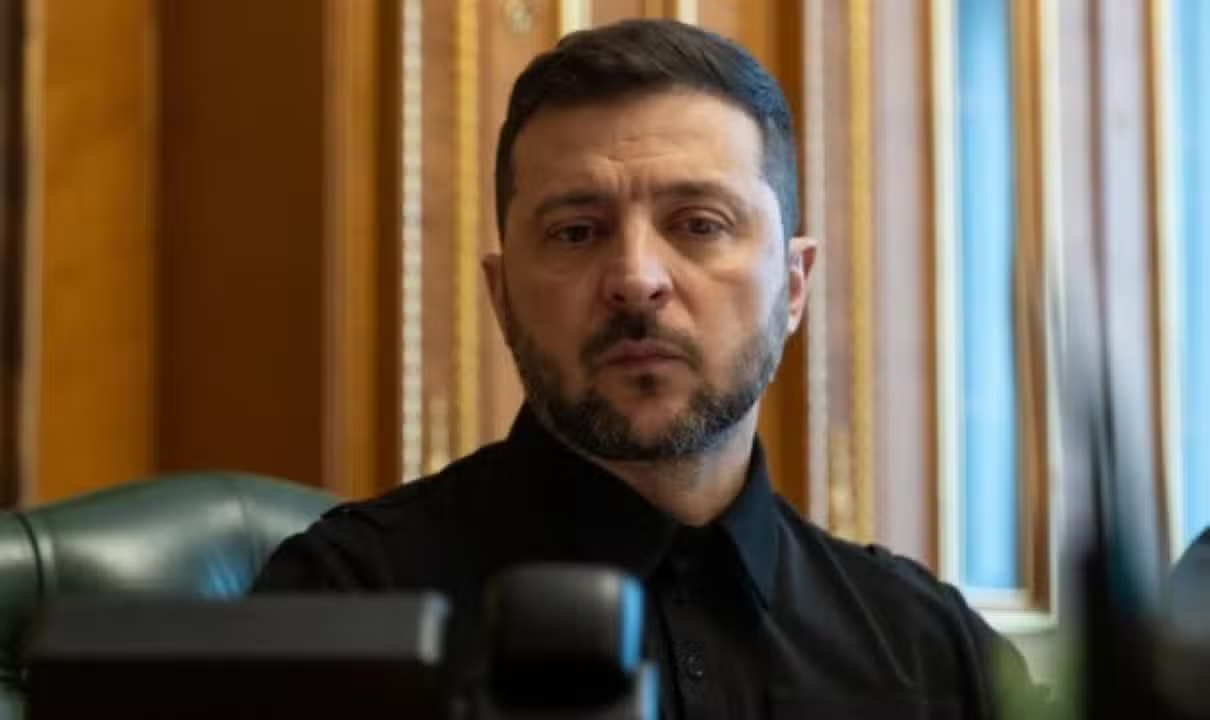
The juxtaposition of Zelensky’s optimistic peace readiness claim and Putin’s firm military assurance highlights the profound ideological chasm that continues to separate the warring nations. International observers are now carefully scrutinizing both statements for any subtle shifts in strategy or potential new avenues for de-escalation, even as the rhetoric remains sharply divided and the global community continues to press for diplomatic solutions.
Diplomatic momentum and critical details
Zelensky’s declaration of a “90% ready” peace deal indicates that a substantial framework for resolution might be in place, possibly encompassing areas beyond core territorial disputes. Such readiness could imply agreement on principles for humanitarian corridors, prisoner exchanges, or even initial steps toward post-conflict security arrangements. The announcement comes after various back-channel discussions and proposals from international mediators, which have sought common ground away from the intense public spotlight.
Despite this claim of significant progress, the devil remains in the undisclosed details, especially concerning the most contentious issues such as territorial integrity, reparations, and future security guarantees for Ukraine. Without clear public outlines of the proposed terms, skepticism persists regarding how such a high level of readiness could translate into a genuinely implementable agreement that satisfies both warring parties and the broader international legal framework, given their fundamentally opposing stances.
Russia’s steadfast resolve for conflict
President Putin’s New Year address reinforced Moscow’s unwavering commitment to its stated objectives, framing the military campaign as a necessary measure for Russia’s national security and historical rectitude. His speech was a powerful call to unity, praising the bravery and dedication of Russian forces and citizens, portraying their actions as a defense against perceived external threats and a stand for national sovereignty.
The Russian leader’s rhetoric suggested no immediate willingness to concede on core demands, instead emphasizing that Russia would achieve its goals through continued military means. This stance contrasts sharply with any notion of a nearly complete peace deal, signaling Moscow’s preparedness for a prolonged conflict if its demands are not met. Putin’s message aims to bolster domestic support and project an image of strength and determination on the global stage.
Historical backdrop of failed peace efforts
The current conflict has seen several attempts at diplomatic resolution since its full-scale escalation, with initial negotiations occurring in early 2022. These early rounds, held in Belarus and later in Istanbul, brought delegations from both sides to the table, raising cautious hopes for an early cessation of hostilities and a political settlement.
However, these talks ultimately collapsed, largely due to profound disagreements over fundamental issues, including Ukraine’s sovereignty over its territories and the demands for demilitarization. A significant lack of trust between the negotiating parties, coupled with evolving battlefield dynamics, repeatedly undermined progress, transforming initial optimism into diplomatic stagnation and further entrenching positions.
Global responses to conflicting narratives
International capitals have reacted to Zelensky’s “90% ready” claim with a mixture of cautious optimism and a demand for concrete evidence. While any sign of diplomatic progress is welcomed by nations eager for an end to the devastating war, past disappointments have fostered a sense of skepticism, highlighting the need for tangible outcomes rather than mere announcements.
Many global leaders and international organizations, including the United Nations and the European Union, continue to emphasize the necessity of a just and lasting peace based on the principles of international law, particularly Ukraine’s territorial integrity. Their statements consistently call for an immediate cessation of hostilities and urge both parties to engage in meaningful negotiations, yet acknowledge the inherent difficulties in reconciling such disparate claims and objectives.
The ongoing realities on the ground
The military situation on the ground remains highly dynamic, characterized by intense fighting along extended frontlines and targeted strikes behind enemy lines. Recent weeks have seen various localized engagements, with both sides reporting tactical gains and losses, underscoring the severe human cost of the protracted conflict.
Economically, both Ukraine and Russia continue to face significant strains. Ukraine grapples with massive reconstruction needs and widespread damage to its infrastructure, while Russia endures extensive international sanctions, impacting its financial sectors and access to global markets. These economic pressures are persistent factors in the strategic calculations of both governments.
The humanitarian crisis persists, with millions of Ukrainians displaced internally and externally, and civilian populations suffering from direct conflict, disrupted services, and shortages. The ongoing destruction of cities and towns underscores the urgent need for peace and humanitarian aid on an unprecedented scale.
Beyond the immediate belligerents, the conflict continues to have broad geopolitical ramifications, affecting global energy markets, food security, and international alliances. Nations worldwide grapple with the ripple effects, from inflationary pressures to shifts in defense policies, adding layers of complexity to the pursuit of any lasting peace deal.
Prospects for a future peace settlement
Translating a claim of “90% ready” into a signed and sustainable peace agreement remains an extraordinarily complex challenge. The chasm between Zelensky’s assertion of near-readiness and Putin’s firm commitment to military victory signifies the deep-seated political and security obstacles that persist.
Achieving a genuine resolution will require not only sustained diplomatic effort but also a fundamental shift in the strategic calculus of both nations. The path forward demands significant compromises, robust international guarantees, and a credible framework for implementation, all against a backdrop of ongoing mistrust and continued conflict.
The critical next steps for resolution
Ultimately, the credibility of Zelensky’s peace deal claim hinges on forthcoming details and verifiable actions from both Kyiv and Moscow. The international community, while cautiously observing, understands that the journey from an announced readiness to an actual end to the devastating hostilities is long and arduous.
