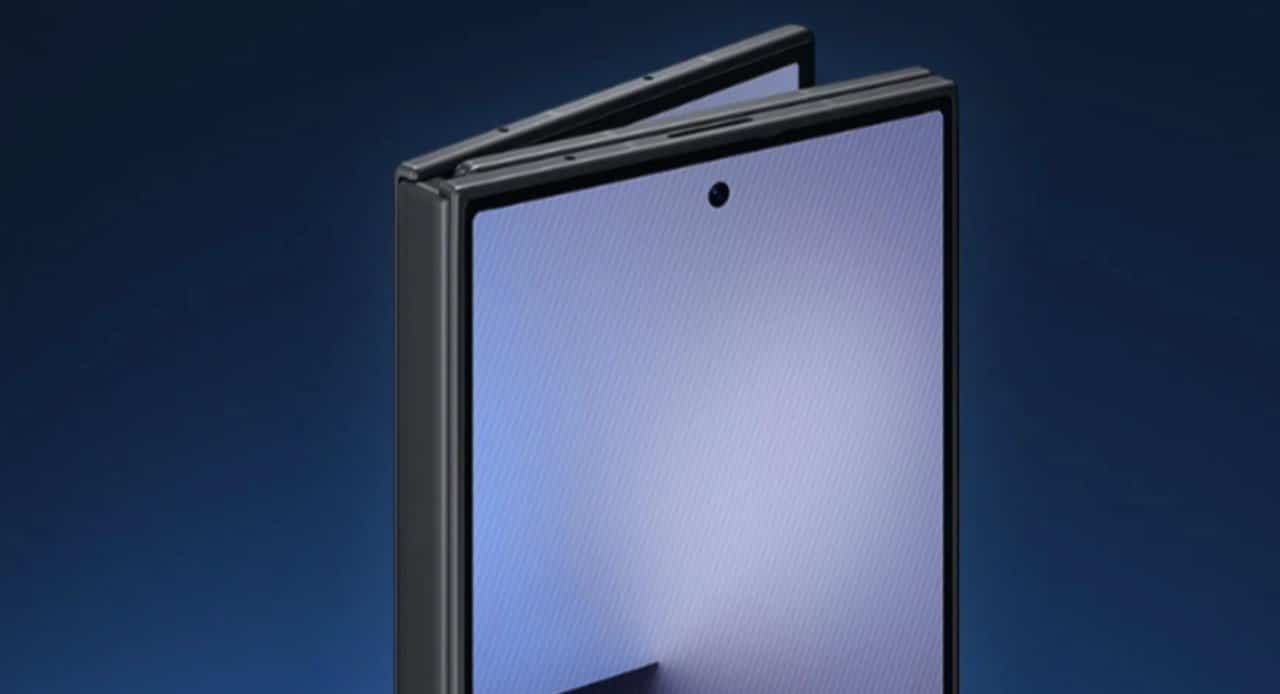
Samsung’s latest entry into the foldable device segment, the Galaxy Z TriFold, did not withstand a rigorous durability assessment. Conduzido by well-known YouTuber Zack Nelson, from the JerryRigEverything channel, the test exposed critical vulnerabilities in the device’s structure, culminating in a catastrophic failure during the application of reverse pressure. The result raises questions about the balance between design innovation and the robustness required for everyday use.
The smartphone, which stands out for being the brand’s first with a triple fold, resulting in a 10-inch internal screen, was designed with a remarkably thin thickness of just 3.9 mm at its thinnest part. Contudo, this feature, combined with the complexity of two hinge mechanisms, proved to be a weak point under extreme mechanical stress, resulting in permanent damage that rendered the device completely unusable.
Equipped with cutting-edge specifications such as the Snapdragon 8 Elite processor, 16 GB of RAM and a robust 5,600 mAh battery, the Galaxy Z TriFold positions itself as a high-performance product in the premium market. Practical analysis, however, demonstrated that the structural integrity of the device can be compromised if it is not handled with extreme care, an important warning for potential consumers of the innovative format.

Scratch Test Details and Inner Screen Vulnerability
The first phase of the resistance assessment focused on the surfaces of the device. The external screen, protected by Gorilla Glass technology, demonstrated performance similar to that of other high-end smartphones. The first signs of scratches appeared at level 6 on the hardness scale of Mohs, with deeper, more visible grooves appearing at level 7, which is considered the standard for high-quality glass.
On the other hand, the large flexible internal screen turned out to be extremely susceptible to damage. As it is manufactured with an ultra-thin plastic polymer, the surface scratches easily, even with the pressure of a fingernail. Isso indicates that common objects, such as keys or coins carried in the same pocket, pose a significant risk of causing permanent damage to the device’s main display.
The vulnerability wasn’t just limited to screens. The rear finish, made of fiberglass to keep the device light, also showed low resistance to scratches when tested with blades. Esses results show that, despite technological advances, the materials used in foldable screens still require a much higher level of caution compared to traditional format smartphones.
Reliance on softer materials for the internal screen continues to be the main engineering challenge for the category. The need for flexibility prevents the use of conventional tempered glass, leaving users with a surface that demands constant protection against contact with abrasive particles and sharp objects that can compromise the visual experience and touch functionality.
Fire and dust resistance compromises vital components
Exposure to heat sources also revealed significant differences between the two screens of the Galaxy Z TriFold. Quando a flame was applied directly to the external display, the OLED pixels resisted for approximately 17 seconds before presenting a permanent white spot, a response time considered reasonable for this type of test.
The internal screen, however, proved to be much more sensitive. In just 10 seconds of exposure to the same flame, the pixels suffered irreversible damage, resulting in a permanent burn that did not recover after cooling. Essa rapid degradation highlights the sensitivity of the flexible plastic material to high temperatures, a factor that can be worrying in situations of use under intense and prolonged sunlight.
Another point of attention was the behavior of the hinge mechanisms when exposed to dust and sand. The entry of fine particles into the gears has resulted in audible grinding noises during the opening and closing movement. Embora the device has an IP48 certification, which guarantees protection against immersion in water and limited dust ingress, the practical test demonstrated that the system is not immune to the accumulation of debris, which can, in the long term, affect the smoothness and longevity of the hinges.
The critical moment of structural failure in bending test
The structural integrity test was the culmination of the evaluation and where the Galaxy Z TriFold failed decisively. When applying force in the opposite direction to the natural bend, the device’s thin aluminum frame gave way almost instantly. An audible crack was recorded when the structure broke along the antenna lines, which are structurally weakest points to allow radio signals to pass through.
Interestingly, the two robust hinge mechanisms remained intact, suggesting that the failure was not in the folding system itself, but in the overall rigidity of the chassis. The search for an extremely thin design compromised the device’s ability to resist twisting and pressure that previous models, such as the Galaxy Z Fold 7, successfully withstood in similar tests. Após the structure broke, the screen went out permanently, marking the first time that a foldable from Samsung failed so completely in this type of test.
Internal analysis reveals complex engineering
After the structural failure, dismantling the device allowed a detailed view of its internal engineering. The triple design required an innovative distribution of components, including a system of three separate batteries, located in each of the chassis segments, which add up to a total capacity of 5,600 mAh. Essa configuration was necessary to balance the weight and take advantage of the space available in such a segmented body. The analysis also revealed the absence of more elaborate cooling systems, such as vapor chambers or dedicated thermal paste on the processor. Aparentemente, the design relies solely on the aluminum frame for heat dissipation, a solution that may fall short under continuous heavy workload, potentially leading to overheating issues. The overall complexity of the device, with two sets of hinges and multiple flexible cables connecting the sections, indicates that repairs would be extremely difficult and expensive, reinforcing the idea that durability was a sacrifice in the name of portability and innovative form factor.
Design innovation versus robustness in the foldable market
The result of the test with the Galaxy Z TriFold exemplifies a central dilemma in the evolution of foldable smartphones: the conflict between the search for increasingly thinner and more portable designs and the need to guarantee a robust construction. The Samsung clearly prioritized thickness and a new shape, but this choice resulted in a weaker overall structure compared to its predecessors.
This event serves as important feedback for the industry, showing that consumers and analysts value durability as much as innovation. Failure of such a prominent public test could influence engineering decisions for future generations, possibly leading to a renewed focus on stronger materials and reinforced structures, even if it means a slight increase in the thickness or weight of devices.
Main weaknesses revealed in the test
The full analysis of the Galaxy Z TriFold highlighted a clear set of vulnerabilities that potential buyers should consider. The fragility of the internal screen to scratches, the sensitivity of the components to heat and dust, and, most critically, structural failure under reverse pressure are the main negatives. Esses combined factors suggest that the device requires extremely careful handling to avoid accidental damage that could compromise its functionality and high market value.
Implications for consumers and the future of the category
For consumers, the test results serve as a warning about the delicate nature of cutting-edge technology. The Embora or Galaxy Z TriFold offers a unique user experience, transforming into a compact tablet, its real-world durability may not live up to expectations of a premium device. The need for extra care can be a deciding factor for many users when purchasing.
Looking ahead, expect Samsung and other manufacturers to use learnings like this to improve the next generation of foldables. The race for innovation will continue, but with an increasing emphasis on developing stronger screen polymers, better-sealing hinge mechanisms, and frames that offer greater rigidity without overly sacrificing design elegance.
