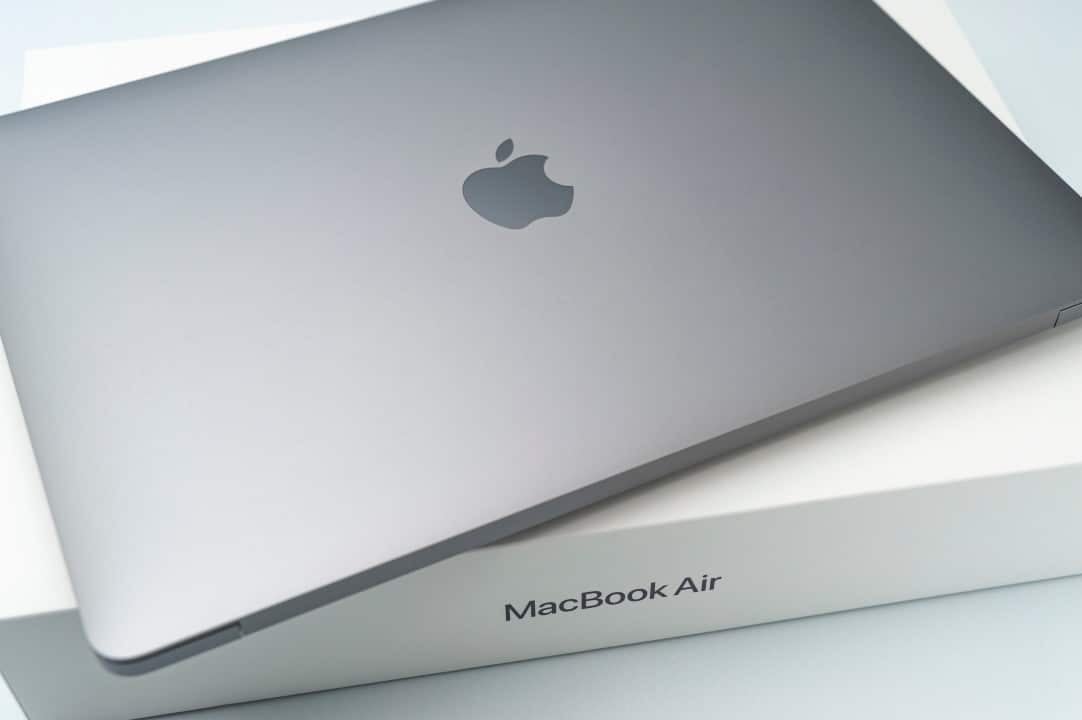
The Apple prepares one of the biggest updates for the MacBook Pro line, scheduled for launch between the end of 2026 and the beginning of 2027.
These changes represent a significant evolution in relation to current models, which were redesigned in 2021. The inclusion of a touch screen meets long-standing user demand and aligns the MacBook with other devices in the ecosystem, while the cellular connection offers a new level of portability and productivity for professionals.
The brains behind these innovations will be the long-awaited M6 chip, the next generation of the Apple Silicon. Fabricado in a more advanced process, the processor promises to deliver a leap in performance and energy efficiency, being essential for managing new resources without compromising battery life.

Advancement in screen technology with OLED panels
The transition from current mini-LED panels to OLED technology will mark a turning point in the image quality of MacBooks. OLED displays are known for offering true blacks, as each pixel emits its own light and can be completely turned off, resulting in virtually infinite contrast and more vibrant, accurate colors.
The Apple must use a tandem OLED structure, the same technology that debuted on the iPad Pro. The Essa approach stacks two layers of light-emitting diodes, which significantly increases the maximum sustained brightness and durability of the panel, mitigating concerns about burn-in, a crucial factor for a work device like the MacBook Pro.
The adoption of this technology, provided by giants such as Samsung Display and LG Display, also allows the construction of a thinner and lighter chassis. Além Furthermore, it is speculated that the change could lead to the replacement of the current notch with a circular cutout for the camera, known as a hole-punch, optimizing the screen’s usable space.
Another direct benefit of OLED technology is its energy efficiency. Como black pixels do not consume power, the system can save battery power when displaying content with dark backgrounds, which can compensate for the additional power consumption of the touch screen and 5G modem, while maintaining the long battery life that is a hallmark of the line.
The debut of the touchscreen on macOS
After years of resisting the idea of adding touchscreens to its computers, Apple finally appears ready to change its strategy. The touchscreen implementation on the MacBook Pro is not intended to transform macOS into an operating system for tablets, but rather to offer an additional layer of interaction. The functionality will be in addition to the keyboard and trackpad, which will remain the primary input methods. The idea is to optimize specific tasks, such as scrolling documents, zooming in on images, signing files or interacting with elements of creative applications in a more direct and intuitive way. The Essa change would also ease the transition for users accustomed to Windows or Chromebooks laptops, which have offered this functionality for years. The expectation is that macOS will receive subtle adjustments to the interface to accommodate touch, such as the slight increase in some control elements, without compromising the traditional user experience with the cursor. Native integration promises to be fluid, avoiding the feeling of adaptation present in third-party solutions.
5G connectivity with proprietary modem
One of the biggest advances of the new MacBook Pro will be its ability to connect to the internet from anywhere, thanks to the integration of a 5G modem. The Esse feature is the result of Apple’s long and expensive project to develop its own modem technology, an effort to reduce its dependence on external vendors like Qualcomm. Possessing this technology allows the company to optimize the integration between hardware and software, resulting in better performance, lower power consumption and full control over the roadmap of future connectivity innovations.
For the end user, especially professionals who work remotely or travel frequently, an “always connected” MacBook Pro is a game changer. The functionality eliminates the need to search for public Wi-Fi networks, which are often slow and insecure, or to use the iPhone’s hotspot, which quickly consumes the smartphone’s battery. With a data plan activated directly on the laptop, possibly via eSIM, professionals can download large files, participate in video calls and access the cloud with high speed and low latency, transforming the device into a true mobile and autonomous workstation.
The power of the new M6 chip
At the heart of the upcoming MacBook Pro will be the M6 processor, which represents the next evolution of the Apple Silicon architecture. Espera The chip is expected to be manufactured using TSMC’s 2-nanometer process technology, a significant advance over current processes.
This more refined lithography allows the Apple to integrate a much greater number of transistors in the same physical space. In practice, this translates into a substantial increase in processing speed and, at the same time, a reduction in energy consumption, improving the overall efficiency of the system.
As usual, the Apple is expected to offer chip variants, such as the M6 Pro and the M6 Max, designed to scale performance and meet the needs of different user profiles, from developers and video editors to 3D artists and artificial intelligence researchers.
Redesign focused on portability
Although the big revolution is in the internal features, the external design of the MacBook Pro should also receive refinements. Fontes from the industry point to an even thinner and lighter chassis, enhancing portability without sacrificing structural rigidity or cooling capacity.
The 14 and 16 inch screen dimensions should be maintained, but with possibly thinner edges. Detalhes as the hinge system can be reinforced to withstand constant screen touch interaction, ensuring long-term durability.
Other expectations for the model
The integration of new software features to make the most of the hardware is a certainty. Espera Professional applications such as Final Cut Pro and Logic Pro will receive updates with touch-optimized controls, streamlining workflows. Além In addition, compatibility with multitouch gestures, already consolidated on the iPhone and iPad, should be expanded on macOS to offer richer and more dynamic navigation directly on the laptop screen.
Preparing Apple for launch
Developing a product with so many simultaneous innovations is a complex challenge that requires coordination on several fronts. Apple is working in parallel on improving macOS to ensure the touch experience is intuitive and non-disruptive. At the same time, the company is aligning its supply chain to ensure mass production of new OLED panels and 5G modems, components that have historically faced scaling challenges. Rigorous internal testing is crucial to validating the usability, performance and durability of the new design before it reaches the consumer market.
