
Tehran has once again issued a stern warning that any military action by the United States against Iran would result in swift and forceful retaliation. Senior Iranian parliamentary figures have emphasized that American and Israeli military installations across the Middle East would be deemed legitimate targets in such a scenario.
This critical declaration underscores the escalating tensions in the region, particularly as international scrutiny intensifies regarding Iran’s domestic policies and nuclear ambitions in early 2025. The pronouncement serves as a direct message to Washington, aiming to deter any potential preemptive strikes.
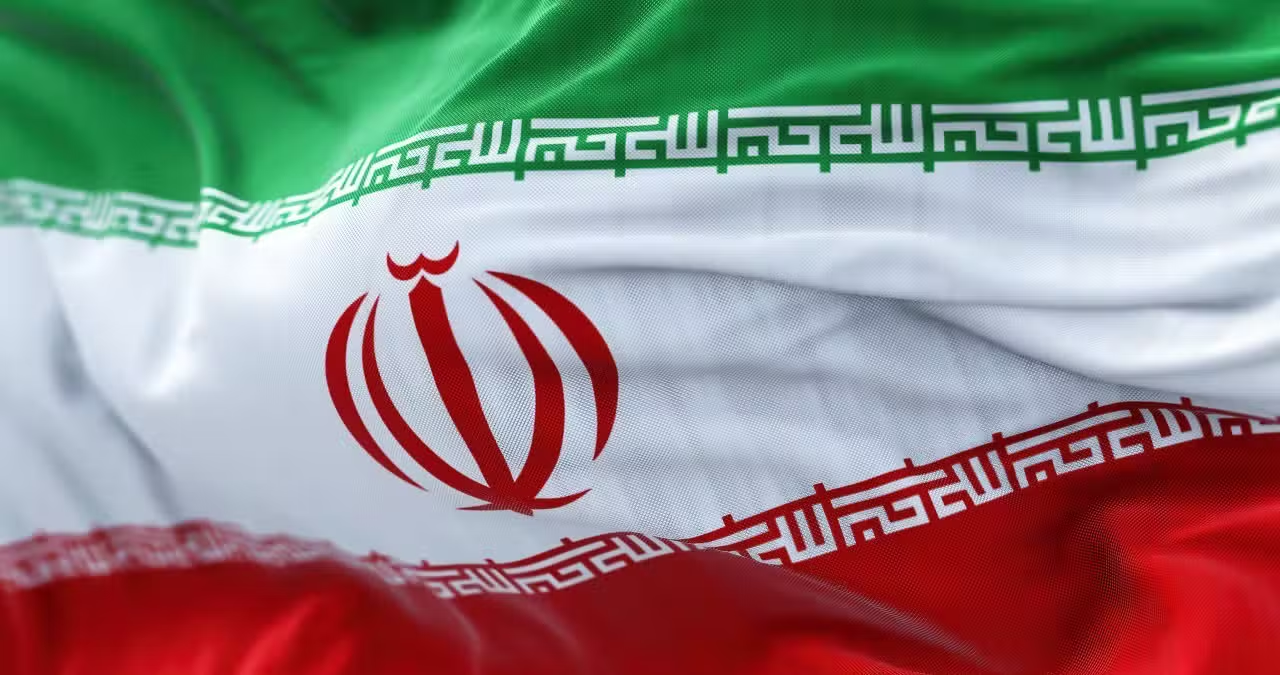
Such warnings are a recurring feature of Iran’s defense doctrine, signaling its readiness to defend its sovereignty. The statements aim to project strength and resolve in the face of persistent external pressures and internal challenges.
Tehran’s Red Line on Regional Security
Iranian legislative bodies have consistently articulated a clear red line regarding external military aggression. Their warnings specify that, in the event of any assault on Iranian territory, regions occupied by Israel and all U.S. bases and naval assets would immediately be considered legitimate targets for a retaliatory strike. This posture is central to Iran’s deterrence strategy.
This strategic communication is designed to demonstrate Iran’s unwavering resolve and its capacity to project power beyond its borders should its security be directly threatened. The explicit naming of both U.S. and Israeli military assets highlights the interconnectedness of these perceived threats from Tehran’s perspective.
Escalating Tensions and International Scrutiny in 2025
Early 2025 has seen a continuation of complex geopolitical maneuvers, with Iranian officials recently asserting that the nation is simultaneously confronting a multifaceted challenge from both Israel and the United States. This engagement spans economic pressures, a battle for public perception, direct military preparedness, and counter-terrorism efforts, reflecting a deeply entrenched strategic rivalry that shapes regional dynamics. The current global landscape, marked by persistent instability in key energy corridors and evolving alliances, contributes to a heightened sense of alert across the Middle East, with major powers carefully assessing potential flashpoints and the broader implications of any direct military confrontation.
Internal Challenges and Government Response
Iran continues to grapple with significant internal unrest, which began as widespread economic grievances and has since evolved into a profound challenge to the clerical establishment. These demonstrations, characterized by their scale and persistence, underscore deep-seated discontent among various segments of the population regarding governance and living conditions.
Reports from human rights organizations indicate a substantial number of casualties and arrests, reflecting a severe governmental crackdown on dissent. These actions aim to quell the protests and reassert state authority amidst mounting domestic pressure.
The government has repeatedly accused foreign powers of instigating and fueling these internal disturbances. Official statements suggest that external actors seek to destabilize the country by supporting subversive elements.
In response to the unrest, state officials have urged families to prevent their younger members from joining what they describe as “rioters and terrorists.” Simultaneously, the government has expressed a willingness to address economic problems and listen to public concerns.
Accusations Against External Powers
Tehran maintains that both the United States and Israel are actively involved in fostering unrest within its borders. High-ranking Iranian officials have publicly stated that these nations are orchestrating plans for destabilization, employing what they term “terrorists” to carry out acts of vandalism and violence.
These accusations frequently point to incidents involving the burning of public facilities, attacks on banks, and damage to religious sites. Iranian authorities present these acts as evidence of foreign-backed sabotage rather than legitimate domestic grievances.
The narrative from Tehran frames such events as a deliberate campaign by its adversaries to undermine national unity and security. This perspective reinforces the idea that the nation is under constant threat from external manipulation.
Ongoing Human Rights Concerns
Human rights organizations continue to express grave concerns over the situation in Iran, citing widespread suppression of protests. Updated reports for early 2025 from activist groups indicate that hundreds of demonstrators have been killed and thousands more detained across the country during recent waves of unrest.
These figures, though challenging to independently verify due to state restrictions, highlight the severity of the government’s response to public dissent. International bodies consistently call for greater transparency and accountability regarding these alleged abuses.
Digital Crackdown Amidst Unrest
During periods of heightened unrest, Iranian authorities have frequently implemented widespread internet and telephone blackouts. These measures are typically deployed to disrupt communication among protesters and control the flow of information both domestically and internationally, severely limiting public access to vital services and news.
