
A large-scale failure hit the X platform, formerly known as Twitter, on the morning of Tuesday, January 13, resulting in a widespread interruption of its services in several parts of the world. Milhões of users reported severe difficulties accessing their profiles, loading the timeline and publishing content, transforming the social network into a practically inoperative tool for a significant period.
The volume of complaints began to grow sharply at around 11:21 am, Brasília time, as recorded by independent digital services monitoring platforms. The instability seemed to indiscriminately affect both the web version and applications for mobile devices, indicating a problem centralized in the company’s infrastructure.
The interruption generated an immediate reaction on other social networks, where the hashtag related to the fall of X quickly reached the most talked about topics. Usuários from different countries shared screenshots displaying error messages and feeds that would not load, confirming the global nature of the issue and the collective frustration with the unavailability of the service.
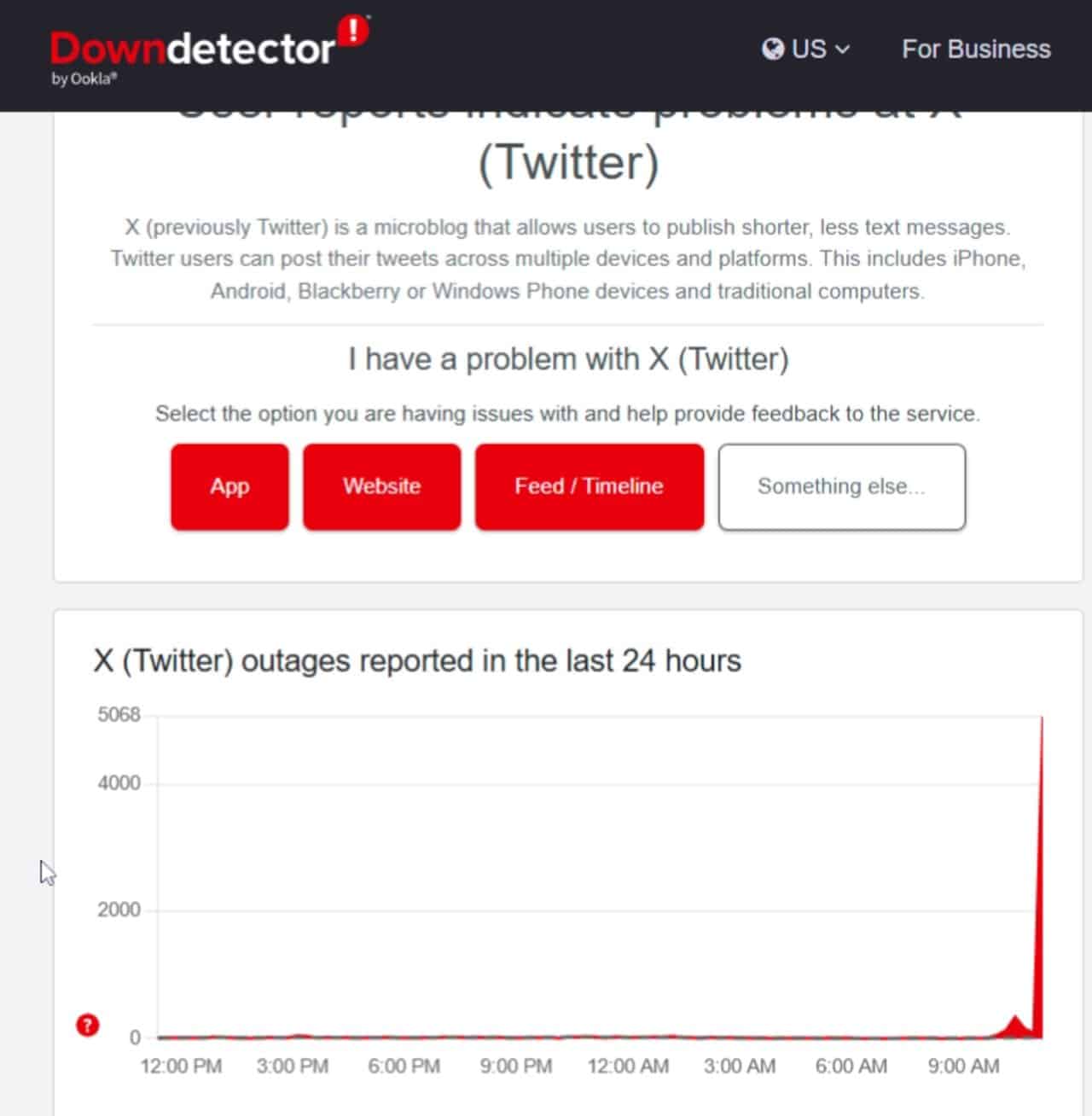
Global dimension of the problem
The extent of the failure was mapped in real time by tools such as Downdetector, which aggregates problem reports sent by users. The platform’s graphs showed an abnormal spike in notifications, exceeding the average volume of complaints registered for X on a typical day by thousands of times, which highlights a massive interruption event and not a localized problem.
Complaints came from multiple continents, including América from Norte, Europa, Ásia and América from Sul. Essa geographic distribution suggests that the failure was not restricted to a single data center or a specific region, but rather to an essential component of the social network’s global architecture, affecting content delivery on a global scale.
Types of errors reported by users
Detailed analysis of complaints revealed a clear pattern in the types of problems faced. The majority of complaints, corresponding to 59% of the total, were related to the inability to use the mobile application, which simply did not load new information or displayed connection errors.
Another 33% of reports pointed to direct difficulties in accessing the platform’s website, with pages that did not load or had authentication failures, preventing users from logging into their accounts. Esse error type suggests a failure in the identity verification or traffic distribution systems.
A smaller portion, 8%, specifically complained about problems loading the main feed, the timeline. Mesmo Those who were able to access the platform were faced with an empty or outdated timeline, making it impossible to view new publications and interact with other profiles.
Immediate repercussions on other networks
With X down, talk about the flaw instantly migrated to competing platforms. Aplicativos of messages and other social networks were flooded with comments, memes and questions about the duration of the instability, demonstrating the dependence of many users on the service for communication and information.
The situation highlighted the interconnection of the digital ecosystem, where the failure of a large service causes a ripple effect on other platforms. The absence of X as a real-time news channel was felt by journalists, companies and content creators, who had to look for alternatives to disseminate urgent information.
Many took the opportunity to discuss the centralization of digital communication in a few large technology companies. The episode served as a reminder of the vulnerability of the systems that support much of everyday online interactions and the importance of having diverse communication channels.
The speed with which the topic has become one of the most talked about globally reflects not only the size of X’s user base, but also its central role in public debates, live event coverage and information dissemination. The shutdown, even if temporary, creates a significant information vacuum.
Possible technical causes of the failure
Although the company did not immediately issue an official statement detailing the causes of the outage, network infrastructure experts point to some common possibilities in events of this magnitude. One of the most likely hypotheses is a flaw in the software update or server configuration, which may have been implemented incorrectly and spread quickly throughout the platform’s global network. Esse type of error can destabilize essential services, such as user authentication and data loading, on a widespread basis.
Another technical possibility lies in problems related to Sistema of Nomes of A flaw in DNS can result in browsers and applications simply not being able to find their way to the X servers, resulting in widespread access errors. Ataques cyber attacks, such as denial of service (DDoS), are considered less likely, given that the reported symptoms are more consistent with an internal infrastructure failure rather than an overload of malicious traffic.
The history of instability on large platforms
Instability events like what happened with X are not new in the technology and social media sector. Gigantes like Facebook, Instagram and WhatsApp have already faced long-lasting outages that have affected billions of people around the world. Esses recurring episodes highlight the immense complexity of keeping a digital infrastructure operating 24 hours a day that serves a global user base and processes a colossal volume of data every second. The architecture behind these platforms is made up of thousands of servers distributed across multiple data centers, load balancing systems, databases and complex software layers that need to work in perfect harmony. Qualquer small error in one of these components can trigger a domino effect, leading to a large-scale outage. Companies continually invest in redundancy and recovery systems to minimize downtime, but increasing complexity and the constant need for updates make failures a real and constant possibility, testing the resilience of the entire modern internet.
Guidance during the outage
For users affected by the instability, the main recommendation is to wait for the platform’s technical team to resolve the problem. Tentar accessing the service repeatedly may, in some cases, contribute to overload on systems that are in the process of recovery. It is advisable to follow the company’s official communication channels or news portals for updates on the restoration of service.
