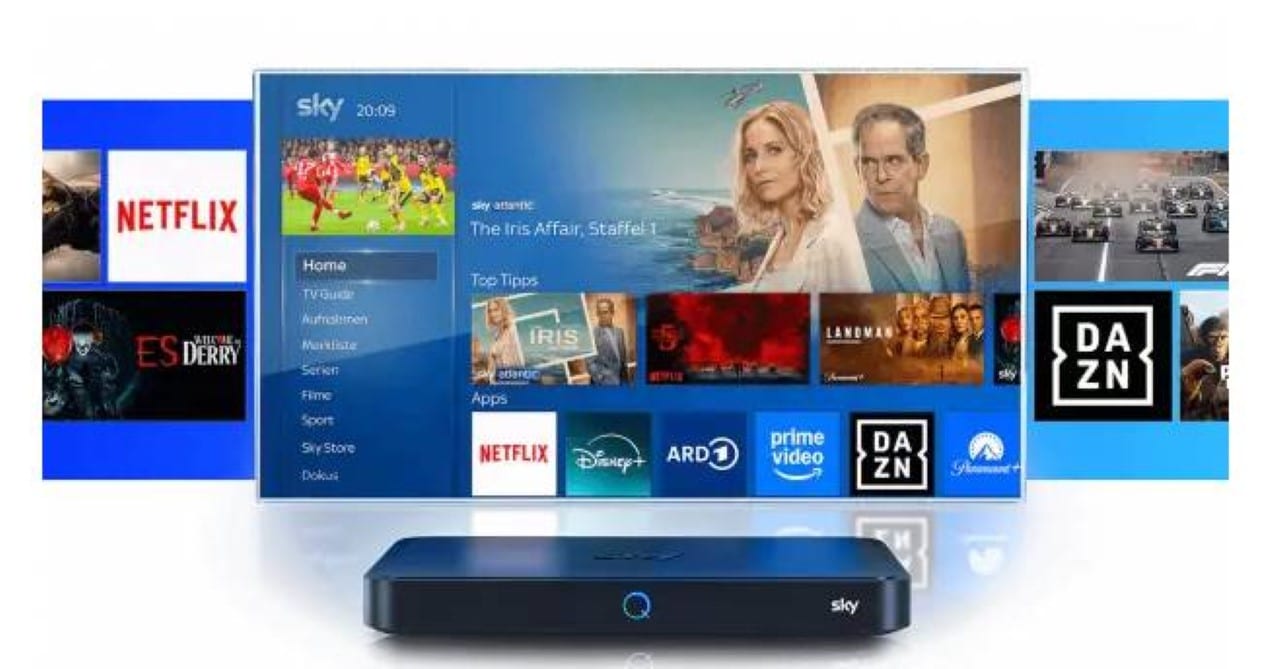
A significant change in the way television content is distributed on Alemanha is scheduled for the beginning of the year. Sky Deutschland, in partnership with Vodafone, will begin a technological migration process, transferring the transmission of several channels from the traditional DVB-C cable system to the modern IPTV platform. The change, which begins to be implemented from February 10th, will impact subscribers who receive the Sky signal through the Vodafone cable infrastructure throughout Germany.
This strategic transition is driven by a broad reorganization of frequencies in the Vodafone coaxial cable network. The operator’s main objective is to free up spectrum to optimize and expand the capacity of its broadband internet services, meeting the growing demand for high-speed connections. The measure reflects a global trend in the telecommunications sector, which prioritizes network infrastructure for data traffic via the internet.
While general entertainment, documentaries and children’s channels will now be delivered exclusively via streaming, Sky’s sports channels will continue, for now, to be transmitted via the DVB-C system. Essa hybrid approach ensures that live sporting events, one of Sky’s core products, maintain their traditional broadcast stability during the initial phase of modernization. Para To access the full grid, customers will need compatible receivers with an internet connection.
Vodafone network modernization details
Vodafone’s initiative to restructure its cable network is a far-reaching project that aims to prepare the infrastructure for future connectivity demands. The reallocation of frequencies previously dedicated to linear television is a key step in increasing the bandwidth available for internet services, resulting in significantly higher download and upload speeds for millions of homes and businesses in the Alemanha.
With the consumption of streaming content increasingly surpassing linear television, the operator is adjusting its investments to strengthen the robustness of its broadband network. Spectrum optimization will allow the implementation of more advanced data transmission technologies, ensuring a more fluid browsing experience, faster downloads and lower latency for online games and video conferencing.
This transformation is not an isolated phenomenon, aligning with similar movements observed in other European and global markets. Telecommunications operators are progressively decommissioning older transmission technologies to consolidate their services on Internet Protocol (IP)-based platforms, which offer greater efficiency and flexibility in network management.
Collaboration between Sky and Vodafone is crucial to the success of this transition. By working together, the companies ensure that pay TV subscribers continue to receive their services with minimal disruption, while the core infrastructure is modernized to benefit all network users, especially those who depend on a stable and fast internet connection.
What changes for Sky subscribers
For Sky customers on the Vodafone network, the main practical change will be the need for a receiver compatible with IPTV technology. The company will offer affected subscribers the option of purchasing the Sky Q decoder, which integrates streaming features, or the Sky Stream Box, a more compact device focused exclusively on delivering content over the internet. Ambos equipment is designed to connect to the home Wi-Fi network and access the full Sky programming through the broadband connection, replacing direct reception via coaxial cable for most channels.
Sky Deutschland ensures that the transition was planned so as not to generate immediate additional costs for the vast majority of subscribers with current contracts. The company’s focus is to ensure continuity and quality of service, offering complete support during the migration process. Customers who already have one of the compatible receivers will not need to make any changes. The company is also strengthening its service channels to answer questions about equipment compatibility, schedule installations and guide users on how to use the new features of the IPTV platform.
Content expansion and image quality improvements
One of the most direct and noticeable benefits for subscribers with the migration to the IPTV platform will be a significant expansion of available content and a leap in image quality. The technological change allows Sky to integrate new channels into its network that were previously exclusive to satellite subscribers. The list of new features that will reach customers on the Vodafone network includes six channels of varying genres, such as children’s channel Cartoon Network, the true crime documentary channel Crime+Investigation, the local culture channel Heimatkanal, the musical Jukebox, the one focused on motorsport Motorvision+ and the animation Nicktoons. Essa addition enriches the entertainment offering and diversifies options for the whole family. Além the inclusion of new programs, the transition will enable an important upgrade in transmission quality for several existing channels, which will begin to be broadcast in high definition (HD) from March onwards. Entre the channels that will receive the improvement are Cartoonito, History Channel, Nick Junior, Romance TV, Warner TV Comedy and The high definition image provides greater clarity, more vibrant colors and a much more immersive visual experience, aligning the quality of cable reception with the highest standards already offered by Sky on other platforms.
The technological transition from DVB-C to IPTV
The DVB-C standard (Digital Video Broadcasting – Cable) represents digital television transmission technology via coaxial cable, a robust and widely used system for decades. Ele works as a broadcast method, where the same signal is sent unidirectionally to all subscribers, who use a tuner to access channels available on specific frequencies.
In contrast, IPTV (Internet Protocol Television) uses the internet infrastructure to deliver video content. Nesta technology, data is sent in packets over the same broadband connection used to browse the web. Isso transforms the TV watching experience into a two-way, interactive process, enabling advanced functionality.
The migration reflects a profound change in media consumption habits in Alemanha, where streaming and on-demand services are increasingly preferred. The flexibility of IPTV allows the native integration of features such as pausing live TV, rewinding programming, accessing film and series catalogs at any time and receiving personalized recommendations, modernizing the user experience.
Gradual migration timeline
The transition process was divided into stages to ensure a smooth and organized implementation. The first phase will begin on February 10th, when an initial group of Sky channels will no longer be broadcast via DVB-C on the Vodafone network. Subscribers in the affected regions will be notified in advance with all necessary instructions to adapt to the change.
The second significant stage is scheduled for March 3. Nesta date, in addition to the migration of more channels to IPTV, several entertainment, documentaries and children’s programs will be upgraded to high definition (HD). Vodafone expects to complete the reorganization of frequencies in a large part of the country by the middle of the year, finalizing the network modernization project.
Communication and customer support
To ensure all customers are well informed and prepared, Sky Deutschland has developed a comprehensive communications campaign. The company will send letters, emails and digital notifications detailing the changes, deadlines and steps each subscriber needs to follow to maintain uninterrupted access to all contracted programming, offering a clear guide for modernization.
German Pay TV Competitive Landscape
The pay television market in Alemanha is constantly evolving, marked by strong competition between cable and satellite operators and streaming platforms. Empresas like Vodafone are under pressure to modernize their networks and balance investments between the offer of traditional TV and the growing demand for very high-speed internet, essential for the consumption of digital content.
In this context, the strategic partnership with Sky and the migration to IPTV position both companies in a more competitive way. The change allows Sky to offer a richer and more interactive user experience, similar to that of streaming services, while Vodafone strengthens its main product, broadband, making its connectivity offering even more attractive to consumers.
