
Toyota officially revealed the sixth generation of the RAV4, its most successful SUV globally, marking a fundamental strategic shift for the model. The main novelty is the complete abandonment of exclusively combustion engines, with the new line being offered only with hybrid engines. The debut is scheduled for the end of 2025 on Japão, with arrival in other markets, including Brasil, scheduled for the first half of 2026.
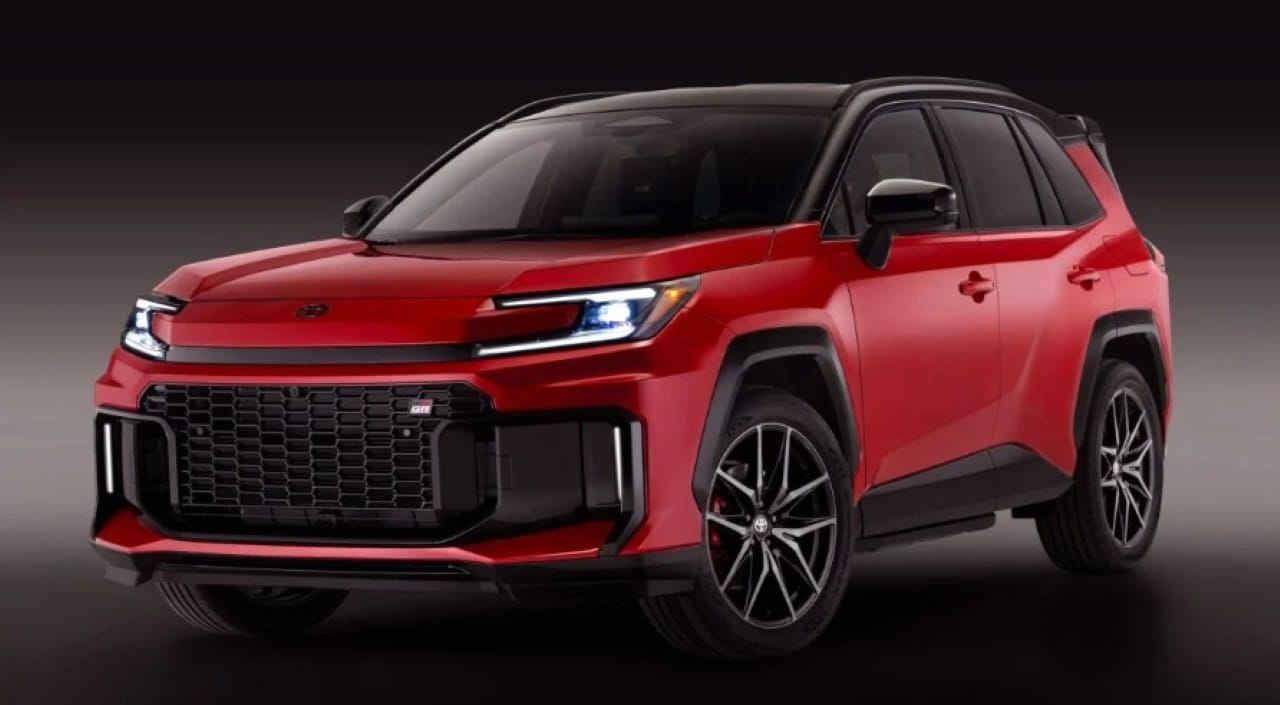
The new RAV4 not only evolves in terms of engine, but also presents a revolution in its design. The front adopts the “hammerhead” style, already seen in more recent launches of the brand, giving the vehicle a more modern, imposing appearance and in line with the global visual identity of the Toyota. Esta aesthetic change aims to reinforce the SUV’s presence on the streets and attract a public looking for a bolder design.
The vehicle platform has been improved to offer more rigidity and safety, as well as superior dynamic behavior. Internamente, the technological leap is evident, with the introduction of larger screens, a new multimedia system with remote updates and a more refined finish, which seeks to raise the standard of comfort and sophistication in the segment.
Units of the new model have already been spotted testing at Brasil, indicating that adaptation for the local market is underway. The expectation is that the Toyota will implement flex hybrid technology, which combines electricity with ethanol, a solution already successfully consolidated in the Corolla and Corolla Cross models manufactured in the country.
A completely redesigned exterior design
The visual identity of the new generation of the Toyota RAV4 is, without a doubt, one of its biggest highlights. The front end has been completely redesigned, abandoning the more angular lines of the previous model in favor of the “hammerhead” concept. Este style is characterized by thinner, more tapered LED headlights that connect to a more discreet front grille integrated into the bumper, creating a striking and futuristic light signature. The change is not just aesthetic; it also contributes to better aerodynamics, which results in greater fuel efficiency and lower wind noise at high speeds.
On the sides, the SUV gained more pronounced creases and wheel arches with more robust frames, reinforcing its vocation for versatility and adventure. The high beltline and new alloy wheel options, with larger diameters, complement the imposing look. At the rear, the main change is the adoption of LED lights interconnected by a horizontal bar, a design element that has become a trend in the automotive market as it gives the vehicle a feeling of greater width and modernity. The rear bumper was also redesigned to harmonize with the whole.
Interior with more technology and sophistication
The cabin of the new RAV4 has undergone a profound modernization, with a focus on technology and comfort. The main highlight is the new multimedia center, which can reach 14 inches in the most complete versions. The operating system is new, faster and more intuitive, and allows “over-the-air” (OTA) updates, ensuring that the vehicle’s software is always in its latest version without the need for visits to the dealership.
The instrument panel was also replaced by a fully digital and configurable screen, allowing the driver to choose what information they want to view, from navigation and consumption data to the operation of the hybrid system. Essa personalization improves the driving experience and safety by keeping crucial information in the driver’s field of vision.
Toyota also improved the quality of the materials used in finishing. The dashboard now has more soft-touch surfaces and high-quality synthetic leather covering options. Apesar Due to strong digitalization, the brand chose to maintain physical controls for essential functions, such as air conditioning and sound volume, a decision that prioritizes ergonomics and ease of use while driving.
To ensure connectivity for all occupants, the new RAV4 is equipped with an induction cell phone charger and multiple USB-C ports, both for front and rear seat passengers. The combination of these elements transforms the cabin into a more premium and connected environment.
Exclusively hybrid engine
Toyota’s most significant decision for the sixth generation RAV4 was to eliminate versions powered solely by combustion engines. The model now focuses on two hybrid powertrain variants. The standard configuration uses a parallel hybrid system that combines a 2.5-liter Atkinson cycle gasoline engine with electric motors, delivering a combined power of approximately 226 horsepower. Essa configuration provides more agile acceleration compared to the previous generation, while optimizing fuel consumption. The E-Four all-wheel drive, available in the most equipped versions, uses an electric motor dedicated to the rear axle, distributing torque intelligently to ensure greater stability and traction capacity on low-grip surfaces, without the need for a physical cardan. In the most demanding markets in terms of electrification, the Toyota will offer a plug-in hybrid (PHEV) version. Este model has a higher capacity battery, which can be recharged from external sources, allowing a range in pure electric mode of over 100 kilometers. Essa option is ideal for daily urban use, allowing most journeys to be made without emitting pollutants. Para o Brasil, the big bet is the adaptation of this engine to flex technology, allowing the use of ethanol, a renewable fuel. Isso would align the RAV4 with the brand’s sustainability strategy in the country, offering one of the most efficient low-carbon mobility solutions on the market.
Improved security with new Toyota Safety Sense
Safety is a fundamental pillar in the new RAV4, which will come equipped with the latest version of the Toyota Safety Sense package. Este suite of driver assistance technologies has been enhanced with higher resolution sensors and cameras, making systems more precise and effective.
The frontal pre-collision system (PCS) now has improved pedestrian and cyclist detection capabilities, working more efficiently even in low light conditions. Além Furthermore, the system can identify and react to vehicles at intersections, increasing safety in complex urban traffic situations.
Other important features have been improved, such as adaptive cruise control (ACC), which now operates over a wider range of speeds and has a smoother response in slow traffic. The lane keeping assistant (LTA) has also been recalibrated to perform steering corrections in a more natural and precise way.
Versions and equipment available at launch
At its initial launch at Japão, the new RAV4 will be offered in two main versions: Já the Z version will present a more urban and sophisticated proposal, with chrome finishes, larger wheels with an elegant design and a more comprehensive list of comfort equipment.
In other markets, such as North America, the range is even wider, including configurations such as the Woodland Edition, which features raised suspension and all-terrain tires. Essa diversity of versions indicates that Toyota can adapt the RAV4 offering to meet the specific preferences of each region, including Brasil, where a combination of luxury and adventurous versions tends to be well received.
Expectations for the Brazilian market
The arrival of the new Toyota RAV4 to the Brasil, scheduled for the first half of 2026, promises to shake up the competitive medium SUV segment. The model will compete directly with strong rivals such as the Honda CR-V, Volkswagen Tiguan and models from rising Chinese brands, such as the GWM Haval H6. The price positioning has not yet been announced, but a value above that practiced in the current generation is expected, justified by the technological leap, the renewed design and the exclusively hybrid engine. The brand’s dealership network is already preparing to receive the new model, with specific training for sales and after-sales teams.
