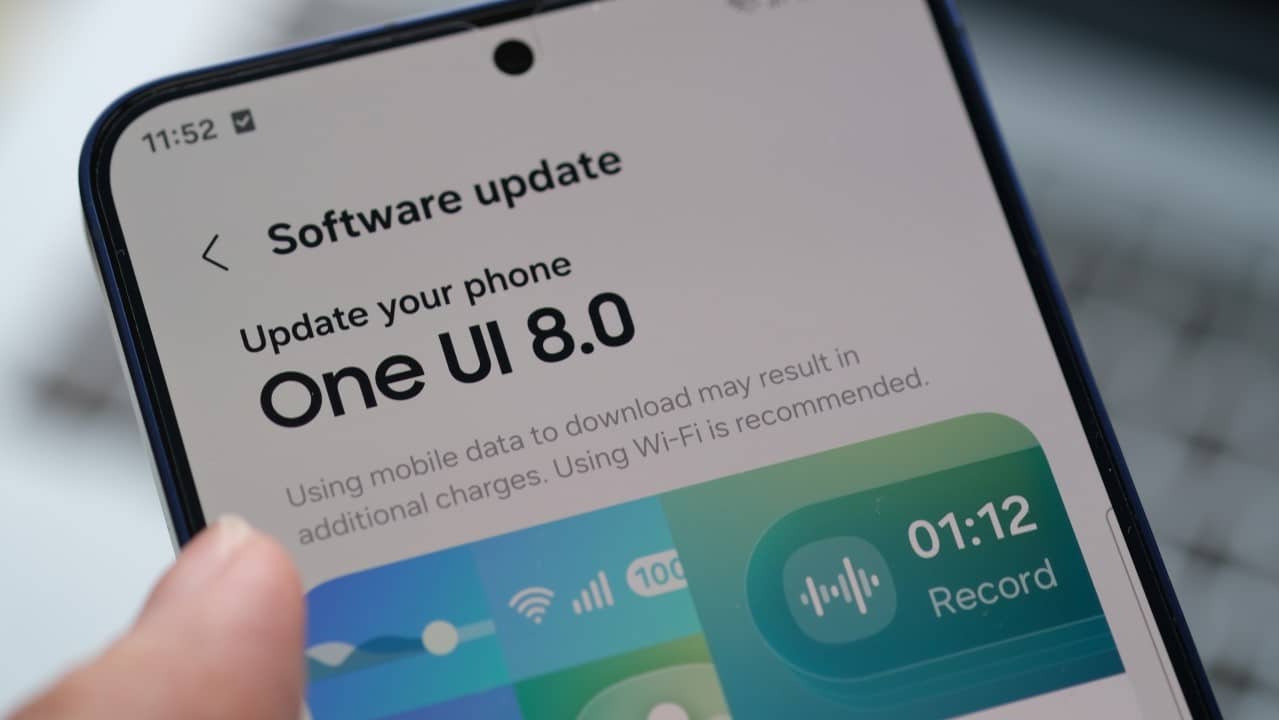
Samsung advances in testing of One UI 8.5, the next major update to its interface for Galaxy devices, but faces specific challenges in its more advanced models. Relatórios recent beta phase indicates that foldable devices from the Galaxy Z line, such as the Z Fold 6, have inconsistencies that affect the user experience, mainly in the quick access panel and the camera application. The company is working to refine the software before the official launch, scheduled for the first quarter of 2026.
The identified flaws are concentrated in features that are crucial to the value proposition of flexible devices: agility in navigation and versatility in capturing images. The Embora update brings significant performance and customization improvements to the entire Galaxy line, adapting to the expandable screens of foldables still requires fine adjustments to ensure fluid and intuitive operation.
The problems come at a time when competition in the foldables segment intensifies, putting pressure on Samsung to deliver a flawless software experience that justifies the premium positioning of its products. The feedback collected during the testing phase will be essential for the final version to meet the high expectations of consumers in this niche.

The new interface promises a broad visual renovation, with hundreds of new unlocking animations, greater customization of shortcuts and a deep optimization of the kernel to guarantee more speed. Contudo, the implementation of these new features in flexible formats revealed points of friction that the development team needs to resolve.
Inconsistencies in quick panel navigation
The main complaint from beta version users on the Galaxy Z models is related to the behavior of the Quick Panel, the quick shortcuts panel. One UI 8.5 has redesigned gesture interaction: swiping from the top left corner of the screen opens the notification area, while swiping from the top right corner reveals shortcuts. Nos traditional models, the transition between these two areas is direct and fluid. Contudo, in foldables, this integration appears to be fragmented and impractical for daily use.
When opening notifications, the user of a Galaxy Z Fold can no longer swipe sideways to access quick shortcuts, an action that was intuitive in previous versions. Da Likewise, when accessing Quick Panel, the path back to notifications is blocked, requiring the user to close the panel and perform a new gesture. Essa interruption in the navigation flow goes against the proposal of advanced multitasking, which is one of the biggest attractions of devices with a flexible screen, making the experience less agile than expected.
Camera features have been relocated
Another significant change that has generated criticism is in the camera app. Popular and advanced Recursos, such as Single Take (Única Capture) and dual recording with front and rear cameras simultaneously, have been removed from the app’s main interface.
These functionalities were not eliminated, but rather transferred to Camera Assistant, a complementary module that needs to be downloaded and configured separately through Galaxy Store. The decision follows a trend already applied to other lines, such as the Galaxy S25.
For owners of foldable devices, who often use these features for content creation, the change represents a step back in terms of usability. The need to access a secondary module to activate functions that were previously just a touch away breaks the fluidity and spontaneity when recording photos or videos.
The multitasking experience was compromised
The inconsistencies observed in both the Quick Panel and the camera app converge into a larger problem: compromising the multitasking experience, the main differentiator of foldable smartphones. The purpose of these devices is to offer productivity similar to that of a tablet in a compact format, where the transition between applications and functions needs to be instantaneous and frictionless. The barriers imposed by new navigation gestures and the reallocation of camera resources create additional steps that frustrate the user and reduce efficiency. On a device like the Galaxy Z Fold, which allows you to use multiple apps on the expansive internal screen, the lack of direct integration between notifications and quick shortcuts becomes a constant limitation. Da Likewise, a content creator who uses flex mode to record videos loses agility when having to navigate through extra menus to activate dual recording, an ideal feature for vlogs and interviews. The fragmentation of the software experience contradicts the versatility of the hardware, indicating that adapting the One UI 8.5 to the flexible format is still a work in progress that requires special attention from Samsung.
General update improvements
Despite specific challenges in foldable models, One UI 8.5 is considered one of the most robust updates to Samsung in years. The main improvement is the complete renewal of the system kernel, which results in a noticeable performance gain across the entire compatible Galaxy line.
This low-level optimization translates into greater fluidity in animations, faster opening of applications and an overall more agile system response. Além Furthermore, the update brings hundreds of new unlock animations and visual adjustments that modernize the interface.
Details about the new kernel and performance
Kernel optimization in One UI 8.5 was a concentrated effort by Samsung to resolve performance bottlenecks that had accumulated in previous versions. Benchmarks Preliminaries and user reports point to a significant reduction in system latency, especially in transitions between heavy applications and when executing intensive tasks.
This improvement not only benefits the latest models, but also provides a feeling of greater speed and longevity for devices from past generations that will receive the update, ensuring a consistent and satisfactory user experience for longer.
Calendar and progress of the testing phase
One UI 8.5 is currently in beta, a crucial period in which Samsung collects feedback from a select group of users to identify and fix bugs like those found in foldable models. The company has a history of releasing multiple test versions, applying fixes incrementally.
The expectation is that gesture inconsistencies and camera usability issues will be addressed in upcoming beta builds, before mass distribution. The testing program allows the company to refine the software to ensure stability.
The official timeline for the release of the stable version of One UI 8.5 remains set for March 2026. The first devices to receive the update will be the latest high-end models, including the Galaxy S series and the Galaxy Z Fold and Z Flip foldables.
After the initial wave, Samsung plans a gradual rollout to other compatible devices over the following months. A detailed calendar with the full list of models and specific dates is expected to be released closer to the public launch.
Essential adaptation for flexible screens
The challenge of optimizing One UI 8.5 for foldables highlights the complexity of developing interfaces for unconventional screen formats. The final experience will depend on Samsung’s ability to calibrate the software to extract the maximum potential from the flexible hardware, ensuring that the promise of advanced multitasking is fully realized.
