
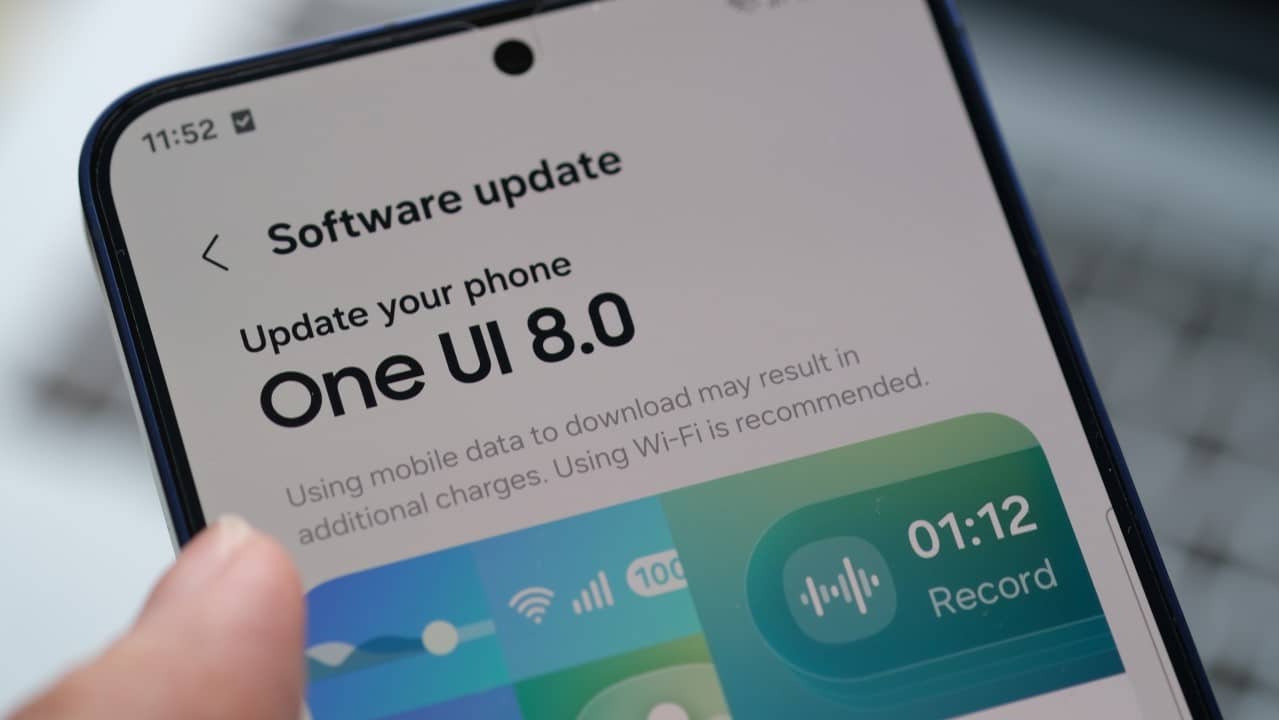
Samsung has started implementing its new interface, the One UI 8, for smartphones in the Galaxy line sold under the Japão. The update, based on the Android 16 operating system, introduces an exclusive functionality that has long been awaited by local users: the ability to completely erase all data stored in the FeliCa chip area, responsible for the Osaifu-Keitai service.
The new tool solves an old demand related to data security and privacy when selling or passing on a used device. Antes of this update, cleaning the information contained in the FeliCa chip was a complex process, which often required specialized technical assistance or the use of professional equipment, inaccessible to the common consumer.
Now, with the functionality integrated directly into the system’s factory reset menu, full formatting can be carried out by the user simply and securely, ensuring that no sensitive information remains on the device before it is transferred to a new owner.
Understanding FeliCa technology and its relevance in Japão
Developed by Sony, FeliCa technology is the pillar of contactless payment systems in Japão, being deeply integrated into the population’s daily lives. Conhecida on smartphones as “Osaifu-Keitai” (mobile wallet), it allows devices to function as public transport cards, such as the popular Suica and PASMO, as well as credit cards, debit cards, loyalty programs and even access keys for homes and offices. Diferente than other NFC technologies, FeliCa offers faster and more secure transactions, which has consolidated its dominance in the Japanese market. Because it stores a wide range of financial and personal data, ensuring that this information can be completely deleted before a device is sold is a fundamental security issue for consumers, who see cell phones as an extension of their financial and personal lives.
The old hurdle in smartphone security and resale
Until the arrival of One UI 8, owners of Galaxy phones faced a significant challenge when trying to prepare their devices for resale. Simply deleting payment applications or unregistering cards from the system was not enough to completely remove the residual information that remained in the FeliCa chip’s memory. Esses remaining data, although not directly accessible by a new owner, represented a security vulnerability and a point of concern for those who value privacy, generating distrust in the second-hand market.
Complete cleaning could only be guaranteed by restricted and often expensive means. Usuários from operator Docomo could request the service at one of its stores, but customers from other companies, such as au and SoftBank, did not have this option available. The alternative was to resort to paid repair services, which did not always carry out the procedure, or to rely on professional tools used by repurchase companies, such as the Blancco Mobile for FeliCa software, access to which is exclusive to legal entities, creating an insurmountable barrier for ordinary citizens.
How One UI 8’s new feature simplifies the process
The procedure for using the new functionality has been drastically simplified and incorporated into the normal device restoration flow.
The user must navigate to the smartphone’s settings menu and access the “Geral Management” section.
Within this menu, the option to select is “Restore” and then “Restore factory defaults”.
On this screen, the system will present a new specific checkbox with the text “Initialize FeliCa area completely”, which must be checked to perform deep cleaning along with formatting the device.
Availability and compatible models
Samsung is distributing functionality broadly across devices that support One UI 8.
Older models that are receiving the update, such as the Galaxy S22, already have the feature, regardless of the operator (whether au or Docomo), as do the unlocked versions sold at retail.
Samsung’s strategy for the Japanese market
The implementation of this tool demonstrates Samsung’s attention to the specificities and requirements of the Japanese market.
By developing a solution to a concrete problem related to Osaifu-Keitai technology, the company reinforces its commitment to local consumers.
This software adaptation not only improves the user experience, but also serves as an important competitive differentiator in relation to other brands operating in the country.
Direct impact on the used appliances market
The new tool has a direct and positive effect on the growing market for smartphones used in Japão. By ensuring that FeliCa chip data can be completely and irretrievably erased, the confidence of sellers and buyers increases, facilitating transactions carried out on online platforms and auctions, and promoting the circular electronics economy.
End of inconvenience for users
Previously, the absence of an accessible method to clean the FeliCa chip caused several inconveniences. Muitos users simply stopped selling their devices or sold them for lower prices due to uncertainty about the remaining data. In other cases, the search for a solution generated unexpected costs with technical assistance that was not always effective or transparent about the procedure carried out, making it difficult for devices to circulate on the secondary market.
