
Toyota officially presented the sixth generation of its RAV4 sports utility vehicle, one of the brand’s most successful models on a global scale. The debut, which initially took place on the Japão in December 2025, marks a significant strategic change for the SUV, which completely abandons exclusively combustion engines to adopt a hybrid system in all its configurations. Arrival in other international markets is scheduled for the following months, consolidating the manufacturer’s commitment to electrification.
The main novelty of the model is the adoption of the brand’s new visual identity, known as “hammer”, which gives the vehicle a more modern and aggressive appearance, in line with the automaker’s most recent launches. Além of the aesthetic changes, the new RAV4 received improvements in power, energy efficiency and onboard technology, reinforcing its leadership position in the competitive medium SUV segment.
The TNGA platform (Toyota New Global Architecture) was maintained as the base, but with updates to accommodate the new mechanical package and safety features. Sales in the Japanese market began with prices ranging between 4.5 million and 4.9 million yen. Test Unidades have already been seen in circulation on the Brasil, indicating that the local launch should take place in the first half of 2026, with likely adaptations for the national market.
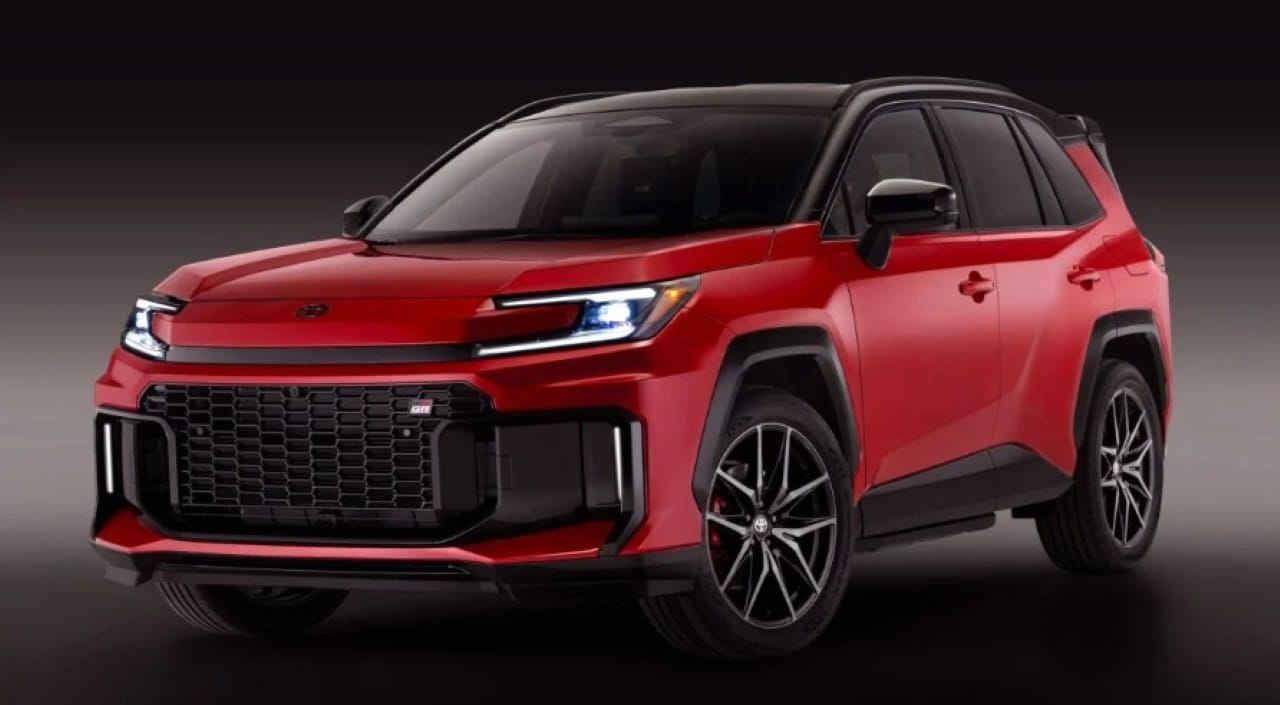
A new visual chapter with hammer design
The aesthetic renewal of the RAV4 is one of the biggest highlights of the new generation. The front end has been completely redesigned to incorporate the “hammer” style, characterized by thinner and more tapered LED headlights, integrated into a more discreet front grille and a robust bumper. Essa change breaks with the more angular lines of the previous generation, introducing a more fluid and sophisticated visual language that improves not only the appearance, but also the aerodynamic efficiency of the vehicle, contributing to the reduction of fuel consumption and wind noise at high speeds.
The sides of the SUV have also been reworked, with smoother creases and more pronounced fenders that reinforce the feeling of robustness without losing elegance. At the rear, the headlights have been redesigned and now feature a horizontal light signature interconnected by a bar, a design element that has become common in recent Toyota models. Características characteristic of an SUV, such as good ground clearance and larger diameter tires, were maintained to guarantee versatility and the ability to face different types of terrain, preserving the practical appeal of the model.
Enhanced technology and comfort in the interior
The interior of the RAV4 has also undergone a complete modernization, with a focus on technology and comfort. The dashboard is now dominated by a new multimedia center with a floating screen that can reach 14 inches in the most equipped versions. The operating system has been updated and now supports over-the-air updates, allowing the installation of new features and software fixes without the need for a dealership visit.
Despite the modernization, the Toyota chose to maintain physical controls for essential functions, such as controlling the air conditioning and adjusting the volume of the sound system, a decision that aims to improve ergonomics and safety while driving. The materials used in the finishing were refined, with greater use of soft-touch surfaces and high-quality synthetic leather covering options.
The interior space has been slightly increased, mainly benefiting rear seat passengers, who now have more leg space. The trunk capacity has also been increased, reinforcing the SUV’s family vocation. Itens as an induction cell phone charger and multiple USB-C ports become standard in more versions.
The instrument panel is now fully digital and configurable, allowing the driver to choose what information they want to view, such as navigation, hybrid system and driving assistant data. An advanced voice assistant, which responds to more natural commands, has also been integrated to facilitate interaction with the vehicle.
Exclusively hybrid engine
Toyota’s decision to offer the new RAV4 only with a hybrid engine reflects the company’s global strategy of electrification and reducing emissions. The system used is the series-parallel system developed by the brand, which combines a 2.5-liter Atkinson cycle combustion engine with electric motors to deliver a combined power of 226 horsepower in the standard configuration. Esse set provides more agile acceleration compared to the previous generation, with a reduction of approximately 0.5 seconds in the time from 0 to 100 km/h. The drive can be front or all-wheel drive E-Four, which uses a dedicated electric motor to move the rear wheels, distributing torque intelligently as needed and improving stability and off-road capability. In selected markets, the RAV4 will also be available in a plug-in hybrid version (PHEV), which has a larger capacity battery and offers a range in pure electric mode of more than 100 kilometers, ideal for daily urban use without pollutant emissions.
Enhanced security with the new Toyota Safety Sense
Safety is another pillar of the new generation RAV4, which is equipped with the latest version of the Toyota Safety Sense technology package. The automatic emergency braking system has been improved and is now capable of detecting pedestrians and cyclists with greater accuracy, even in low light conditions.
Adaptive cruise control (ACC) has also been updated to operate in all speed ranges, including moving in and out of congested traffic, making driving less tiring. Já the lane keeping assistant makes steering corrections more smoothly and precisely, increasing safety on highways.
To facilitate maneuvers, the SUV has a camera system with 360-degree vision and ultrasonic parking sensors. Blind spot monitoring and rear cross traffic alert complete the set of assistants that aim to minimize collision risks. The body structure now uses a higher percentage of high-strength steel, which improves energy absorption in the event of an impact and protects occupants.
Versions and pricing strategy in the global market
The version structure of the new RAV4 was designed to meet different consumer profiles. No Japão, the model was launched in two main versions: the Adventure, with a more robust look and aimed at light off-road use, and the Z, which focuses on a more refined and urban finish. Ambas versions are equipped with the brand’s full hybrid system and the latest connectivity features.
In the North American market and other markets, the range of options will be wider, including configurations such as the Woodland, with raised suspension and mixed-use tires, ideal for those looking for more adventure. Prices may vary depending on the country and equipment package, but Toyota seeks to keep the RAV4 competitive against its main competitors, such as the Honda CR-V and Volkswagen Tiguan.
Expectations for arrival on the national market
The presence of new RAV4 units being tested at Brasil since mid-2025 is a strong indication that Toyota is preparing the model for the local market. The main adaptation expected is the introduction of flex hybrid technology, which allows the use of ethanol, a renewable fuel.
This configuration is already used successfully in other models of the brand in the country, such as the Corolla and the Corolla Cross, and optimizes energy efficiency while benefiting from a plant-based fuel, in line with decarbonization policies.
The continuous evolution of an SUV icon
Originally launched in 1994, the Toyota RAV4 was one of the pioneers in the compact SUV segment and has since evolved to adapt to new market demands. The fifth generation was a milestone in introducing the TNGA platform and popularizing hybrid options.
Now, the sixth generation takes it a step further by prioritizing full electrification, as part of Toyota’s global strategy to achieve carbon neutrality. Comparado compared to the previous model, the new RAV4 not only offers better performance and up to 15% lower consumption in urban cycles, but also aligns with the brand’s more modern visual identity.
Bet on electrification
The elimination of exclusively combustion engines is a trend that should be followed by other vehicles in the Toyota line in the coming years, consolidating the automaker’s commitment to sustainability and technological innovation in the global automotive sector.
