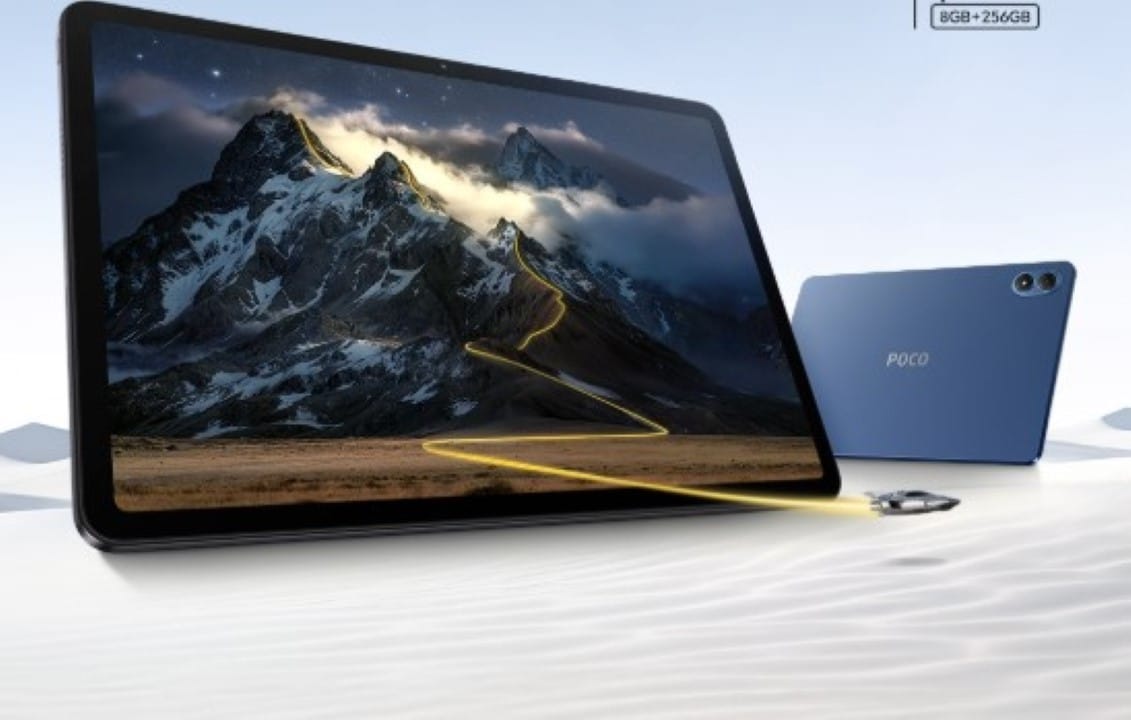
Xiaomi Japan started sales of the POCO Pad M1 tablet this Thursday, January 22, 2026. The device hits the market with a single configuration of 8 GB of RAM and 256 GB of storage, with a suggested price of 49,980 yen. Até February 4, the model is available in early bird promotion for 44,980 yen.
The launch reinforces the POCO brand strategy in the mid-range tablet segment. Disponível in blue and black colors, the device stands out for its balance between performance and multimedia resources. The company also offers optional accessories to increase productivity.
Japanese consumers can purchase the POCO Pad M1 at official Xiaomi channels and partner retailers. The initial promotion aims to attract users looking for versatile devices for remote work, studies and daily entertainment.
Display and visual experience
The POCO Pad M1 has a 12.1-inch screen with 2.5K resolution, equivalent to 2560 x 1600 pixels. Essa configuration ensures sharp images for viewing professional documents and video content. Up to 120Hz refresh rate delivers smooth transitions in gaming and browsing.
The panel supports Dolby Vision and more than 1 billion colors, increasing the quality of films and series. TÜV Rheinland certification for low blue light emission and flicker reduction protects your eyes during extended sessions. Reading mode and adaptive color adjustment complete the visual features.
Wet touch technology allows operation even with wet hands, useful in environments such as the kitchen or bathroom. Maximum brightness of 600 nits in high brightness mode maintains visibility in outdoor conditions. Esses elements position the tablet as a comfortable option for intense daily use.
أكثر متعة، مع بطارية أكبر 😍 POCO Pad M1
— POCO KSA (@PocoKsa)January 4, 2026
تجربتك قوية وما لها حدود 🤍pic.twitter.com/0T5S2Iru05
Performance and operating system
Equipped with Snapdragon 7s Gen 4 processor, POCO Pad M1 offers balanced performance for multiple tasks. The Qualcomm’s mobile platform ensures energy efficiency in demanding applications such as light image editing and casual gaming. The system runs Android 15 with Xiaomi HyperOS 2 interface.
Connectivity includes support for expansion via microSD card of up to 2 TB, expanding the internal storage to 256 GB. Integration with POCO smartphones allows for fluid file transfer and direct calls on the tablet. Essas functions facilitate the brand ecosystem.
Battery and charging
The 12,000 mAh battery provides extensive autonomy, reaching up to 16 hours of continuous video playback. 33 W fast charging quickly recovers energy on a daily basis. The device also supports wired reverse charging of up to 27W for other devices.
This capacity suits users who spend long periods away from sockets. Testes internals of Xiaomi indicate stability in mixed use, including browsing and streaming. The combination with an efficient processor optimizes overall consumption.
Audio and construction
The four-speaker system with Dolby Atmos delivers immersive sound and supports high-resolution audio. The presence of a P2 input for headphones maintains compatibility with traditional accessories. Esses features benefit music and podcast consumers.
The unibody aluminum body provides strength and premium design, with a thickness of 7.5 mm and a weight of approximately 610 grams. The structure withstands prolonged use without excessive heating. The construction reinforces durability for daily transport.
Available accessories
Xiaomi offers a line of dedicated accessories for the POCO Pad M1, expanding its functions.
- POCO Smart Pen smart pen, with a suggested price of 4,980 yen, ideal for precise notes and drawings.
- POCO Pad M1 Keyboard keyboard, for around 6,980 yen, turns the tablet into a portable workstation.
- POCO Pad M1 Cover protective case, available for approximately 3,980 yen, with a resistant finish.
These items are sold separately and magnetically integrate with the device. The pen offers pressure sensitivity for creativity. The keyboard includes additional protection and fixed angle adjustment.
The accessories meet productivity demands in home offices or studies. Native compatibility avoids complex configurations. Muitos users opt for the complete package for maximum versatility.
Additional comfort features
POCO Pad M1 includes wet touch technology for operation in wet conditions. Sunlight mode improves readability in bright light. Certificações of eye comfort reduces fatigue during long sessions.
HyperOS interconnectivity allows mirroring and remote control of compatible smartphones. Chamadas can be answered directly on the tablet. Content transfer occurs seamlessly via Bluetooth and Wi-Fi.
Positioning in the Japanese market
The launch comes at a time of growing demand for versatile tablets in the Japão. The competitive price positions the POCO Pad M1 against models from established brands. The initial promotion attracts cost-sensitive buyers.
The unique configuration simplifies consumer choice. Canais for sale include Xiaomi official store and platforms like Amazon Japão. The strategy focuses on accessibility without compromising premium features.
The POCO Pad M1 consolidates the sub-brand’s presence in the tablet segment. The balance between large screen, durable battery and qualified audio suits different profiles. The device represents a solid option for entertainment and light tasks.
Full technical specifications
The tablet has dimensions of 279.8 x 181.7 x 7.5 mm and weighs 610 grams. The IPS LCD screen supports touch rate up to 360Hz with stylus. Eye protection includes DC dimming hardware.
The Snapdragon 7s Gen 4 processor works with 8 GB of LPDDR4X RAM. Armazenamento 256GB UFS 2.2 expands via microSD. Câmeras 8 MP front and rear cameras handle basic video calls.
Connectivity includes Wi-Fi 6, Bluetooth 5.3 and USB-C port. Não native cellular network is supported. The HyperOS 2 system receives regular updates from Xiaomi.
Advantages for daily use
The combination of wide screen and quad audio allows immersion in multimedia content. The extensive battery supports full journeys without recharging. Recursos and wet touch add practicality in varied routines.
The lightweight design makes it easy to carry in backpacks or bags. The P2 input maintains compatibility with wired headphones. Esses details differentiate the mid-range model.
POCO Pad M1 suits students, remote professionals and casual users. The launch promotion represents an opportunity for economic acquisition. The device delivers value in line with current market expectations.
