
Brazilian President Luiz Inácio Lula da Silva engaged with Palestinian Authority President Mahmoud Abbas in a telephone call this Thursday, February 22, 2025. The high-level diplomatic exchange centered on the critical humanitarian and political landscape in the Middle East, particularly following the recent cessation of hostilities in the Gaza Strip. The leaders addressed the immediate needs of the region and explored pathways toward a more stable future.
President Lula expressed satisfaction regarding the ceasefire achieved in Gaza, a development that brought a temporary halt to intense conflict and offered a glimmer of hope for stability. He consulted President Abbas on the complex perspectives for the reconstruction of the war-torn region, emphasizing Brazil’s readiness to contribute to recovery efforts. The conversation underscored Brazil’s unwavering commitment to fostering peace and stability across the Middle East.
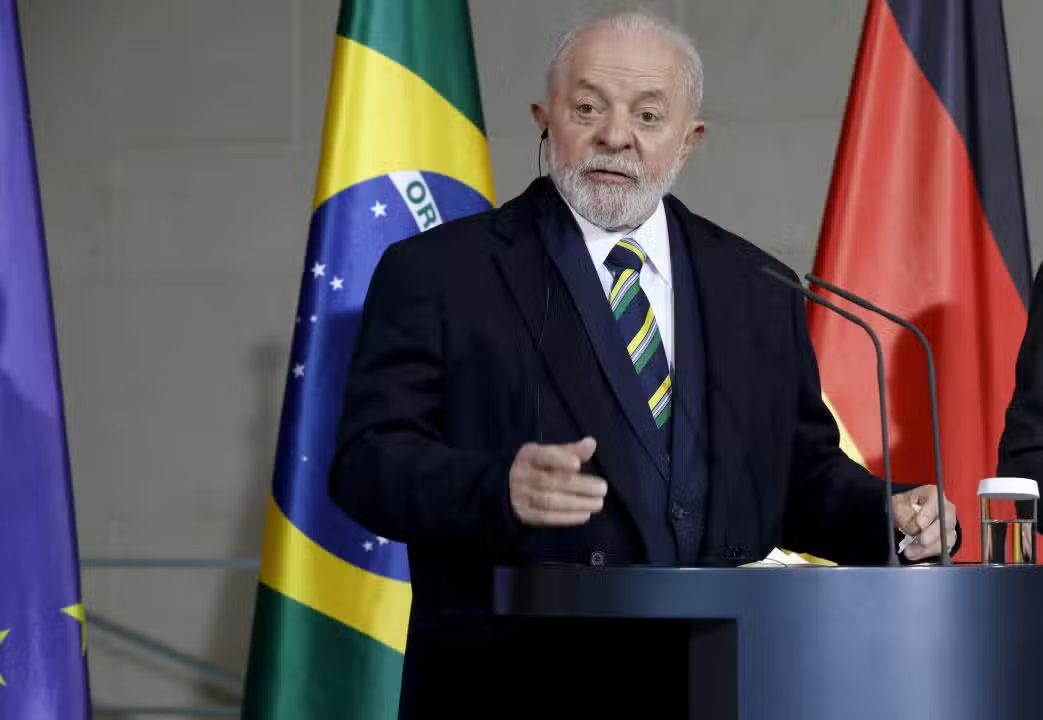
Discussing a fragile ceasefire
The two leaders dedicated a significant portion of their discussion to the nuances of the fragile ceasefire currently in effect. This agreement, while crucial for immediate relief, remains a subject of ongoing international monitoring and delicate diplomatic maneuvering. Its sustainability hinges on various factors, including adherence from all parties and robust international support to prevent further escalation.
Concerns were raised regarding the comprehensive implementation of the ceasefire terms, particularly those relating to humanitarian access and the movement of goods and people. Both presidents acknowledged the immense challenges in transforming a cessation of hostilities into a durable peace, requiring sustained political will and coordination among regional and global actors.
Pathways to gaza’s rebuilding
The prospect of rebuilding Gaza dominated a key part of the presidential dialogue, with President Lula seeking Abbas’s insights on the immediate and long-term requirements. The destruction across Gaza from recent conflicts has been extensive, impacting infrastructure, housing, and essential services, necessitating a massive international coordinated effort. This reconstruction will require significant financial investment and logistical planning to restore basic living conditions and enable economic recovery for its residents.
Brazil’s consistent diplomatic stance
Brazil’s long-standing foreign policy emphasizes multilateralism and peaceful resolution of conflicts, a position consistently reiterated by President Lula’s administration. This commitment translates into active participation in international forums and diplomatic efforts aimed at de-escalation and promoting dialogue. Brazil has historically advocated for a two-state solution, recognizing both Israeli and Palestinian states living side-by-side in peace and security.
The Brazilian government views its engagement with the Palestinian Authority as integral to its broader strategy of contributing to global stability and human rights. Brazil’s diplomatic influence is often channeled through its support for United Nations resolutions and its role in various international blocs, reflecting a balanced approach to regional complexities. This sustained engagement seeks to foster an environment conducive to lasting peace.
International efforts for lasting peace
The conversation extended to the broader international efforts aimed at establishing a comprehensive and lasting peace in the Middle East. Various peace plans are currently under consideration by international bodies and regional powers, each with unique approaches to addressing core issues such as borders, security, and the status of Jerusalem. The leaders exchanged impressions on these ongoing initiatives.
A key challenge remains unifying international consensus around a viable peace framework that addresses the legitimate aspirations of both Israelis and Palestinians. Diplomatic efforts frequently encounter obstacles related to historical grievances, political divides, and regional power dynamics, complicating progress toward a definitive resolution.
The global community continues to call for a renewed commitment to a negotiated settlement. Brazil, through its diplomatic channels, has consistently advocated for a process that is inclusive, respects international law, and leads to tangible results on the ground for all peoples in the region.
Future engagement and cooperation
Both President Lula and President Abbas acknowledged the importance of continued high-level communication and agreed to maintain contact on the evolving situation. This commitment ensures that channels for direct dialogue remain open, facilitating ongoing discussions on critical issues and potential areas for cooperation. Such sustained engagement is vital for building trust and understanding.
The leaders also explored possibilities for Brazil to further support humanitarian and development initiatives within Palestinian territories. This could include technical cooperation programs or increased aid contributions, reinforcing Brazil’s solidarity with the Palestinian people and their reconstruction efforts. Future discussions will likely delve into specific projects and implementation strategies.
Continuing diplomatic engagement also provides a platform for Brazil to advocate for its positions on human rights and international law within the context of the Middle East conflict. The bilateral relationship serves as an important bridge for international dialogue and the pursuit of peaceful solutions. Regular consultations help ensure that Brazil’s perspective remains a constructive force in global discussions.
The urgency of humanitarian aid
Beyond long-term reconstruction, the immediate delivery of humanitarian aid remains a paramount concern for Gaza’s population. Access to food, water, medicine, and shelter is critically needed, and international efforts are intensifying to ensure these vital supplies reach those most affected.
