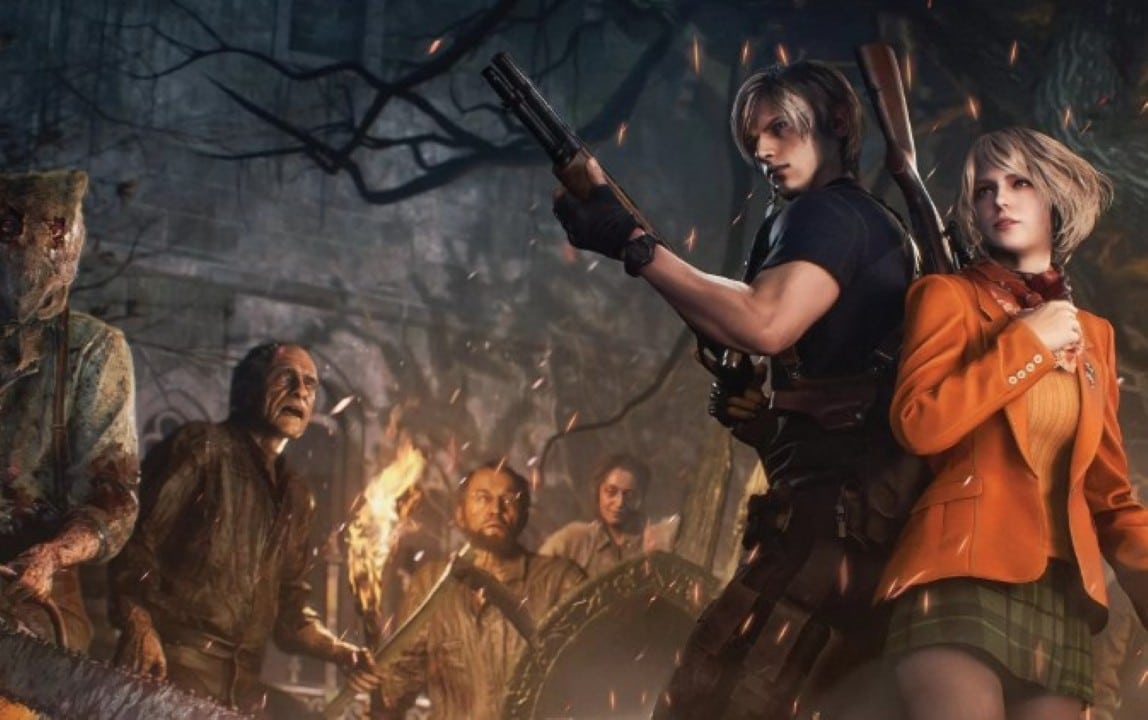
A recent discovery in the files of Resident Evil 4 A playable prologue, starring Ashley Graham, was completely discarded during development. The revelation, brought to light by the YouTuber and data miner known as “Thekempy”, shows that players would control the president’s daughter in a desperate attempt to escape her captors even before the arrival of Leon S. Kennedy.
The analysis of residual files and codes not used in the final version of the game allowed the partial reconstruction of this introductory sequence. The content suggests an approach much more focused on horror and survival, placing the player in a position of extreme vulnerability from the first moment. Essa fundamental change in the game’s initial structure generated intense debate among fans about how the experience and perception of the characters could have been changed.
The existence of this prologue was already speculated by some attentive fans, who noticed brief scenes of Ashley running alone in some of the game’s initial promotional trailers. However, only with in-depth data analysis was it possible to confirm and visualize how this section would work in practice, exposing a significant creative decision on the part of the development team, which opted for a more direct and action-focused start with Leon.
The alternative introduction of Ashley
The scrapped prologue would have plunged the player directly into the perspective of Ashley Graham. The sequence would begin with her waking up disoriented in a shadowy location, likely one of the rustic cabins seen at the beginning of the game, and realizing that she had been kidnapped. From there, the objective would be to escape stealthily, avoiding the members of the Los Iluminados cult, who patrolled the initial area of the village.
Unlike the combat-focused gameplay of Leon, moments with Ashley would be centered around stealth, solving small environmental puzzles, and evasion. The absence of weapons or combat skills would intensify the feeling of panic and helplessness, setting the tone of horror in a much more personal and immediate way. The player would feel the character’s fear firsthand before even meeting the hero tasked with rescuing her.
Details of the discarded phase and the reason for the cut
The reconstruction based on the data found indicates that Ashley would navigate through sections of the iconic village and its surroundings, using the environment to hide. The sequence would probably culminate in his recapture, possibly in the church, a moment that would directly connect with the arrival of Leon in the region. Essa approach would create a smoother narrative bridge, contextualizing the rescue mission with prior experience of the real danger faced by the victim.
Capcom’s decision to remove this extended introduction appears to have been motivated by a desire to speed up the game’s pace and deliver a more immediate and impactful experience. A slower, survival-focused start could be perceived as dragging by some of the audience, who expect the franchise’s signature action. Priorizar’s arrival allowed combat and exploration to begin almost immediately, better aligning with the structure of the original 2005 game, which also begins directly with the male protagonist.
The content of the eliminated phase reveals that Capcom planned a more gradual sequence for the beginning of the game. Essa approach contrasted with the dynamic and action-packed opening that was eventually implemented. The cut phase involved Ashley trying to escape the cult of Saddler, focusing on a slower, survival-based introduction, something that code fragments and initial trailers already indicated. In the end, Capcom prioritized a more dynamic start with Leon to capture the player’s attention from the first moment.
Repercussion among players and future possibilities
The Resident Evil community reacted with enormous interest to the discovery, flooding forums and social media with discussions about how this introduction could have changed the general perception of the game. Muitos fans expressed a desire to try this alternate version, imagining the impact it would have on the narrative and immersion by establishing Ashley as a more proactive and resilient character from the beginning. The revelation sparked a debate about the importance of perspective in constructing a horror story and how vulnerability can be a powerful tool.
The fascination with cut content goes beyond simple curiosity, as it offers a rare glimpse into the creative process behind major productions. Ele reveals the “roads not taken” by developers and the difficult decisions that need to be made to deliver a cohesive and polished final product. The existence of this playable prologue with Ashley opens doors for players’ imagination regarding additional content or future modifications (mods) that could restore this experience, further enriching the game’s universe.
Improving the narrative in remakes
The revelation of this cut phase highlights the complexity involved in developing remakes of classic titles loved by the public. Studios face the constant challenge of balancing fidelity to the source material with the need to modernize the experience, optimize narrative flow, and surprise new players and veterans alike. Cada decision, whether the inclusion of new mechanics or the cutting of story segments, is crucial in shaping the pacing and cohesion of the final narrative, directly influencing the critical reception and commercial success of the product.
The remake trend remains strong in 2026, with several studios investing in bringing classics to new generations of consoles and players. The case of the prologue of Ashley in Resident Evil 4 Remake serves as an excellent study on how creative intentions can evolve over the course of a project. The decision to focus the opening on Leon was ultimately a choice to ensure a strong initial impact consistent with the series’ identity, demonstrating that sometimes less is more in the search for the perfect gaming experience.
The impact that the change would have on the character
Controlling Ashley in his first moments of captivity would have fundamentally transformed his characterization. Instead of being introduced primarily as an objective to be rescued, players would see her as an active survivor, fighting for her freedom even before Leon intervened. Isso could have mitigated some of the criticism the character received in the original game for her supposed passivity, showing her courage and ingenuity from the beginning. The player’s emotional connection with Ashley would be established organically, making the mission of protecting her throughout the game an even more personal and meaningful task.
Capcom’s original vision for horror
This discarded prologue also sheds light on a possible initial vision of Capcom that leaned more towards classic survival horror. By forcing the player into a situation of total helplessness, with no resources to fight, the company would be evoking the tension of games like the first Resident Evil or Haunting Ground. The choice to remove this section in favor of an action opening reflects the hybrid identity of Resident Evil 4, which successfully merges horror elements with third-person shooter mechanics. The final decision solidified the game as an action horror landmark, but the existence of Ashley’s prologue shows that a more purely terrifying path was considered and ultimately abandoned in favor of pacing.
