
Ukrainian President Volodymyr Zelensky called on the United States for critical air defense supplies this Saturday, February 24, following a wave of Russian assaults on energy infrastructure in Kyiv, the nation’s capital. These recent attacks underscore the urgent necessity for timely delivery of defensive equipment, particularly in light of discussions held during the World Economic Forum.
Zelensky stressed that agreements made with former President Donald Trump in Davos earlier this week must be fully implemented to protect Ukrainian cities and citizens from ongoing aerial bombardment. The escalation of hostilities highlights the immediate need for robust defensive capabilities.
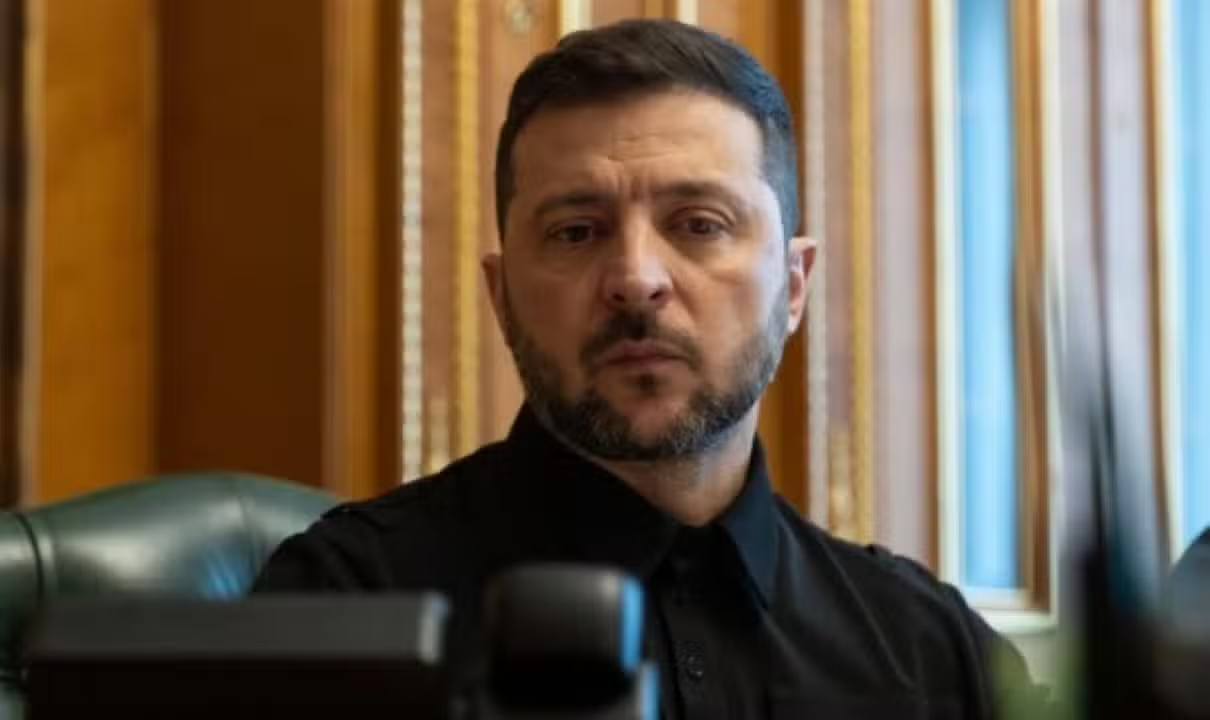
The urgent appeal comes as Russia intensifies its campaign against Ukrainian power grids, demonstrating a clear intent to disrupt essential services and exert pressure amidst ongoing diplomatic efforts.
Kyiv hit after peace talks
Kyiv experienced a significant attack hours after trilateral talks involving the United States, Russia, and Ukraine aimed at ending the conflict. City Mayor Vitali Klitschko reported one fatality and four injuries in the capital, with three individuals requiring hospital treatment for their wounds.
The extensive barrage targeted critical infrastructure, leaving nearly 6,000 buildings without heating as temperatures plummeted to -12 degrees Celsius on Saturday morning. This disruption further exacerbated the humanitarian challenges faced by residents in the heart of winter.
Diplomatic efforts amidst escalation
Ukraine’s Minister of Foreign Affairs accused Russian President Vladimir Putin of cynically ordering a massive missile attack precisely when Ukrainian, Russian, and U.S. delegations were engaged in Washington-mediated peace negotiations in Abu Dhabi. This move casts a shadow over diplomatic pathways.
Andrii Sybiha, Ukraine’s Foreign Minister, stated on X that this “barbaric attack proves once again that Putin’s place is not at the peace negotiation table, but rather in the dock of a special tribunal.” The timing of the offensive suggests a deliberate undermining of peace efforts.
The concurrent diplomatic discussions and military aggression highlight the complex and often contradictory nature of the ongoing conflict. International observers continue to monitor these developments closely, weighing the prospects for de-escalation against persistent hostilities. These negotiations, intended to foster a path to peace, instead coincided with heightened aggression, further complicating an already delicate international situation.
Zelensky’s plea for robust air defenses
President Zelensky’s renewed appeal for air defense systems directly links the recent attacks to the vital need for international military assistance. He emphasized that every delay in supplying essential equipment translates into more destruction and casualties on the ground. The sophisticated nature of the recent strikes, involving a combination of drones and missiles, necessitates equally advanced defensive measures.
The Ukrainian Air Force confirmed that Russia launched 375 drones and 21 missiles across the country in the latest offensive. Such high volumes of munitions necessitate comprehensive and continuous defensive capabilities that can effectively intercept incoming threats. Kyiv’s plea is not merely for more equipment but for a strategic acceleration of its delivery.
The attacks on critical energy infrastructure are particularly damaging during the harsh winter months, affecting heating and electricity for millions. Protecting these sites requires a multi-layered air defense system capable of safeguarding urban centers and power grids alike. This strategic imperative forms the core of Zelensky’s consistent appeals to international partners.
The discussions held with former President Trump in Davos underscored the ongoing dialogue about military aid. While the specific details of their agreements remain undisclosed, the Ukrainian leadership views these commitments as crucial for bolstering the country’s defenses against sustained aggression. The post-attack plea from Kyiv reinforces the urgency of translating those commitments into tangible support.
Infrastructure damage and humanitarian impact
The extensive Russian assault inflicted significant damage on Kyiv’s energy infrastructure, resulting in widespread power outages and a severe disruption to the city’s heating supply. Thousands of residential and commercial buildings were left without essential services, exacerbating the already challenging winter conditions.
Mayor Klitschko’s report on the nearly 6,000 buildings lacking heating highlights the immediate humanitarian crisis. Residents faced freezing temperatures inside their homes, leading to concerns about health and safety, particularly for vulnerable populations such as the elderly and young children. The rapid restoration of services remains a top priority amidst ongoing threats.
Unspecified Davos agreements surface
President Zelensky and former President Trump met at the World Economic Forum, where they reportedly discussed support for Ukraine’s air defense. While neither leader publicly specified the exact nature or scope of their agreements, the meeting itself signals an ongoing dialogue at high levels regarding military aid.
The lack of explicit detail surrounding the Davos discussions has led to speculation about the specific commitments made. Nevertheless, Zelensky’s subsequent statements strongly imply that assurances or understandings were reached concerning the provision of air defense systems, critical for Ukraine’s continued resilience. These diplomatic engagements are vital avenues for securing necessary international backing.
Urgent need for continued international support
The relentless nature of Russian aggression, particularly targeting civilian infrastructure, reinforces the critical need for sustained international assistance to Ukraine. Without continuous and robust support, the ability of Ukrainian forces to defend against future attacks diminishes significantly.
