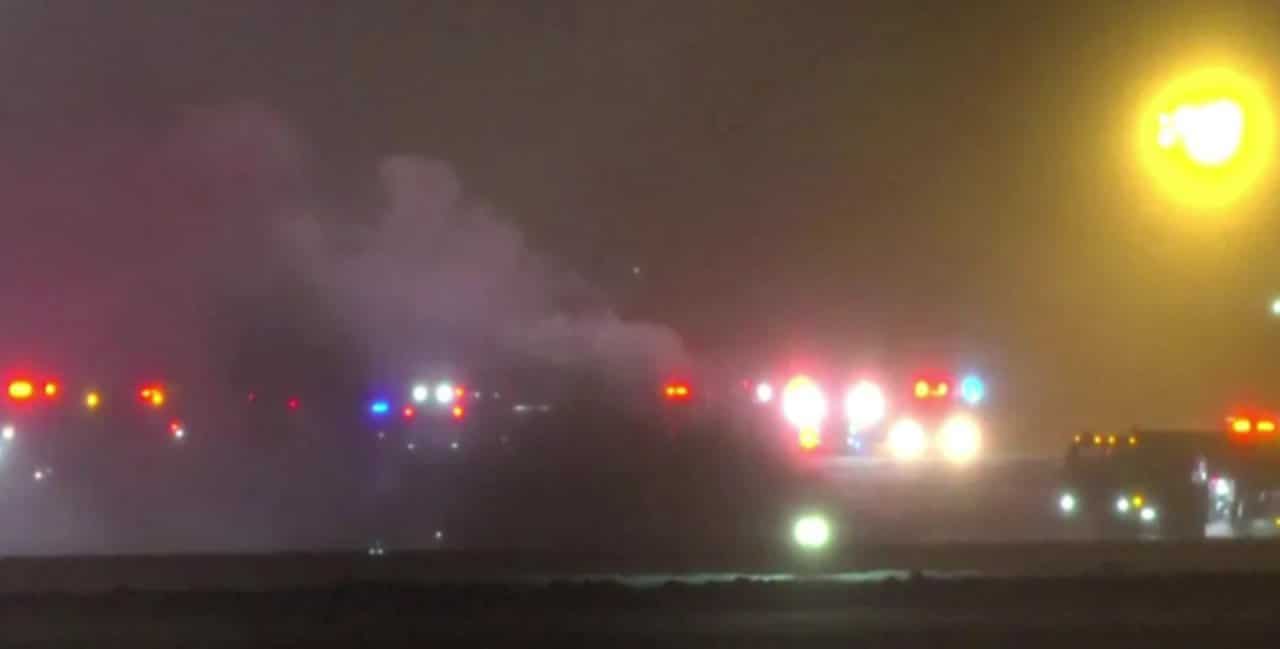
A private jet model Bombardier Challenger 600, with eight people on board, suffered a serious accident during the takeoff procedure in Aeroporto Internacional of Bangor, in the state of Maine, in Estados Unidos. The event took place in the midst of a severe winter storm that was affecting a large part of the country, imposing conditions of low visibility and accumulation of snow on the runway, factors that critically complicated the aircraft’s operation.
Emergency teams were called immediately after the crash was reported, and the airport’s operations were suspended to facilitate rescue work and the subsequent investigation. The identities and health status of the occupants were not initially disclosed by the authorities, creating a climate of uncertainty surrounding the outcome of the accident.
This incident adds to a scenario of aerial chaos that took place in the Estados Unidos due to adverse weather conditions. Milhares flights were canceled or suffered significant delays throughout the North American territory, impacting millions of passengers and exposing the vulnerability of the airline network to extreme weather events.
Details of the aircraft and the circumstances of the accident
The plane involved in the accident was an Bombardier Challenger 600, a medium-sized executive jet known for its robustness and intercontinental range. According to preliminary information released by Administração Federal of Aviação (FAA), the accident occurred at around 7:45 pm local time. The aircraft would have collided with the runway during the takeoff run, at a time when visibility was extremely poor, a considerable challenge even for experienced pilots. The investigation will seek to determine whether the cause was a combination of technical and meteorological factors.
The first images from the scene showed burning debris and dense smoke, highlighting the violence of the impact. The Challenger 600 is equipped with advanced navigation and de-icing systems, but the intensity of the storm may have overwhelmed the crew and aircraft’s ability to operate safely. The analysis of cockpit voice and data recorders, known as black boxes, will be essential to reconstruct the final moments of the flight and understand the decisions made by the pilots in the face of the adverse conditions they faced.
The adverse climate scenario in the Maine region
The winter storm that was raging in Maine and other parts of northeastern Estados Unidos was classified as severe. The Serviço Nacional of Meteorologia had issued a warning for the region of Bangor, predicting an accumulation of snow that could reach 40 centimeters.
These conditions created a high-risk operating environment for aviation. Além Heavy snow, strong winds and falling temperatures contributed to the formation of ice on surfaces, one of the greatest dangers to aircraft.
The impact of the storm was not limited to the airport. Centenas of thousands of homes and commercial establishments were left without electricity across the state, and several roads were closed due to snow and the risk of accidents.
Local authorities declared a state of emergency in several cities, recommending that residents avoid non-essential travel. The plane crash in Bangor occurred at the height of this chaotic climate scenario.
Communication with the control tower
Minutes before the accident, communications between the control tower of Aeroporto of Bangor and several aircraft already indicated the seriousness of the situation. Gravações obtained by websites specialized in air traffic, such as LiveATC.net, reveal conversations about the rapid deterioration of visibility.
Although it is not possible to confirm whether the recordings specifically refer to Bombardier Challenger 600, the tone of the conversations demonstrated general concern about the security of operations at that time. Pilots reported difficulties in maintaining visual contact with the runway and marker lights.
Shortly afterwards, a communication from an air traffic controller confirmed the occurrence of a serious event. In the recording, he reports seeing “an overturned passenger aircraft” on the runway, a term that describes an accident of great magnitude and that immediately triggered the entire emergency protocol.
Emergency response and shutdown of operations
The response to the accident was immediate. Equipes of airport firefighters, ambulances and police vehicles were moved to the main runway, which was closed to any other landing or take-off operations.
The administration of Aeroporto Internacional of Bangor issued a statement asking the public to avoid the area so as not to interfere with the work of rescue and investigation teams, ensuring perimeter security.
The storm’s widespread impact on air transportation
The incident in Bangor was a localized reflection of an air transport crisis that extended throughout the territory of the Estados Unidos. The winter storm forced the cancellation of more than 11,000 flights and caused delays to another 5,500 on the day of the accident, according to data from flight tracking platform FlightAware. Grandes air hubs, such as Filadélfia, Washington D.C., Nova Iorque and The situation highlighted the complex interdependence of the air system, where the shutdown of a main airport generates a cascade effect that affects flights around the world. Airlines faced a logistical nightmare, trying to relocate passengers and crew, while dealing with the need to perform de-icing procedures on aircraft that were able to operate, a time-consuming process that further contributed to the delays. The episode highlighted the vulnerability of transport infrastructure to extreme weather events, raising debates about the need for investment in more resilient technologies and more effective contingency plans to minimize the impact on millions of travelers.
Safety procedures for flights in extreme conditions
Operating aircraft in snow and low visibility requires the application of extremely strict safety protocols. FAA regulations determine minimum visibility limits for takeoffs and landings, which vary depending on the type of aircraft and the equipment available at the airport.
The crew is responsible for a careful assessment of conditions, including contamination of the runway by snow or ice and the risk of ice forming on the wings and engines. Decisões about whether to proceed or abort a takeoff in these circumstances are complex and based on a detailed analysis of multiple factors in real time.
Investigation to determine the causes
The official accident investigation will be conducted by the National Transportation Safety Board (NTSB) in collaboration with the FAA. The objective is to determine the exact causes that led to the crash of the Bombardier Challenger 600, analyzing everything from the aircraft’s maintenance to the crew’s decisions and the response of the plane’s systems to meteorological conditions.
